 Julien Reszka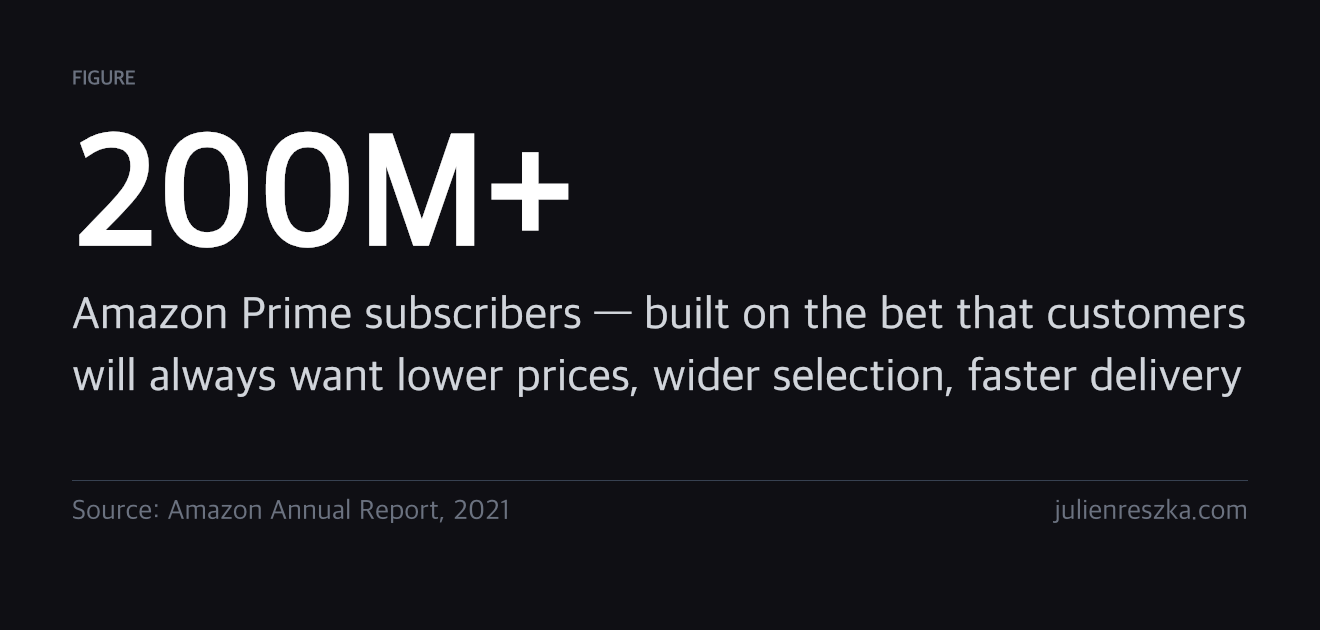
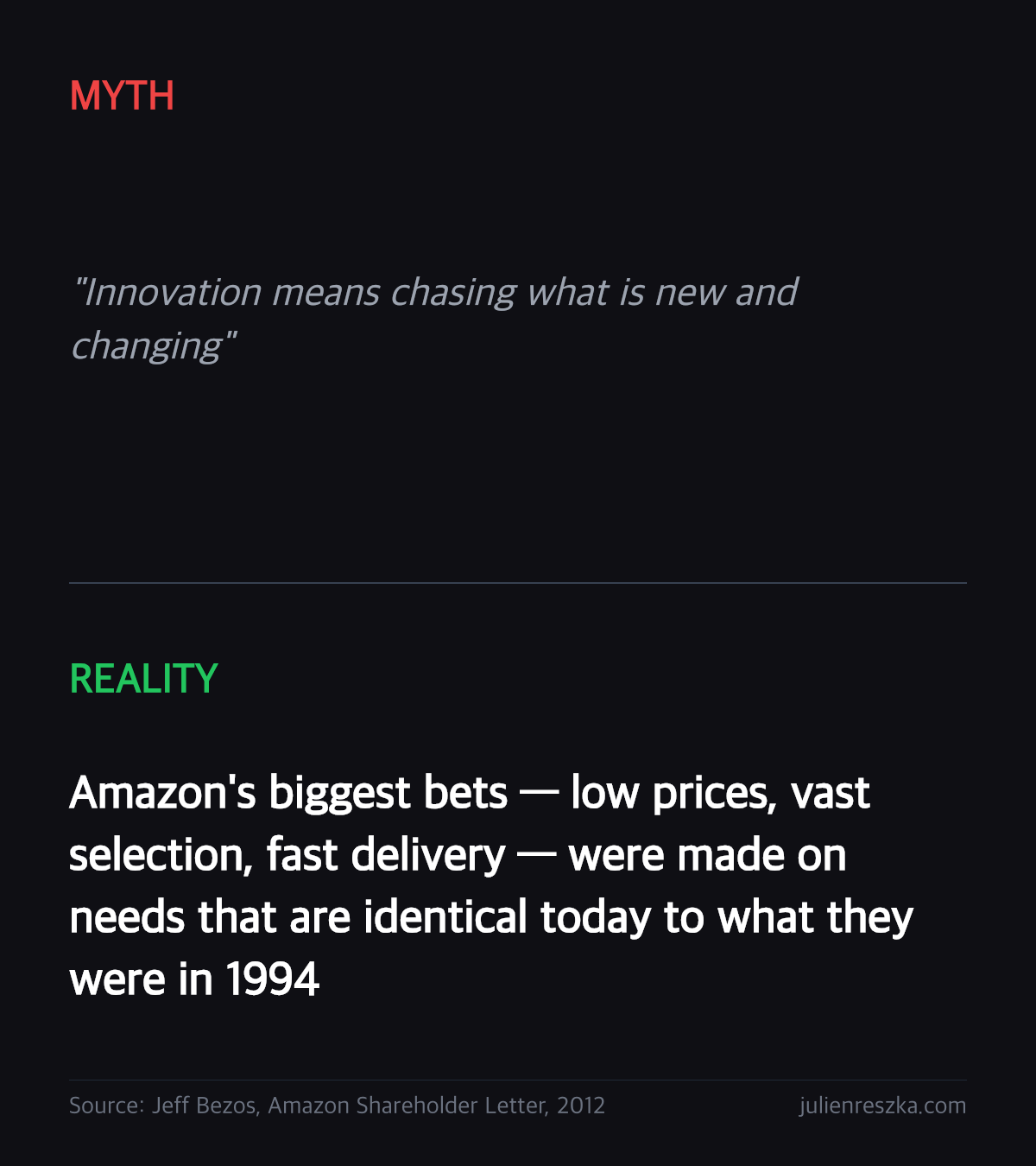
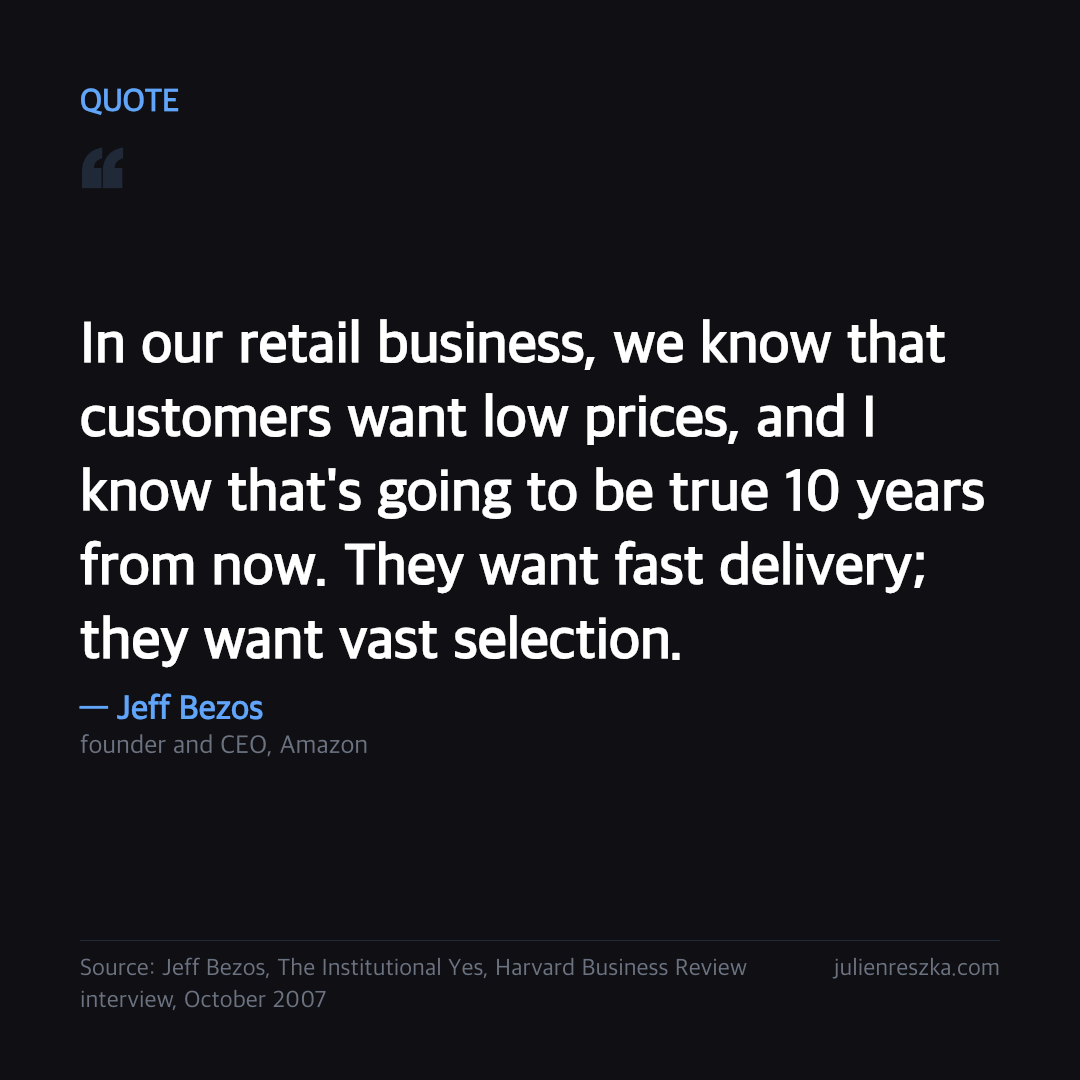
Jeff Bezos had a standard response when people asked what was going to change in the next ten years. His more important question, the one he almost never got asked, was the opposite: what is not going to change? Amazon was built on three bets Bezos was confident would hold indefinitely:
- lower prices
- wider selection
- faster delivery
That stability meant every dollar invested in logistics infrastructure, warehouse automation, or supplier relationships was compounding certainty, not a gamble on shifting taste. Patrick Collison at Stripe made a related argument for why large businesses are underrated: scale creates the ability to make long-term bets that smaller companies cannot sustain. The discipline is the same in both cases: identify the need that will not shift, then build toward it relentlessly, because the compounding advantage of being right about something stable far exceeds the short-term gain of being first on something uncertain. The practical version is simple: write down the core need your next project serves and ask whether people had it twenty years ago and will have it twenty years from now. If yes to both, you are building on bedrock. If the answer depends on a current trend, you are building on fashion.
Discussion
Yes. We're debating whether to chase the latest AI feature trend or invest in faster delivery times. The 20-year test makes the answer obvious: nobody will care about today's trend in two years.
Yes. Almost pivoted to a trend-following positioning last quarter. Wrote down the 20-year test and the original durable bet survived. Glad I didn't move.
Durable compounds. New is usually just expensive.
Some of the largest wealth creation came from betting on change, not on stability. Mobile disrupted everything that looked durable in 2006. The people who built on 'what won't change' in the pre-smartphone era (print directories, fixed-line telecoms) got overtaken by people who correctly bet on an unstable transition. Stability compounds, but only if the stable thing stays stable.