 Julien Reszka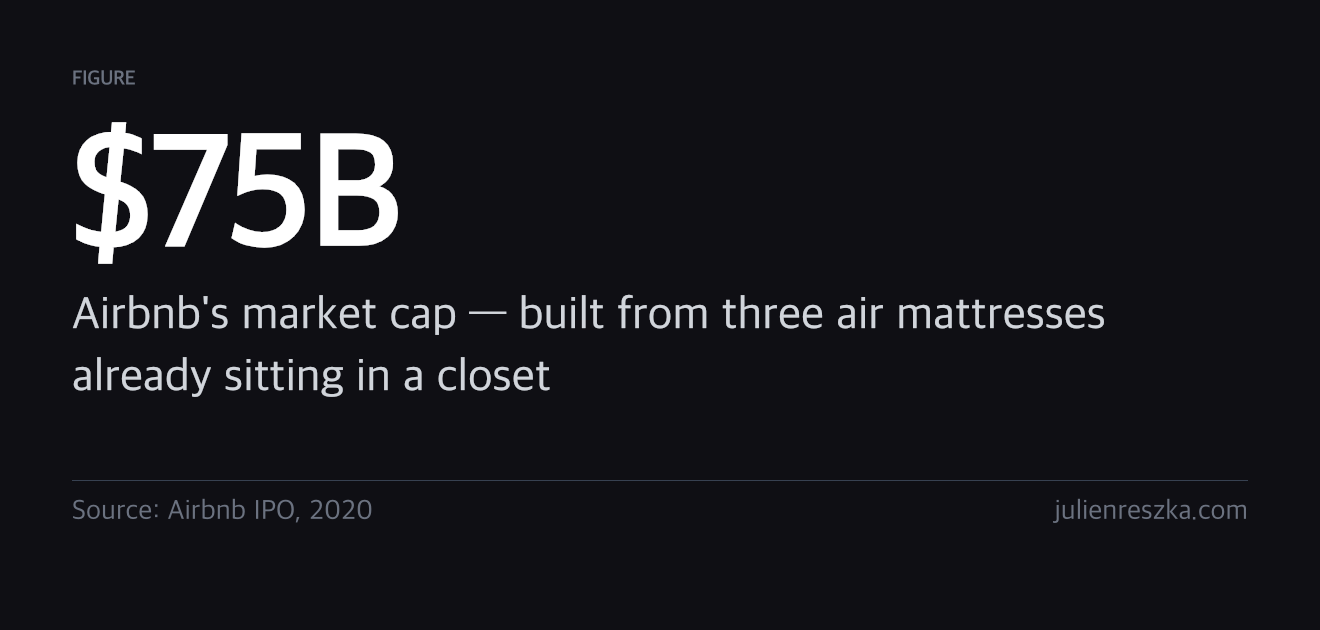
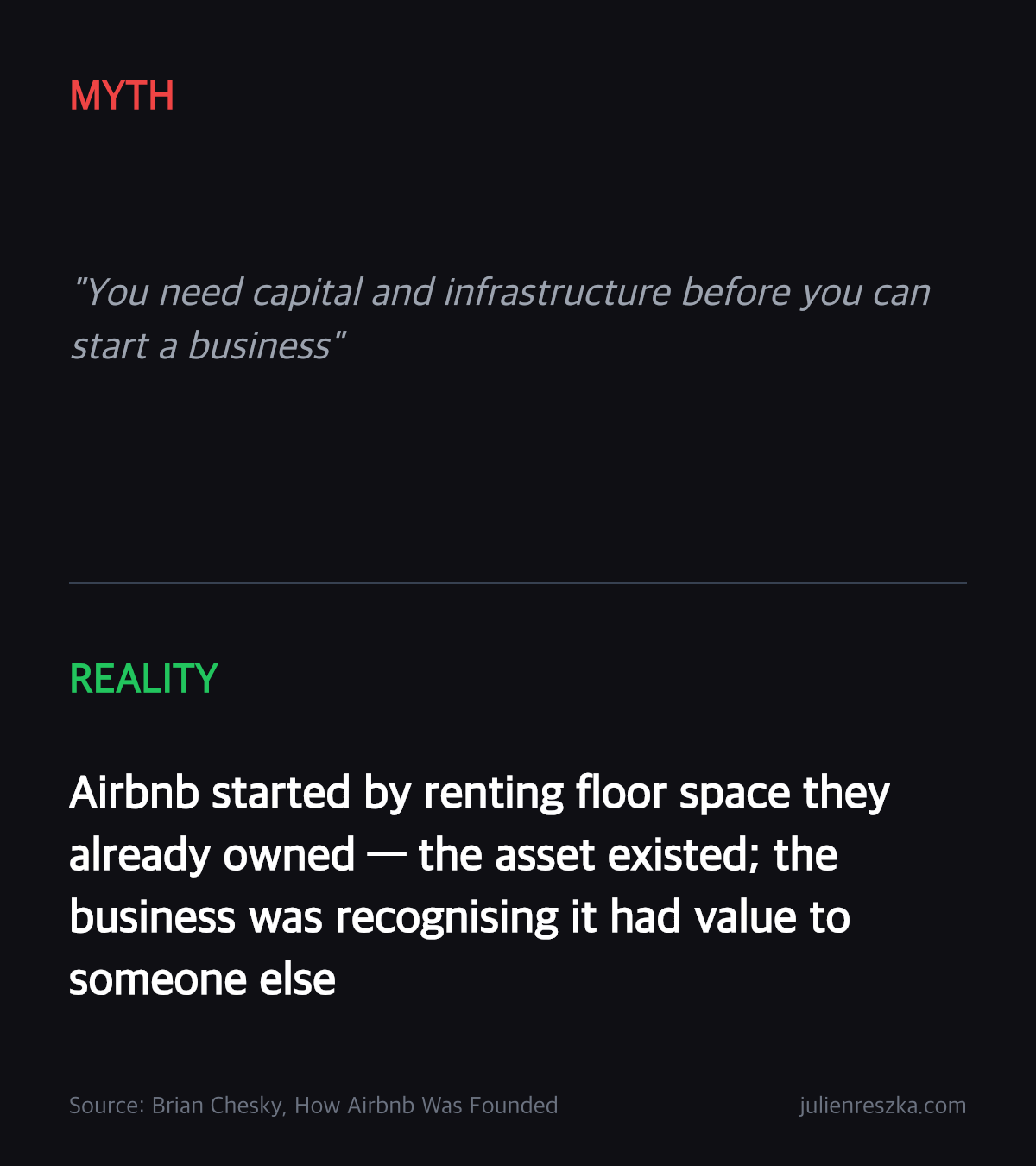
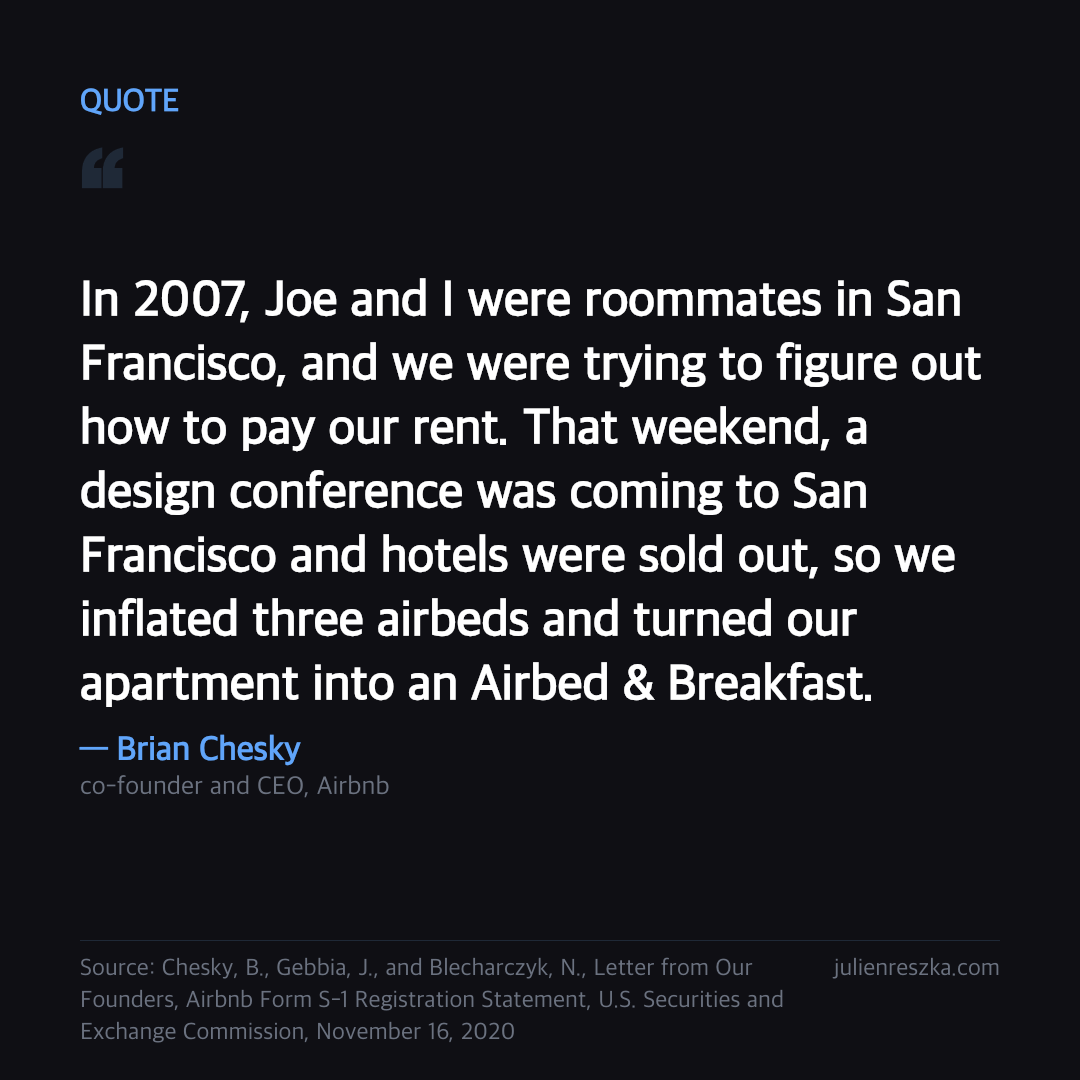
Brian Chesky had $1,000 and could not make rent. The resource that saved him was not a loan or an investor. It was three air mattresses already in the closet and a design conference that had sold out every hotel in San Francisco. The demand was visible; the supply was sitting unused in his apartment. That is how Airbnb started. Larry Page described Google's capital allocation strategy in similar terms: the job is to identify where there is capacity (people, money, relationships) that is not fully deployed, and find the use case that needs it. Android had ten people when Google acquired it; the asset was the team and the codebase, undervalued by everyone except Page. The question that unlocks this kind of thinking is not 'what do I need to build this?' but 'what already exists that I am not using?' Unused capacity is everywhere:
- spare rooms
- idle professional skills
- underutilised relationships
- capital sitting in low-yield accounts
The business is not the asset; the business is the recognition that someone else needs what you already have.
Discussion
Yes. Did the one-hour audit and found three things I'm already doing that people would pay for. Picking one this week instead of waiting to raise money for an idea I don't have yet.
The Airbnb story lands differently as 'they had the asset, they just hadn't priced it for someone else'.
Yes. I have a network of 200 specialists I built over five years and never monetised. That's the asset. The business is figuring out who needs access to them.
Not everything that sits idle is idle because it's underused. Some assets are unused because they're not worth much. Spent three months trying to monetise a skill from a previous role and discovered the reason nobody was paying for it was that it wasn't worth paying for. The audit should include a market-size check, not just an inventory check.