 Julien Reszka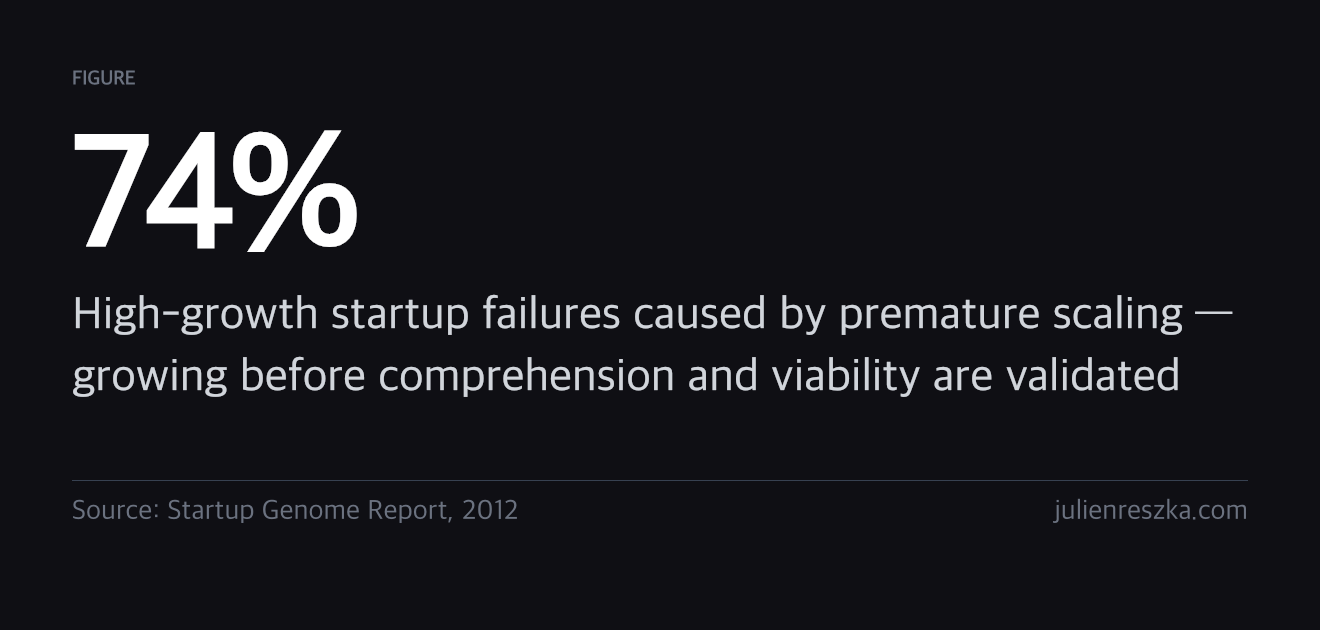
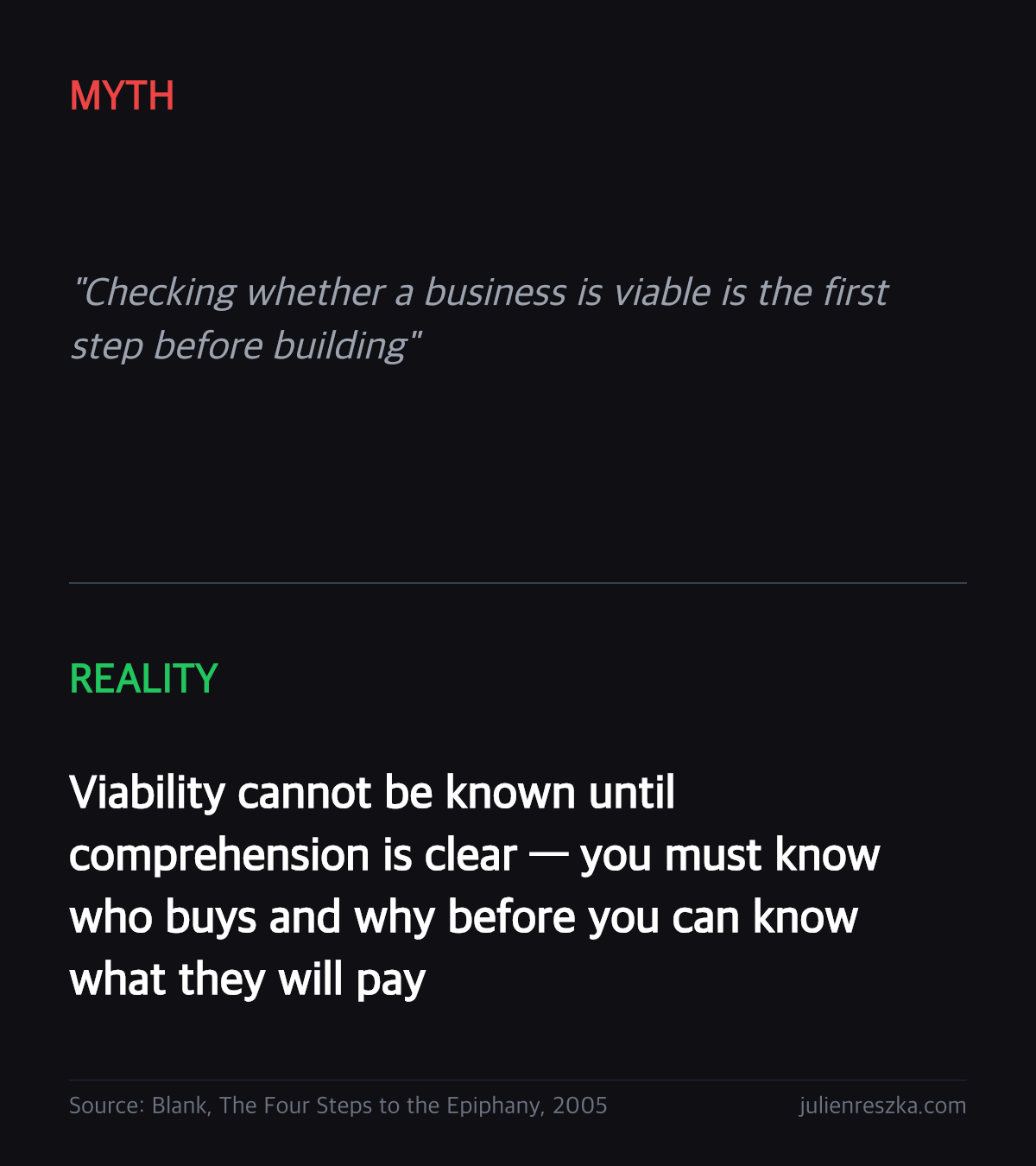
Most founders ask whether something is worth building too late, or too vaguely. There is a cleaner frame: three thresholds, each gating the next, that turn the question into a sequence of falsifiable tests.
The three thresholds in order:
- Comprehension threshold: you can predict who buys and why. Around five to fifteen real customers is enough to clear this.
- Viability threshold: revenue covers your minimum. The maths are specific to your situation, but you must be able to run them.
- Growth threshold: you can acquire customers faster than you lose them.
The order is strict. Each one gates the next. This is not just a question of whether it is worth building. The thresholds give you a framework for knowing when to stop, pivot, or double down.
If you cannot clear a threshold, the diagnosis is different each time:
- If you cannot hit comprehension, the problem is not real enough or specific enough. Stop or reframe.
- If you cannot hit viability, the pricing is wrong, the market is too small, or you are the wrong person to sell it. Fix one or stop.
- If you cannot hit growth, it is a distribution problem: the thing works but spreading it is broken. That is actually the most solvable of the three.
Discussion
Yes. Eighteen months in, I can name maybe two real buyers and one is my cousin. The threshold framing tells me I'm not at viability. I'm still at comprehension and I've been pretending otherwise.
We hit comprehension fine but viability is where we're stuck: the people who say yes won't pay what the maths require. Trying to decide whether that's a pricing problem or a 'wrong me' problem.
Exact same trap here. Took me a year to admit it was a wrong-me problem: the buyers existed but I had no credible way to reach the ones who'd pay full price.
Five to fifteen customers to clear comprehension works for consumer. In enterprise B2B, a single pilot takes six months and involves five stakeholders. At fifteen customers you've spent two years and may still be talking to the wrong segment. The threshold number needs to scale with sales cycle length or it becomes a target that signals nothing.