 Julien Reszka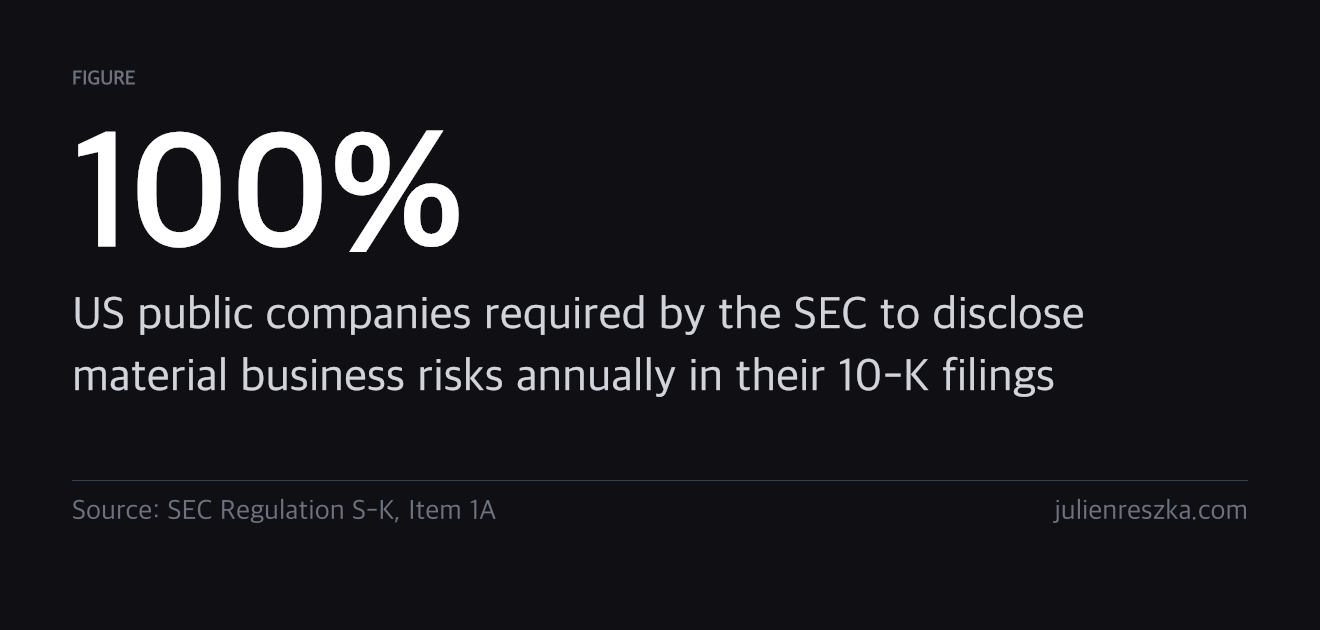
Every public company in the US must file an annual 10-K report with the SEC, and every 10-K contains a section called Item 1A: Risk Factors. This section is a legal obligation to tell shareholders, in plain language, what could go wrong:
- regulatory shifts
- technology disruptions
- supply chain fragility
- customer concentration
- competitive threats
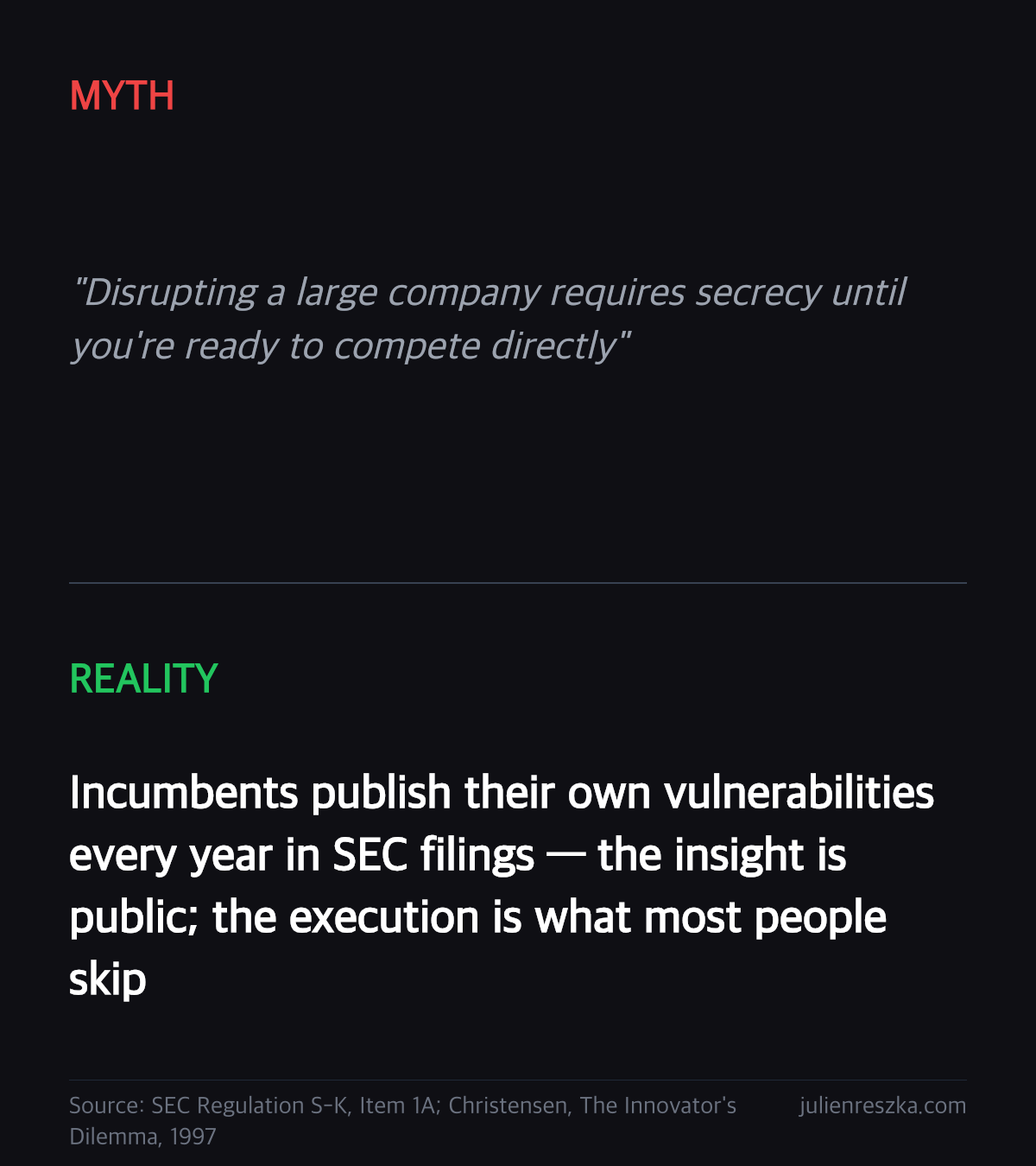
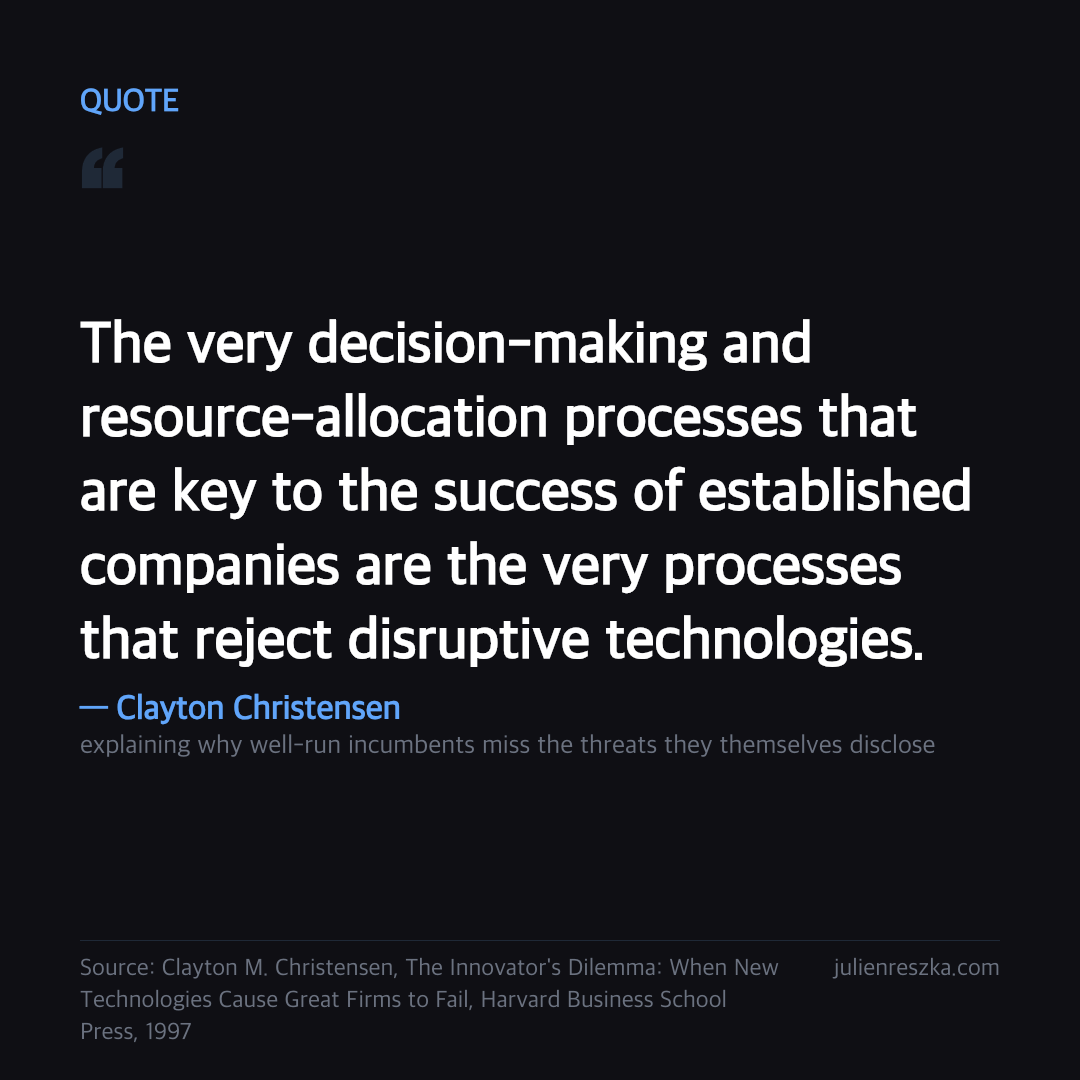
Most people skim past it. A startup founder should read it carefully. The risk factors section is, in effect, a map of the incumbent's weakest points. If a company discloses that its business depends heavily on one distribution channel, that channel is an attack surface. If it says that new technology could make its core product obsolete, that technology is worth investigating. The playbook from there is straightforward: find a risk they have disclosed, build a product that mitigates or exploits it, and sell that product to their competitors first. Once their competitors are using your product, the incumbent faces a choice: buy you or fall further behind. You do not need to win the whole market to be dangerous. You need to make their disclosed risk into a real and present threat.
Discussion
Yeah this hit home. We're up against a ~$4B incumbent and for a year our pitch has basically been 'cheaper + nicer support' which is... not enough. Going through their 10-K this weekend to find something real to attack.
Did this last year in payments. Found one risk disclosure around a coming regulatory change and built around that specific pain. Ended up closing 3 of their competitors.
Same spot here. Incumbent has brand, distro, integrations, all of it. The 10-K angle is the first next step I've heard in months that isn't just 'grind harder'.
Small pushback: risk factors in 10-Ks are lawyered to death. Useful, yes, but often sanitized. The nastier vulnerabilities are usually the ones they can't spell out publicly (roadmap bets, quiet channel deals, internal intel moves already underway).