 Julien Reszka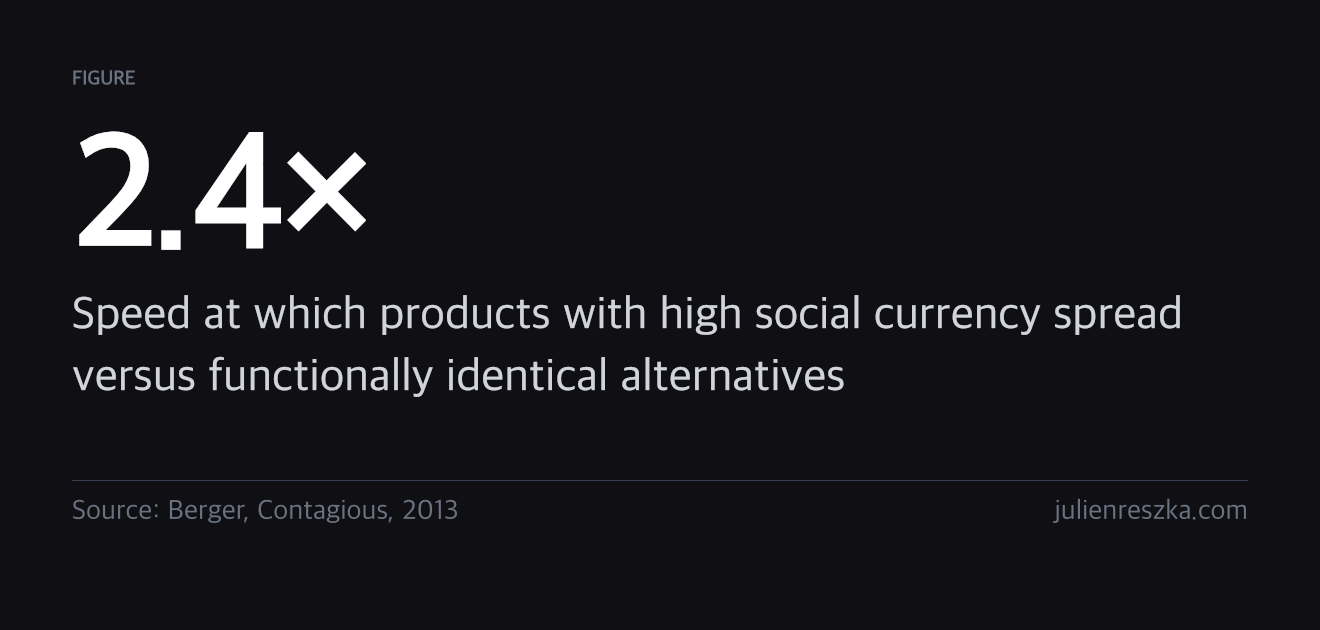
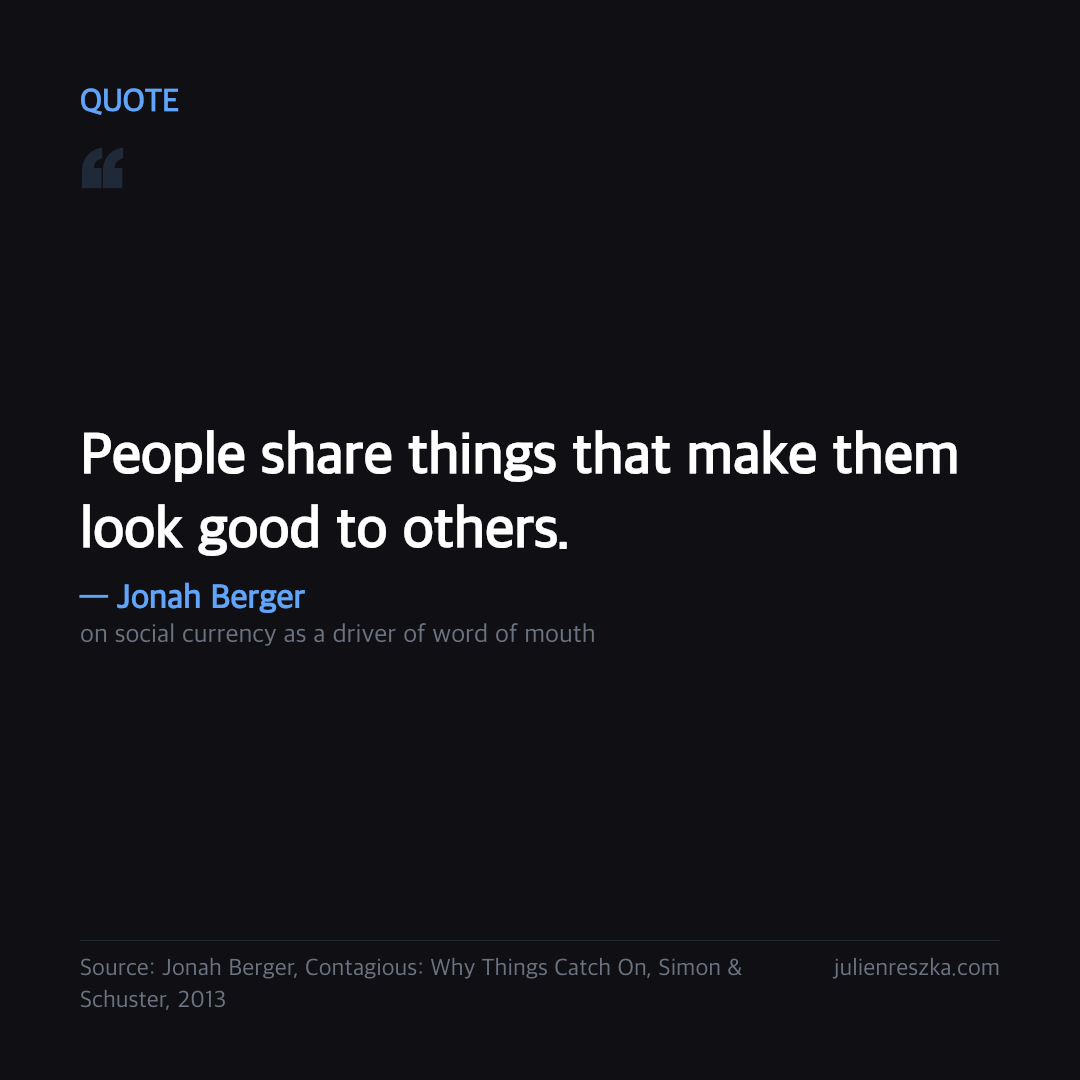
Luxury brands understood this before the word 'viral' existed: the product is only part of what you are selling. The other part is what owning it says about you. A Rolex is not a better timepiece than a fifty-euro Casio. It is a statement about status, success, and taste, and the buyer knows it. This dynamic is not limited to luxury goods. When someone recommends an investment course, a productivity tool, or a restaurant, they are also recommending themselves, signalling that they are:
- smart
- successful
- well-travelled
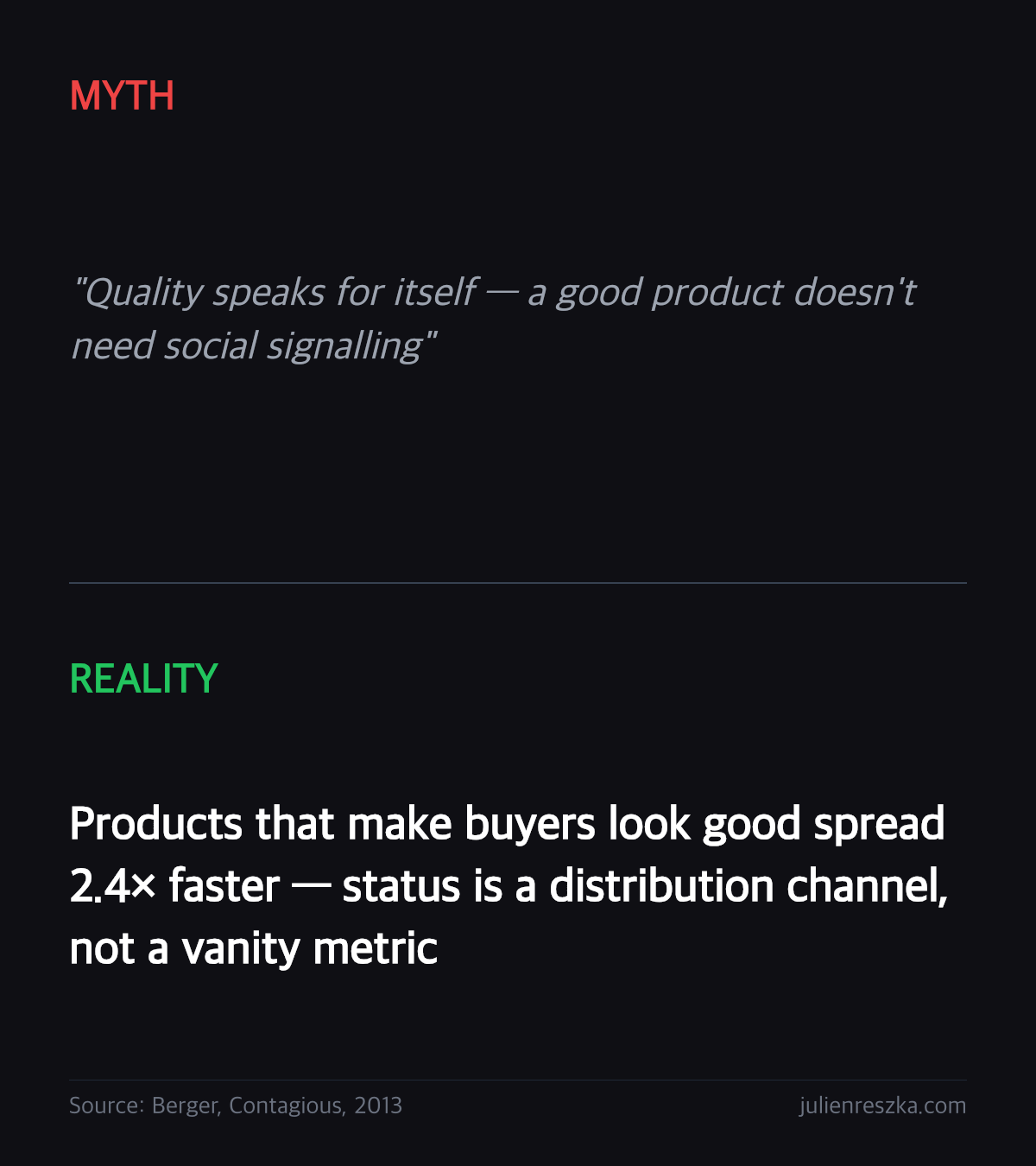
Jonah Berger's research into why things go viral found that products with high social currency spread around 2.4 times faster than functionally identical alternatives that carry no status signal. The design implication is deliberate: make your product something buyers are proud to be associated with, and they will do your marketing for free. The question is not whether your product works. It is whether the act of using it says something good about the person using it.
Discussion
Yes, users love the product but say nothing publicly. Realised we don't give them anything worth posting. Working on adding a shareable end-of-onboarding moment this month.
B2B version of the same problem. Buyers tell us they love it in private but never put their name to a quote. We're going to ask explicitly what would make it safe to recommend.
That direct question is the one we never thought to ask. Doing it next week.
This is a consumer and prosumer argument. In enterprise infrastructure (databases, monitoring, security tooling), nobody buys Datadog because it makes them look good at a party. Procurement decisions are driven by compliance requirements, uptime SLAs, and vendor lock-in risk. Social currency doesn't enter the room.