 Julien Reszka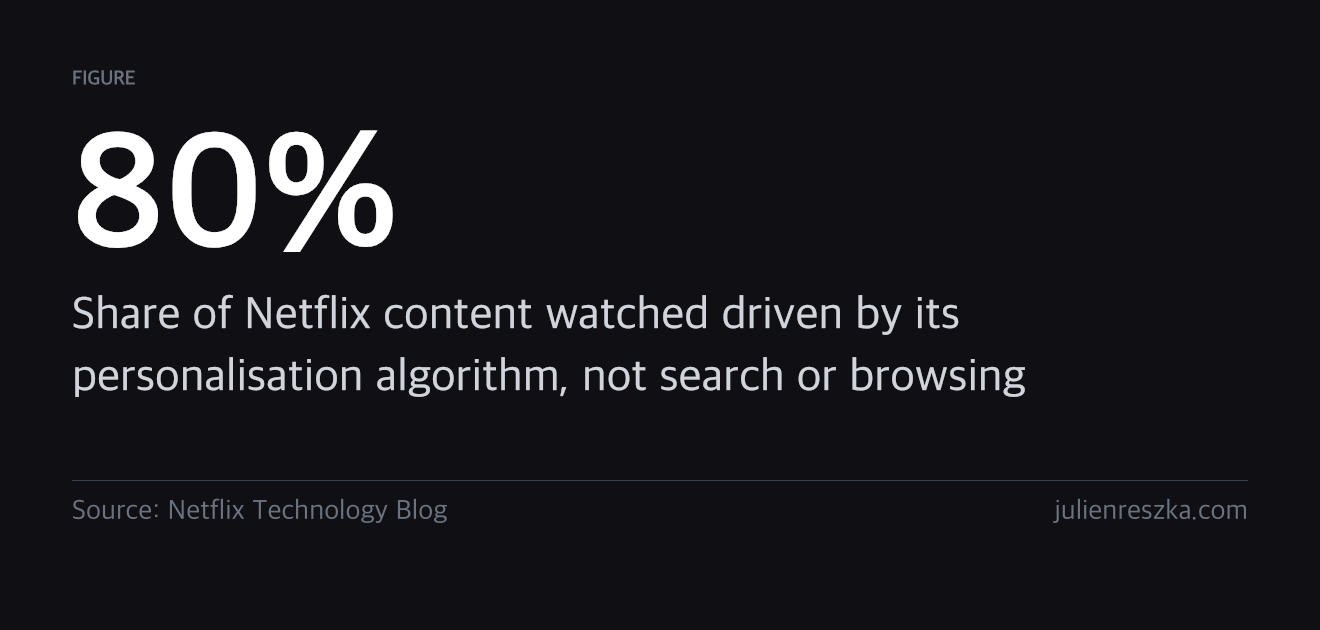
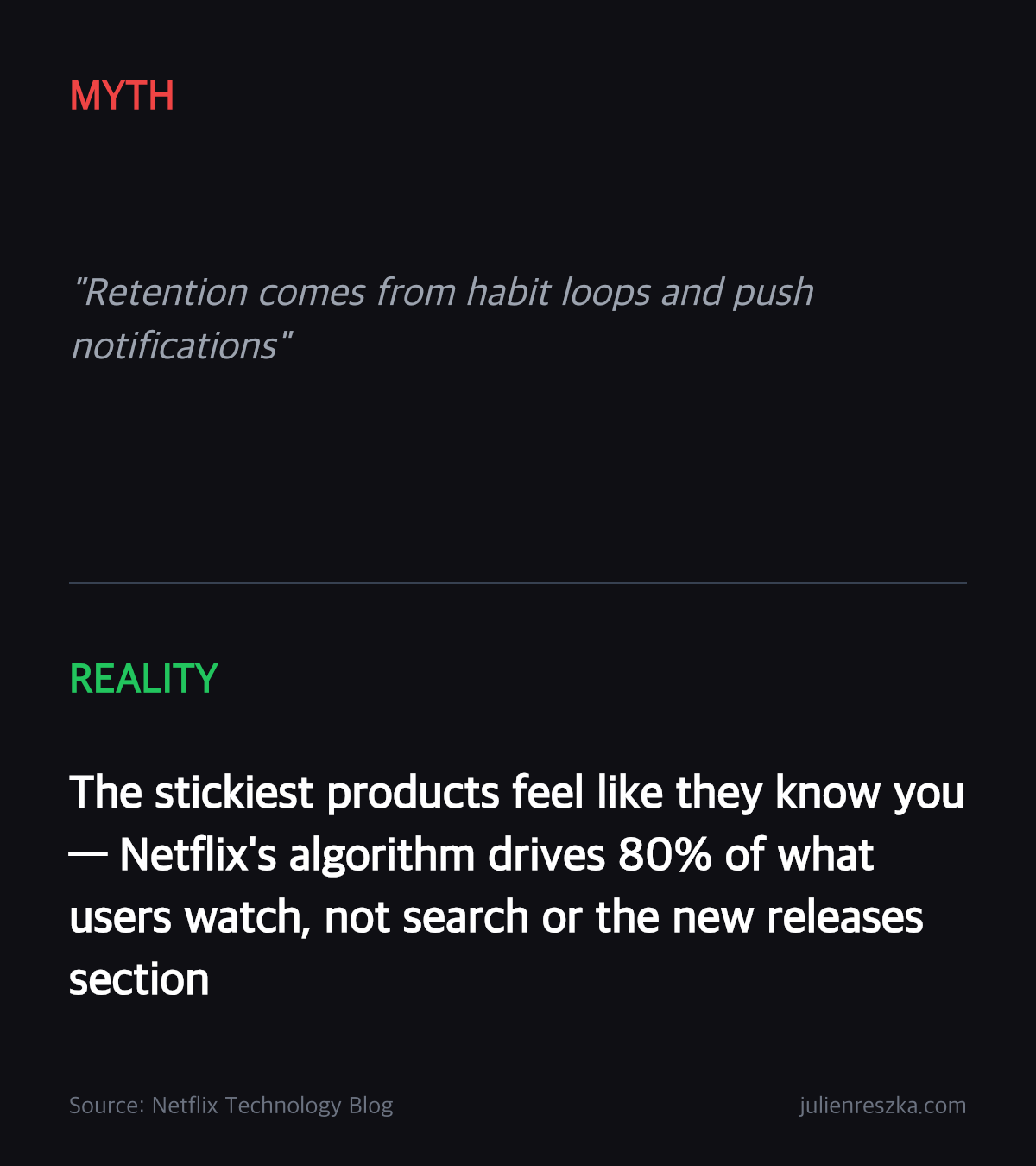
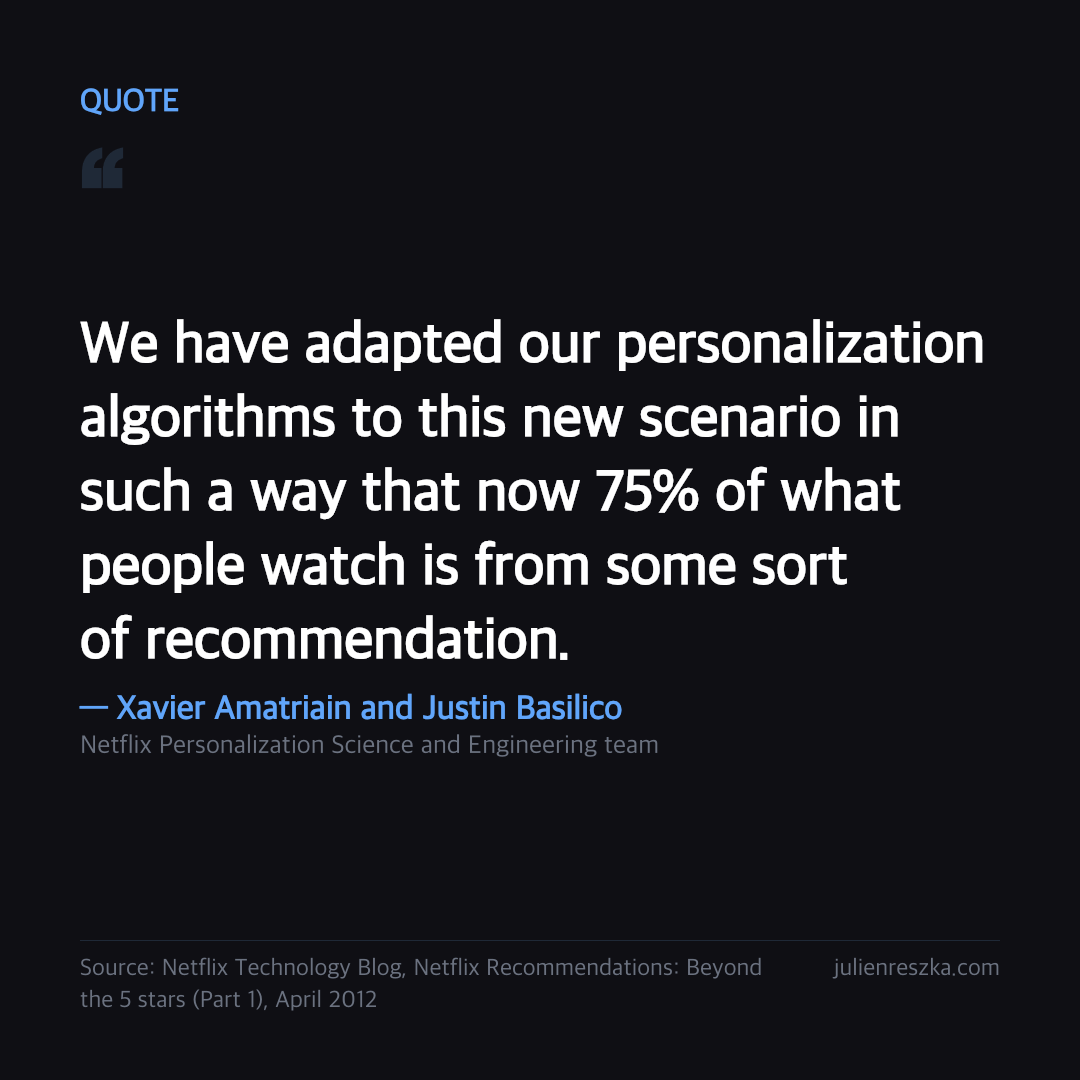
Netflix's recommendation algorithm is responsible for 80% of what users watch, not search, not browsing, not the new releases section, but the algorithm's guess about what you specifically will like next. This is not a coincidence: a product that feels like it knows you is harder to leave than one that treats you as a generic user. The personalisation can be explicit:
- settings
- preferences
- saved history
or implicit, where the app learns your patterns without asking. If privacy is a concern, all of it can be stored locally on the user's device rather than on a server. The personalisation works the same way, and the user keeps control of their data. But the underlying mechanism is the same: the more the product reflects your identity and behaviour back at you, the more expensive it becomes to switch away from it. You have not just invested time in the product; the product has invested in you. The practical version of this for any product is to find the one moment where a user thinks 'this thing gets me', like a playlist that feels curated for you, a recommendation that seems to read your mind. Design everything around creating that moment as early as possible.
Discussion
Yes. We lose 60% of users in the first three sessions. They never hit the moment where the recommendations get good. Going to surface a personalised view on day one instead of day five.
Same drop-off shape on our side. The 'this gets me' moment exists in our product but it's buried behind too much onboarding scaffolding.
Cut the scaffolding. Personalisation early is more valuable than an explainer tour.
The personalisation argument assumes users want to be known. In enterprise software, the 'this gets me' moment often triggers a security review: IT flags it, compliance adds it to the risk register, procurement asks where the data lives. The consumer stickiness model doesn't port cleanly into regulated industries.