 Julien Reszka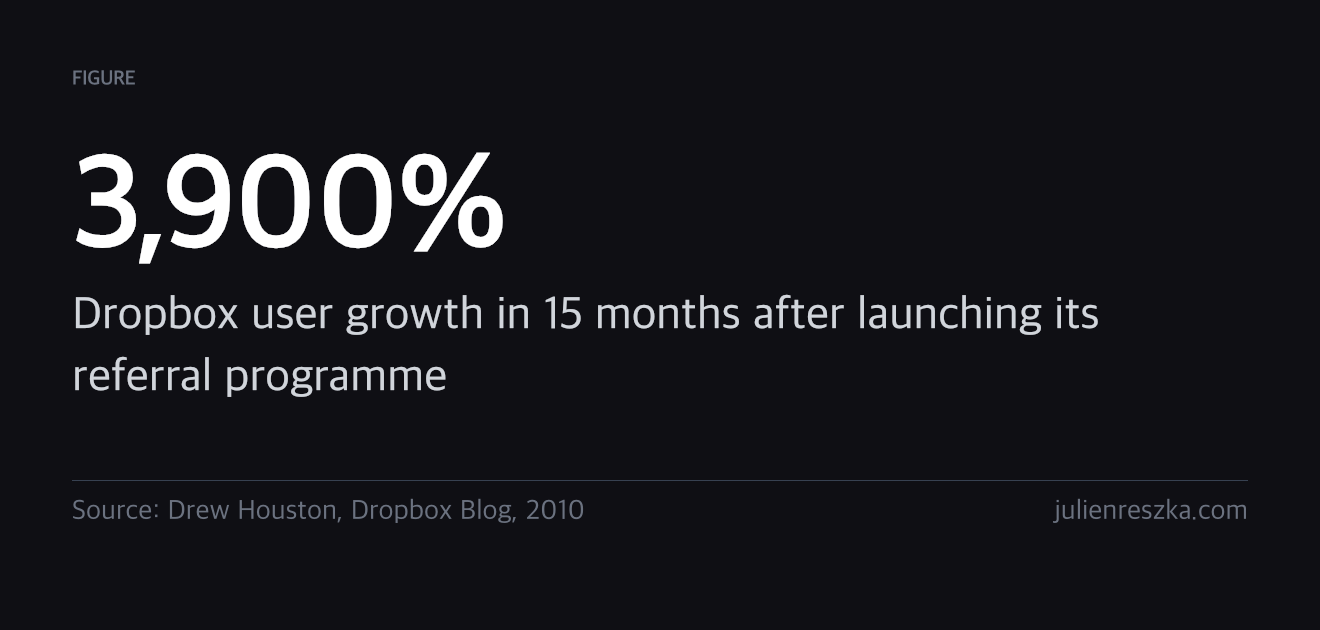
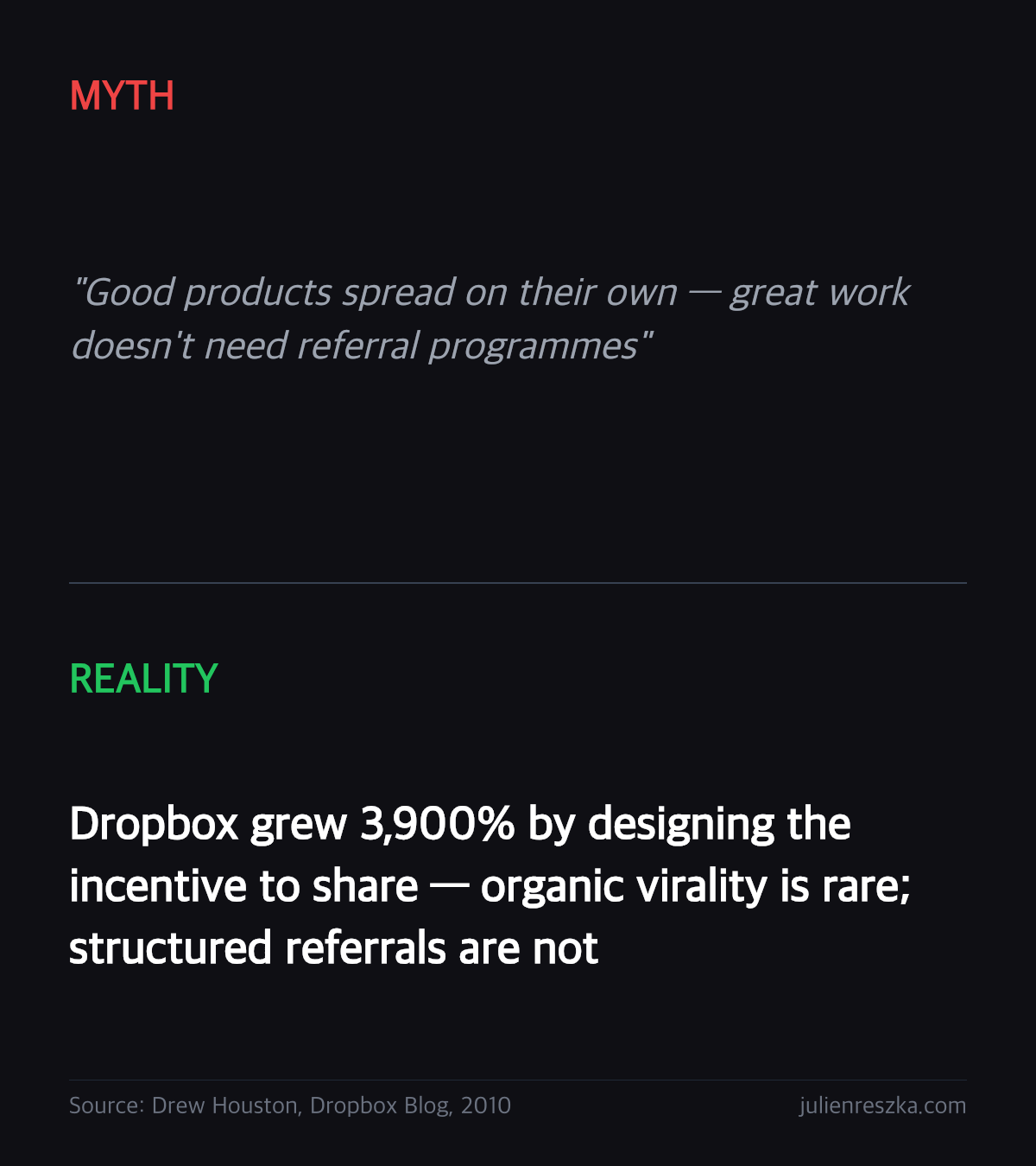
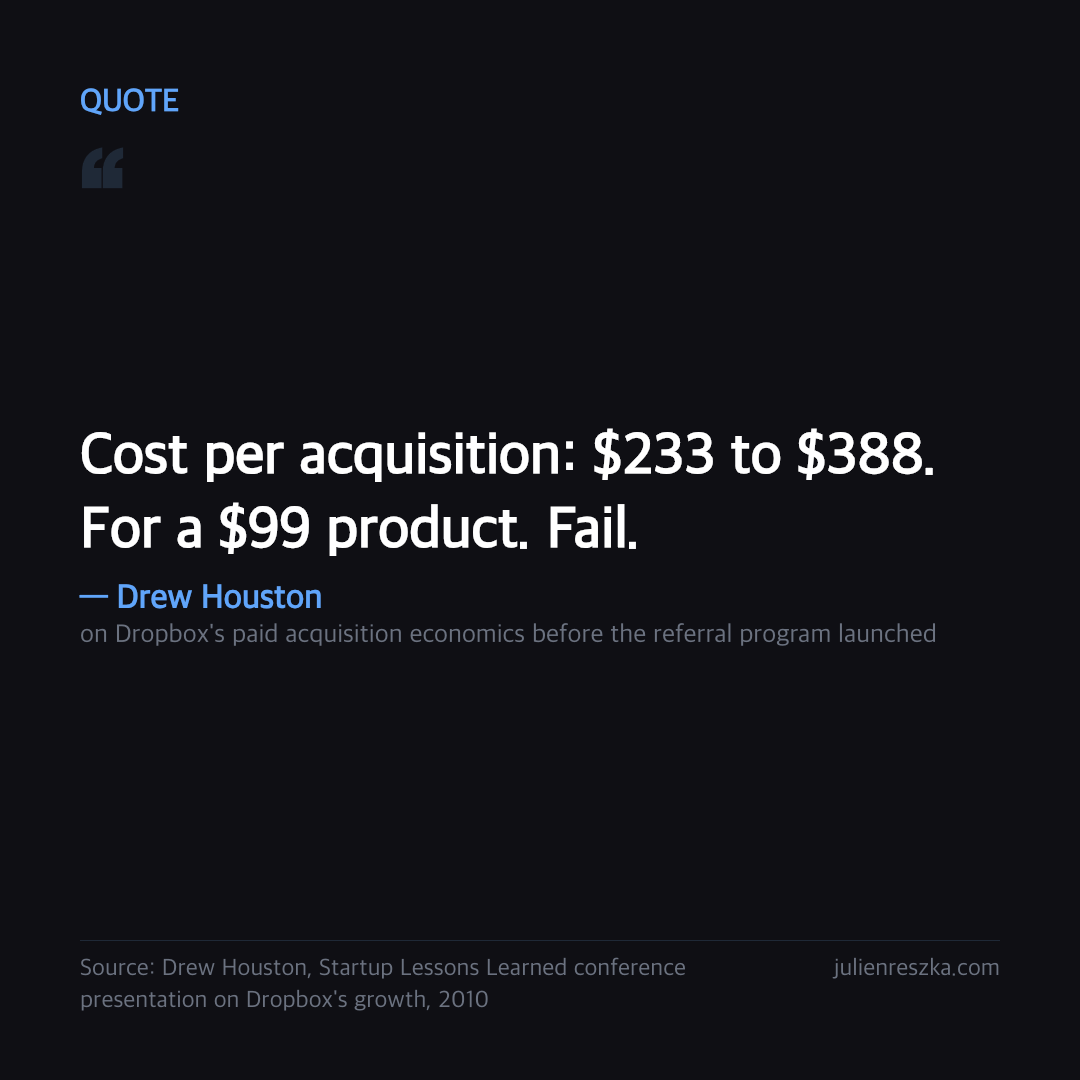
Dropbox did not grow because cloud storage is an inherently shareable idea. It grew because every user who referred a friend got more storage, and every friend who joined got more storage too. Sharing was not an altruistic act but a rational one. Before Dropbox introduced its referral programme in 2008, it was spending $388 on Google Ads to acquire each customer who had a lifetime value of $99. After the programme launched: 35% of daily signups came from referrals, and the cost per acquisition collapsed. The mechanism was not accidental. It was designed. A good referral programme:
- rewards both sides
- removes friction from the act of sharing
- ties the reward to the core value of the product (storage, in Dropbox's case)
If your product has a referral mechanism, it should feel like a natural extension of using the product, not a loyalty programme bolted on as an afterthought. Design the incentive before you design the ad.
Discussion
Yes. Tried a generic '$20 credit per referral' programme last year. Zero adoption. The post is right: the reward has to be the product, not money.
Same. Switched from cash reward to product credit tied to usage and conversion roughly doubled.
Calendly is the canonical example: every booking page is a tiny ad. Nobody at the company had to 'do marketing' for years.
Haven't built one yet and our CAC is killing us. Reading this as a sign to design the mechanic before the next ad spend.
Referral mechanics have saturated in SaaS. Users have been through enough 'invite a friend, get a month free' campaigns that the reflex is now suspicion rather than sharing. Our referral conversion dropped 60% over two years while we kept improving the incentive. At some point the mechanic itself signals that you're struggling for growth.