 Julien Reszka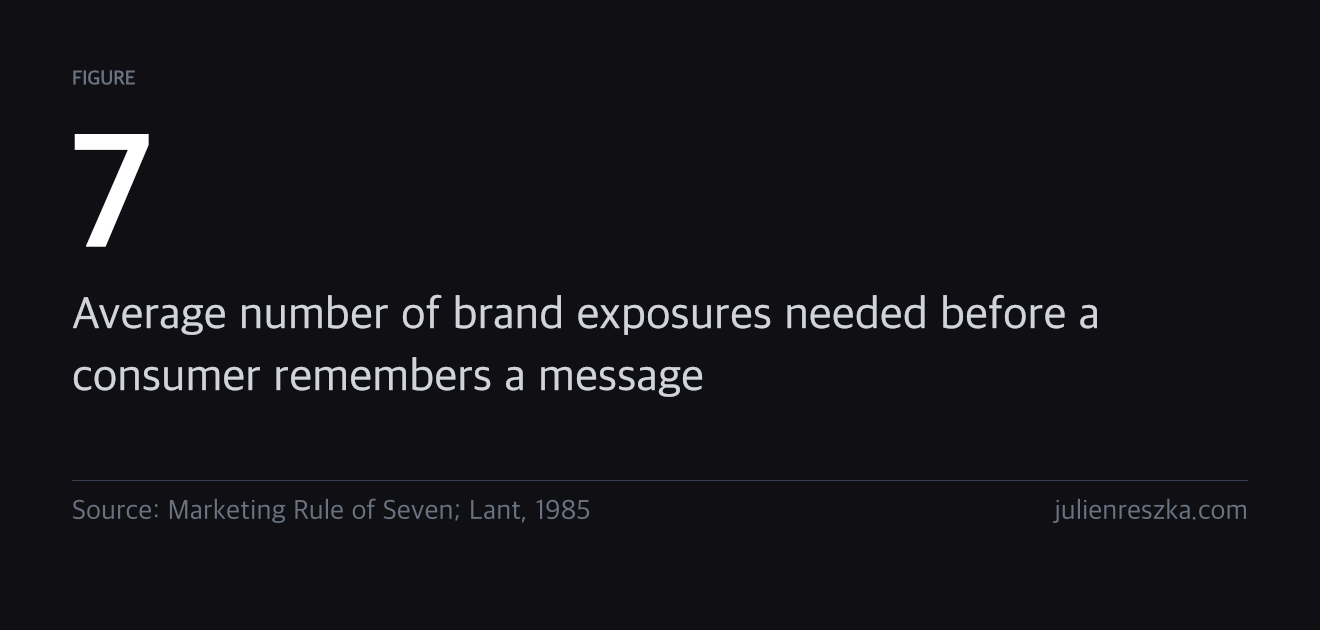
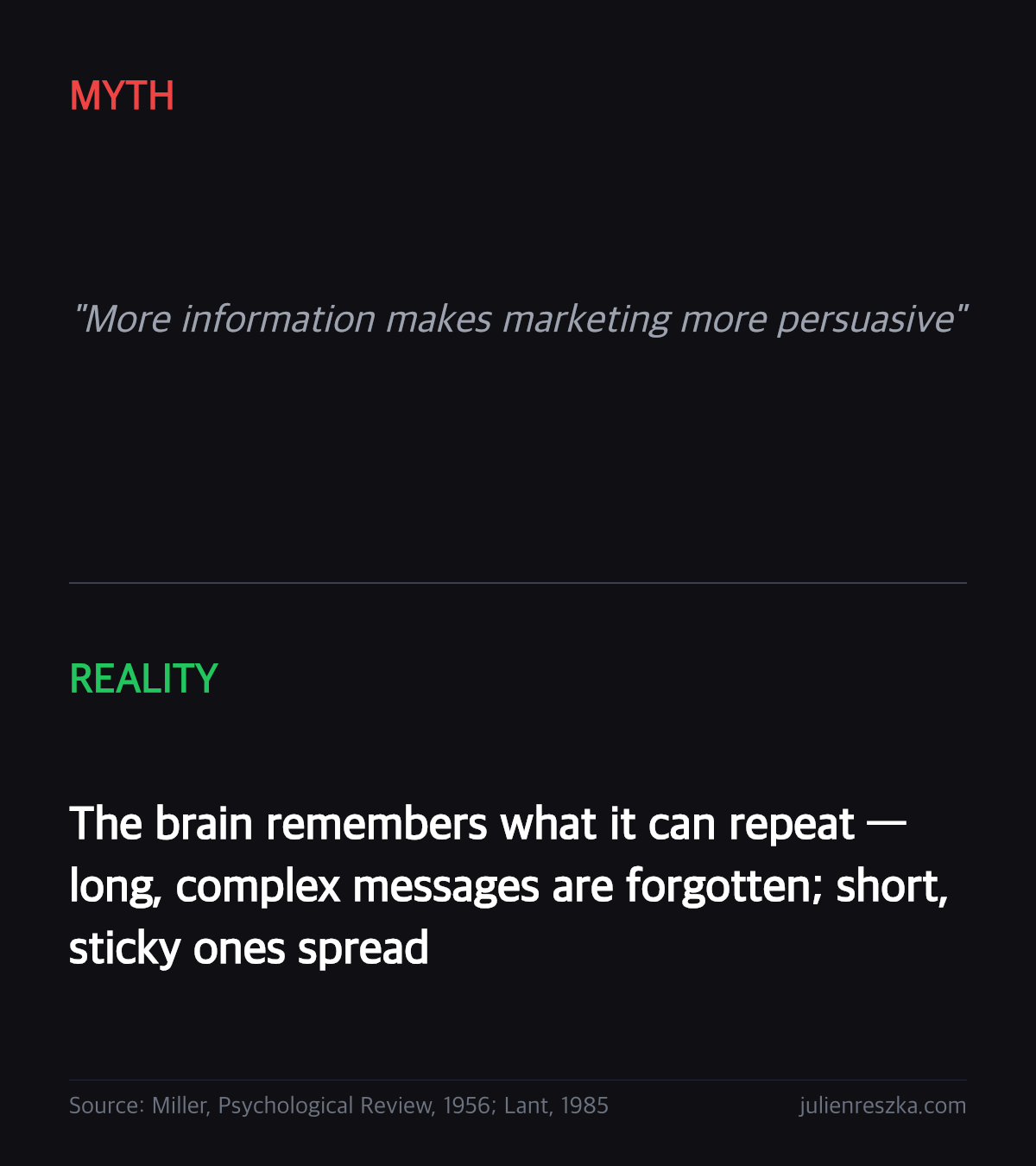
People share what they can remember, and they remember what they can say in one sentence. The marketing rule of seven, the idea that a consumer needs around seven exposures to a message before it sticks, exists because most marketing says too much. These are not infantilising; they are compression:
- a jingle
- a tagline
- a mascot
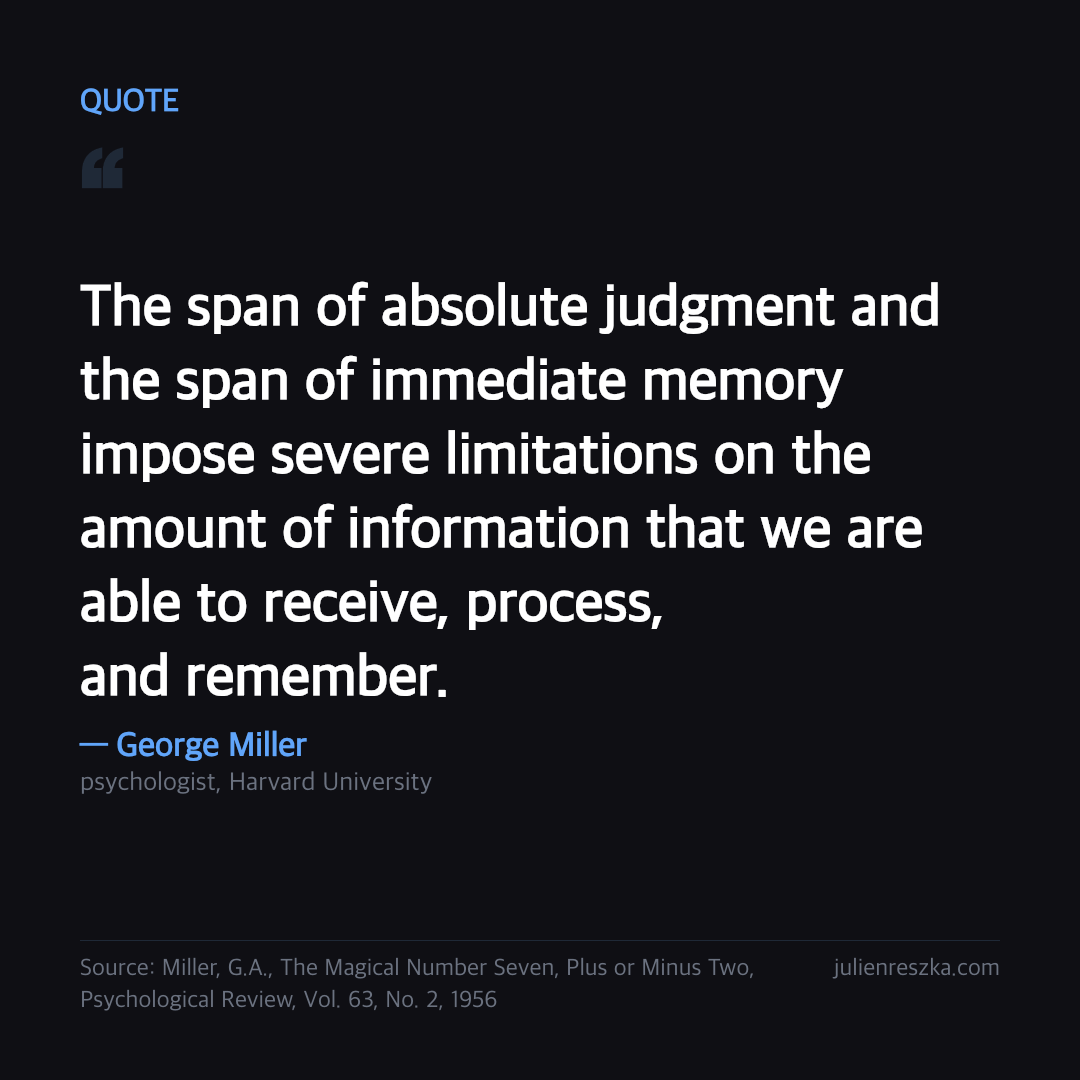
The more you compress a message without losing its meaning, the more likely someone is to repeat it correctly to someone else. George Miller's 1956 research on working memory established that the human brain can hold around seven items at once, which means every word you add to a message competes with every other word for a slot that was already full. The same principle applies to product naming, onboarding copy, and pitch decks: if the person you are talking to cannot explain your product to a colleague in thirty seconds, your marketing has not done its job. Cut until there is nothing left to cut, then check whether what remains is still true and still interesting.
Discussion
Yes, I pitched my product to a friend last week and she repeated something back that bore no resemblance to what I'd said. The compression problem is mine, not hers.
Our deck is 47 slides. Our investors can't repeat the pitch back to us. Going to cut to one sentence this week and see what survives.
Cut hard. If it survives the cut and still feels true, that's your real pitch.
One-sentence compression works for broad consumer products. For deep technical tools (compilers, ORMs, security frameworks), the buyers who matter are exactly the ones who distrust oversimplification. A one-sentence pitch for PostgreSQL would drive away the engineers evaluating it seriously. Sometimes the complexity is the credibility signal.