 Julien Reszka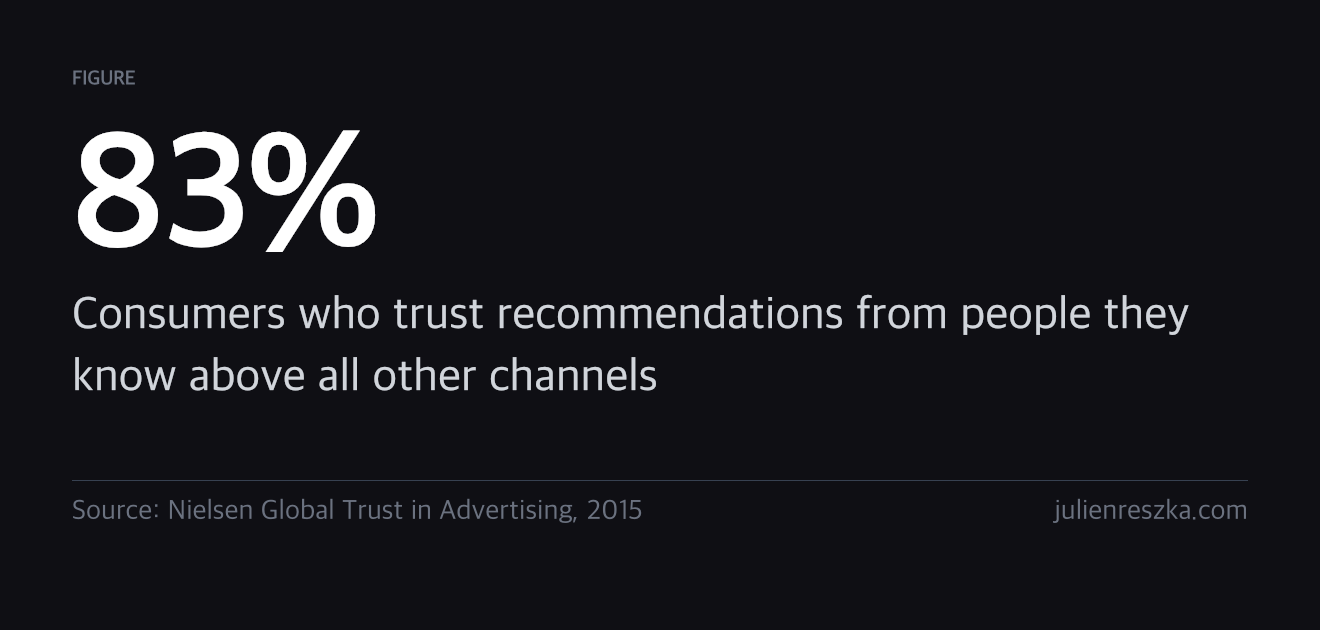
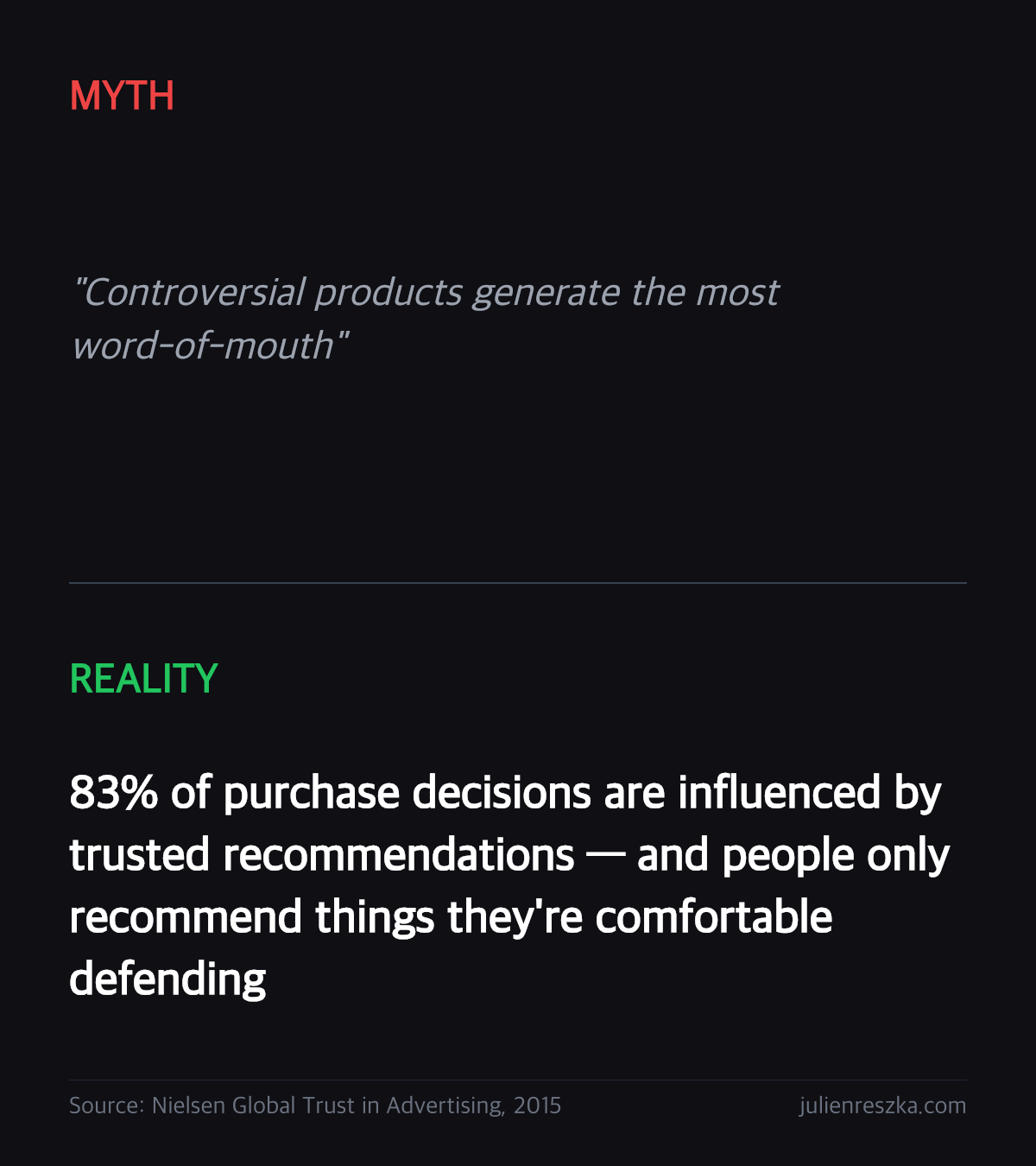
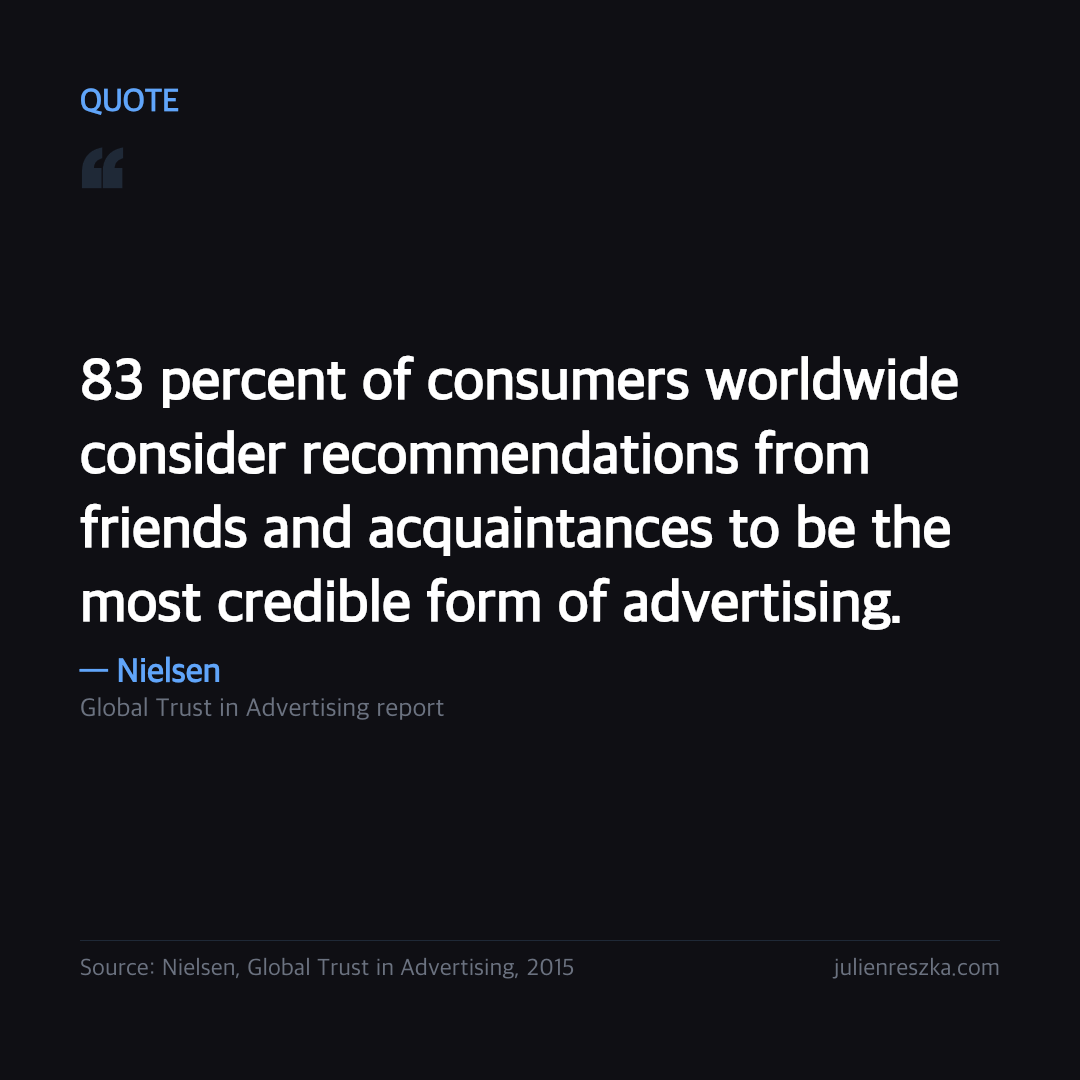
Eighty-three percent of purchase decisions are influenced by recommendations from people the buyer already trusts, making word-of-mouth the most powerful acquisition channel available. But people only recommend things they are comfortable being associated with. A product that is politically contentious, socially niche, or professionally risky to endorse gets filtered out of the recommendation pool, regardless of how good it is. The reusable water bottle, the creative writing course, the useful browser extension: these spread partly on merit and partly because recommending them reflects well on the person doing the recommending. The design implication is to audit every aspect of your product for social risk:
- Would a doctor recommend it to a patient?
- Would an employee bring it up in a team meeting without hesitation?
If the answer is no, the growth channel is blocked at the source. Removing the social risk of recommending is as important as making the product worth recommending in the first place.
Discussion
Yes. We have NPS in the 60s and basically zero referrals. The audit framing made me realise the pricing page is the blocker: recommending us makes the buyer look like they overpay.
We have the opposite problem: the brand looks too cheap to recommend internally. Same effect, different cause.
Yes. A doctor literally told us last quarter she liked our product but couldn't recommend it because the marketing copy felt 'unserious'. We've been editing copy ever since.
Therapy apps, rehab tools, medication management platforms: all fail the work-meeting test, yet all have built large businesses. The word-of-mouth still happens, just inside the community that has the problem rather than across professional networks. BetterHelp didn't rebrand therapy and still grew to a billion-dollar company.