 Julien Reszka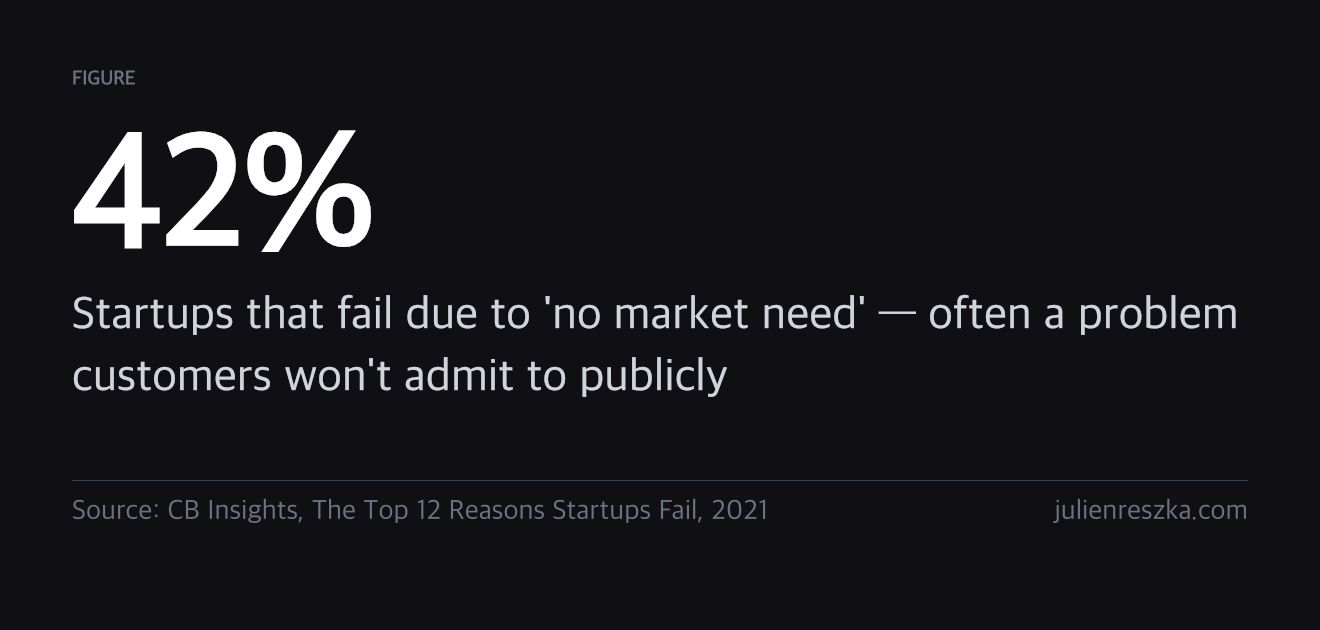
Strong retention with zero referrals is not a mystery. It is a diagnosis. CB Insights finds that 42% of startups fail citing 'no market need,' but a meaningful slice of those are not solving fake problems. They are solving real problems that real people have but will not say out loud. The customers stay. They just never bring you up at work.
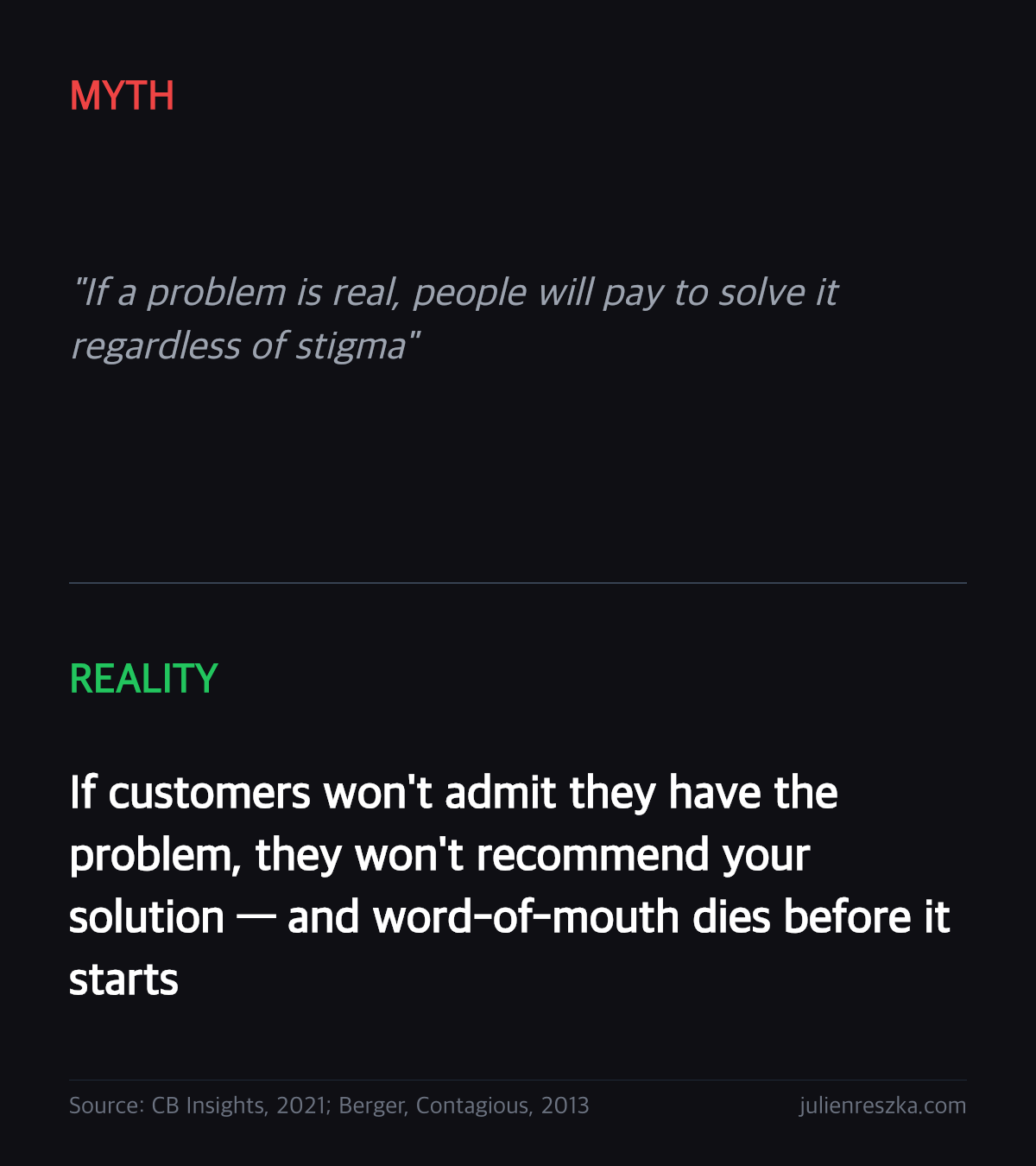
The test is behavioral, not attitudinal. When a prospect says 'that's interesting' instead of 'how soon can I have it,' they have already filed your product under 'things I would not mention in a meeting.' Interesting means unspoken. You can run the same test in reverse: would your target customer mention using your product in a work meeting without hesitation? If the answer is no, word-of-mouth is structurally unavailable to you. Not slow, not blocked, not fixable with better marketing. Structurally unavailable.
The exception is real but narrow. Some products solve embarrassing problems and still scale through paid acquisition plus unusually strong retention economics (think anonymous communities or therapeutic apps that converted stigma into a badge via reframing). Headspace did this deliberately: meditation was hippie-adjacent until they repositioned it as a high-performer productivity habit. The problem did not change; the framing made it safe to admit. That path exists, but it requires reframing the problem statement, not just the product.
Contrast this with the failure mode that looks safe: a product with a respectable, mentionable value proposition that is too niche to come up naturally in conversation. A B2B tool for one narrow compliance workflow passes the embarrassment test and still dies quietly, because nobody thinks to mention it. There is no moment where recommending it makes the recommender look good or feel generous. Admissibility is necessary but not sufficient.
When you fail the work-meeting test, you have three choices, and the honest answer determines which runway math applies:
- Reframe the problem statement. Quote customers admitting it in their own words: on your landing page, in your pitch, in onboarding. If enough say it privately, someone will say it publicly.
- Change the target customer. Find the segment where the same problem is public: the person who talks openly about what your current customers hide.
- Accept paid-only and build accordingly. High LTV, low churn, sustainable CAC makes it a business. Without those, it is a treadmill.

Discussion
Yes. My product solves something people use privately every week and would never mention at work. Retention is great, referrals are zero, and the work-meeting test just diagnosed why in one sentence.
Same issue from the other end: we solve something embarrassing and our only growth channel is paid. CAC keeps climbing. The honest answer is that paid is not a strategy, it's a treadmill.
Exactly where I am. Either reposition so it's safe to recommend or accept paid-only forever.
Yes, and the giveaway is when prospects say 'oh that's interesting' instead of 'how soon can I have it'. Interesting = unspoken. We killed two products on exactly that signal.
We rewrote our landing page from 'we help X do Y' to literally quoting customers admitting the problem. Conversion 2x'd in a week.
Counterpoint: gambling, tobacco, and alcohol are enormous industries built on problems nobody mentions in a team meeting. The work-meeting test would have killed all three. Some of the largest markets are precisely the unmentionable ones. The question isn't whether referrals work but whether you need them to survive.