 Julien Reszka
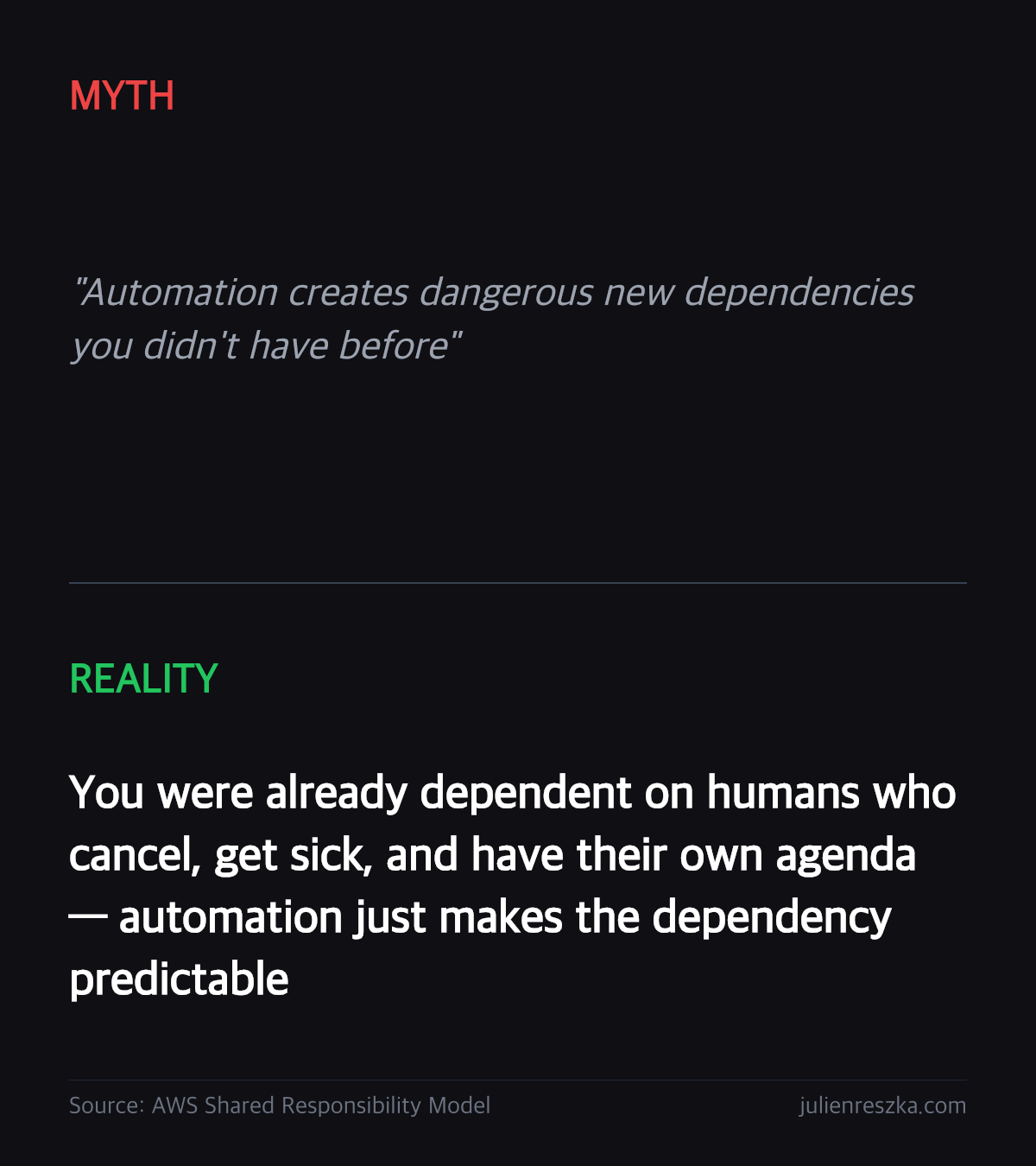
You were already dependent before automation:
- the contractor who does not pick up on Fridays
- the IT department that closes tickets in three weeks
- the supplier who decides your order is not worth prioritising
Automation does not introduce dependency; it swaps an unpredictable one for a predictable one. A system that runs your invoicing at midnight on the first of the month does not have a bad day, does not go on holiday, and does not decide it has a better offer. The people who resist automation on the grounds that it creates reliance on machines have not noticed how much reliance on other humans they are already carrying, and how little of it was ever in their control.
Discussion
Yes. Our CTO blocked an invoicing automation for a year citing 'dependency risk' while we were already dependent on a contractor who replied in 5-day cycles. This reframe finally moved him.
Same pattern everywhere. The human dependency is invisible because it's familiar, not because it's reliable.
Yes. Doing the audit you suggested: every human in our critical path. Already found three I can replace with a script this quarter.
Human dependencies have properties automated systems don't: they improvise, negotiate, and catch errors you didn't know you were making. The contractor who replies in five-day cycles will also notice the invoice is for the wrong entity. The automation sends the wrong invoice on time, every time.