 Julien Reszka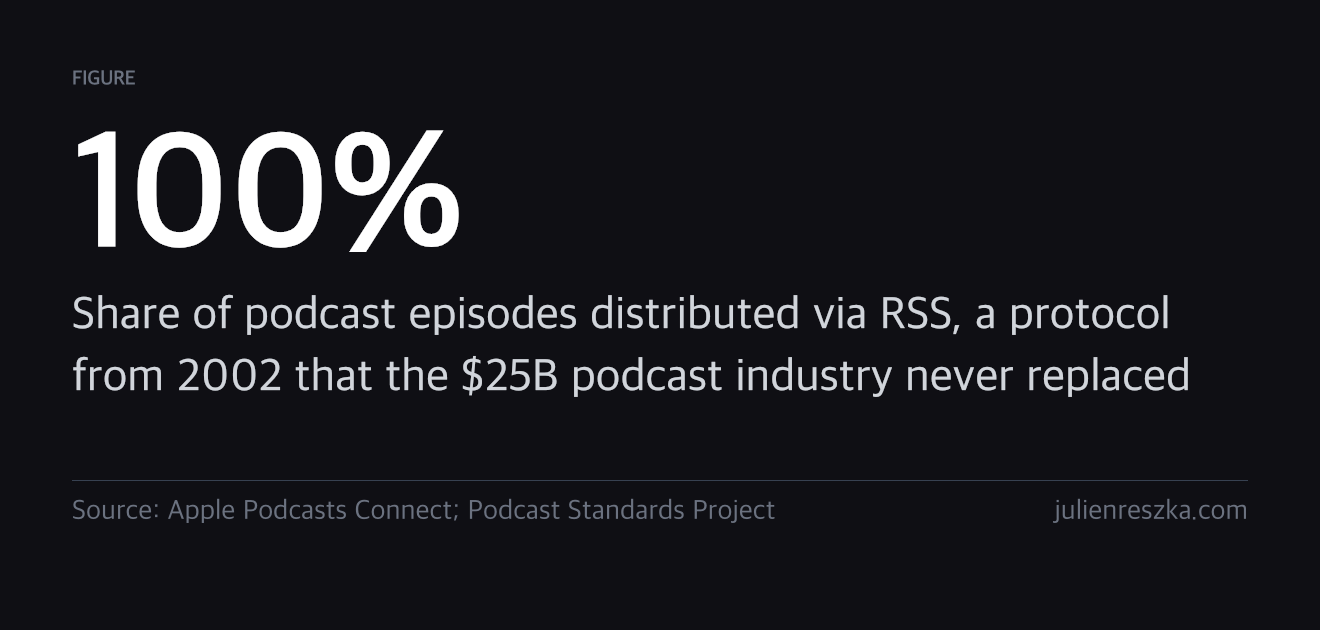
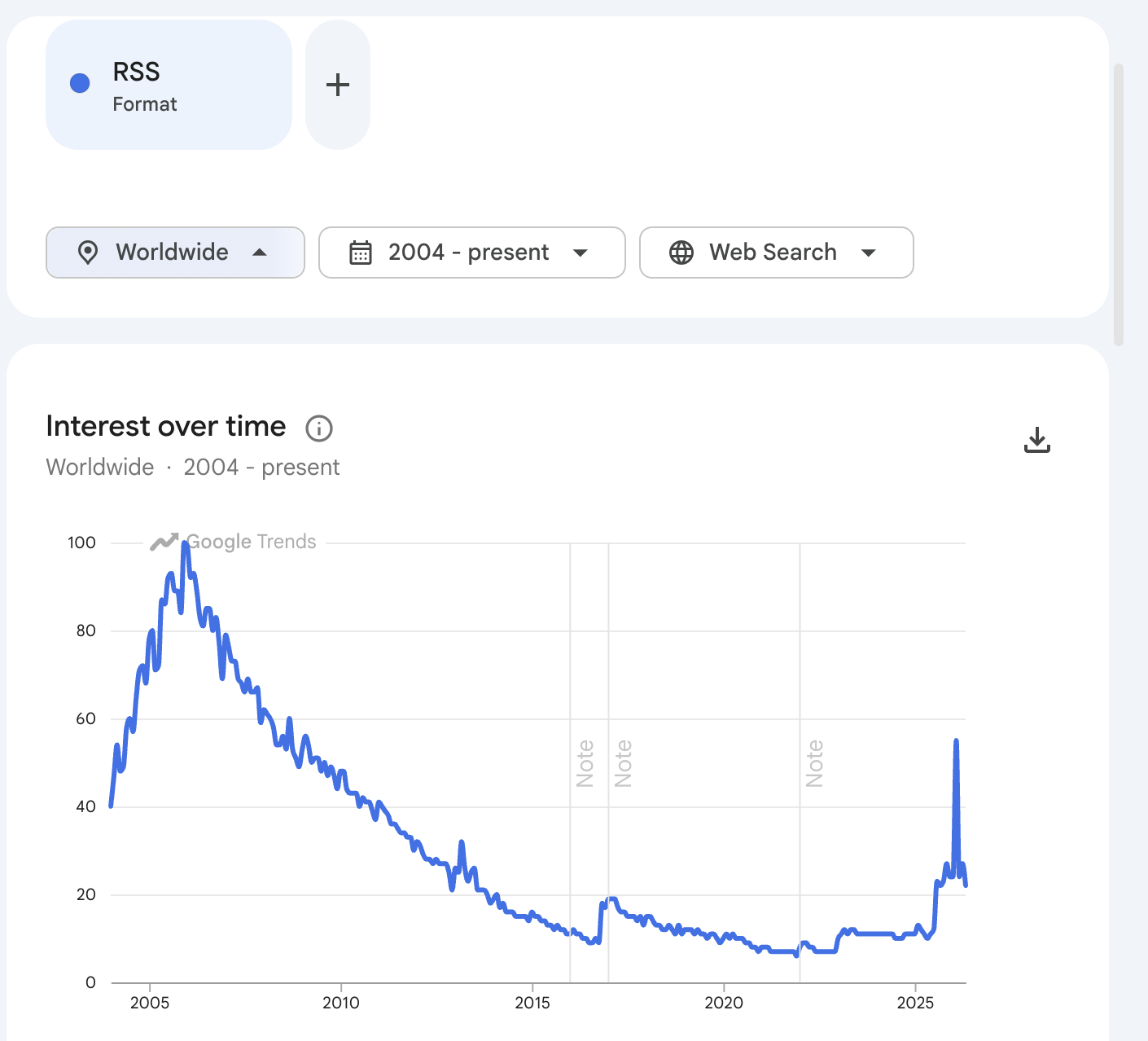
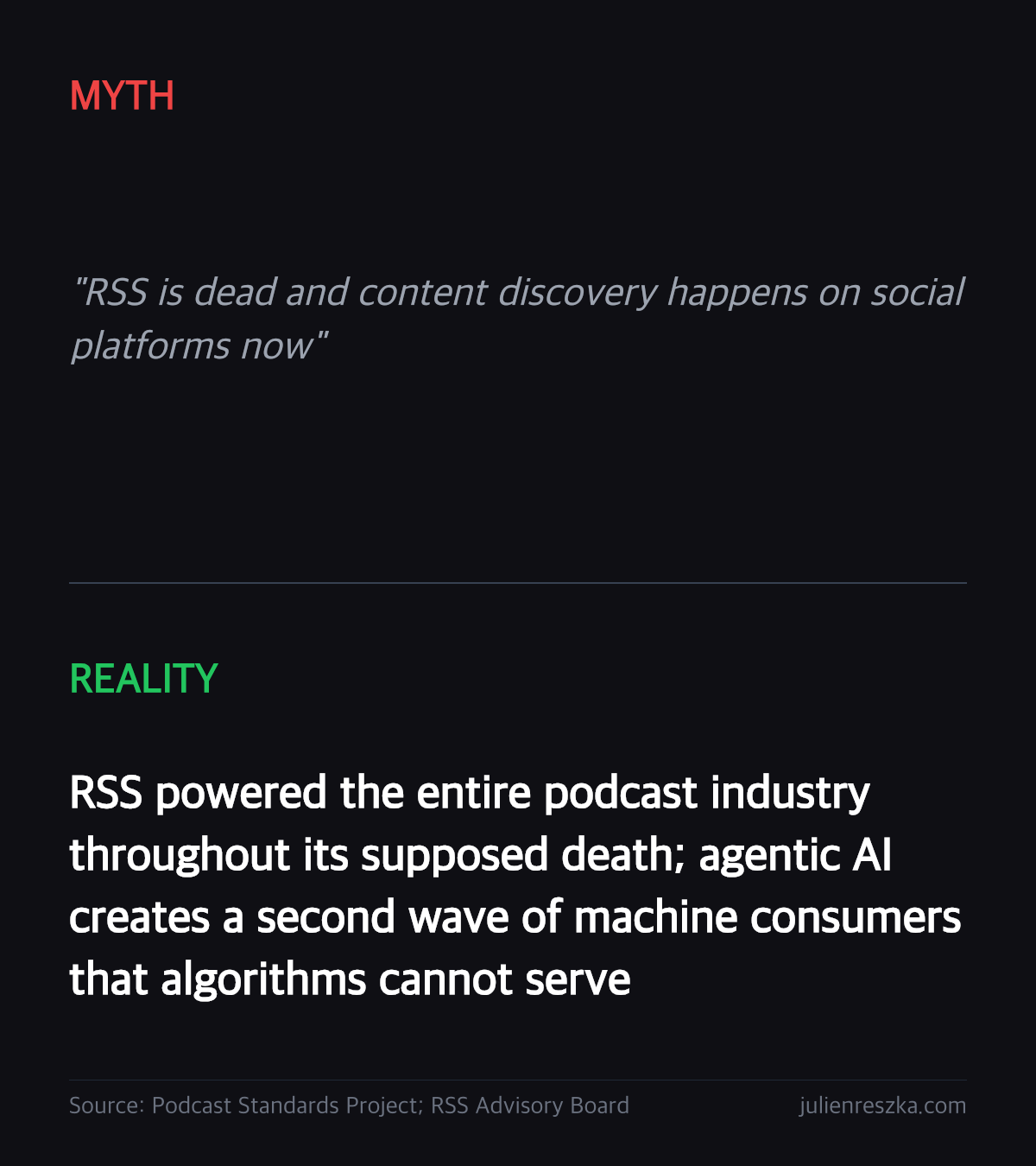
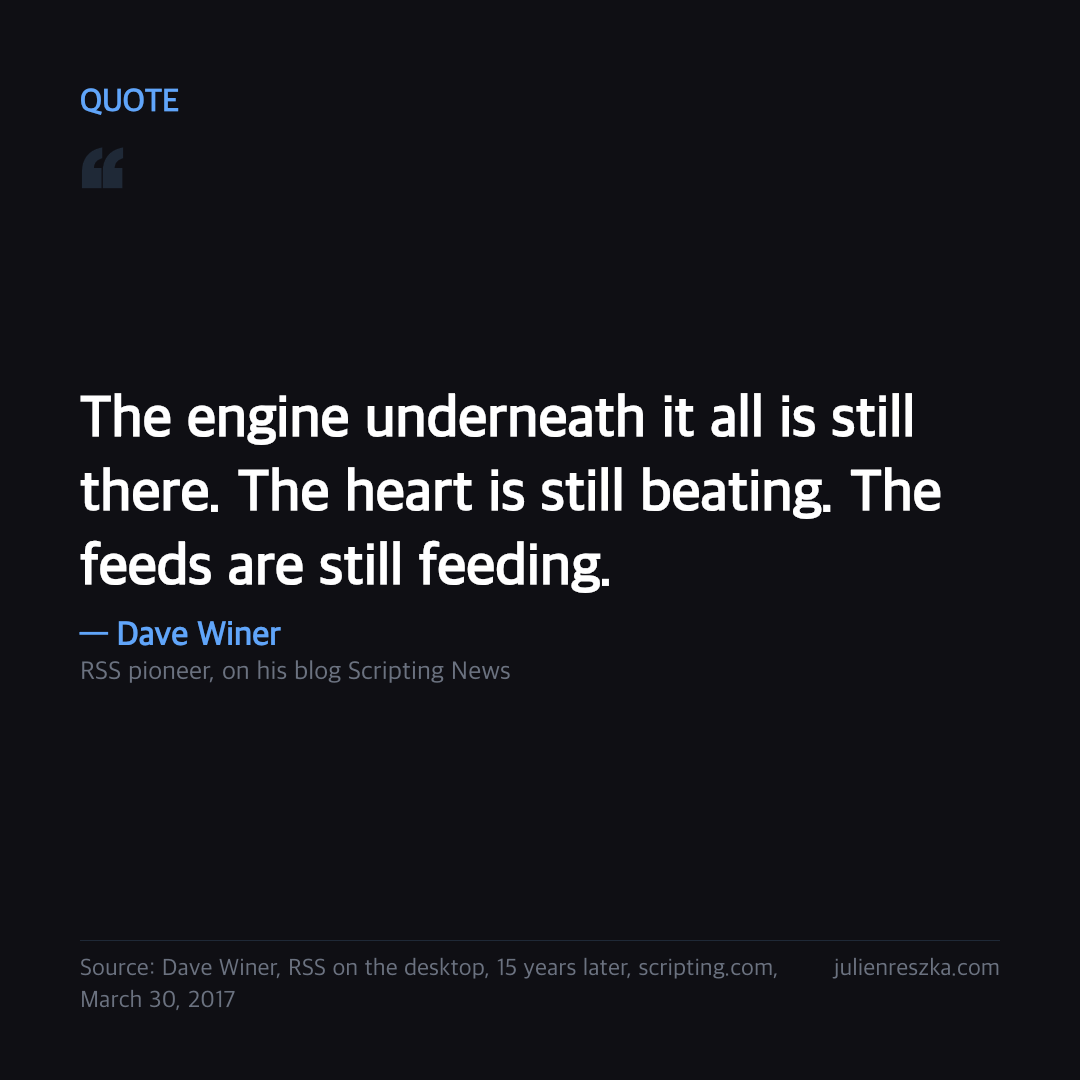
RSS was declared dead in 2013 when Google shut down Reader. The eulogies were premature and wrong about the cause. RSS never stopped working. It stopped being the primary way humans discovered content, because social algorithms offered something RSS could not: the addictive randomness of a variable reward schedule. Humans find that irresistible. Agents do not.
An AI agent that monitors competitor releases, tracks regulatory changes, or summarises research does not want to be surprised. It wants:
- a deterministic list of what is new
- a structured format it can parse without guessing
- no rate limits tied to an advertising relationship
- no authentication wall protecting public content
RSS provides all four. Social platform APIs provide none of them. When they do, they revoke access on a quarterly basis and charge for it. An RSS feed is pull-based, open, and consistent in a way that no algorithm is designed to be, because an algorithm's job is to be inconsistent.
The clearest evidence that RSS was never really dead is podcasting. Every podcast app (Spotify, Apple, Overcast, Pocket Casts) pulls episode files and metadata from RSS feeds. The $25 billion podcast industry runs on a protocol published in 2002. Nobody disrupted it because there was nothing to disrupt: open, free, no middleman, nothing to negotiate access to. The episode is at the URL in the feed, always has been.
The same logic will now extend to any written content that agents need to reliably consume. A language model retrieving context for a user query, a monitoring agent checking for new filings, a summarisation tool ingesting newsletters: all of them benefit from a predictable, structured, chronological list of new content. That is all RSS is. The question is whether your content is reachable that way, or whether it lives inside a system that was designed for human attention and actively degrades programmatic access.
Discussion
Yes. Building a competitor monitoring agent for a client this week. The sites that have RSS feeds take thirty seconds to wire in. The ones without them require fragile scraping rigs that break on every redesign. The delta in reliability is enormous.
You have exactly hit the problem, though. If your competitors find out that their RSS feeds allow you to take their content easily, won't they pull them? If you make your content easily machine-digestible then you allow your content to become commodified, taken and used to give value to someone else. Some people love that because they just want to be heard (people are listening to my podcast!), some people love that because getting content out in any way is the aim (people are listening to our podcasts with sponsors mentioned every few minutes!), and many many people hate it (oh good, we have sent reporters out and edited our newspaper and this AI is just stealing all the content).
Pushback: agents can scrape just as well as they can parse RSS. If a page loads HTML, a capable agent retrieves it. The structured feed argument assumes agents are too fragile to handle real web pages, which is increasingly not true.
Scraping works until the site adds a CAPTCHA, changes its markup, or starts blocking known agent user agents. RSS is deterministic by design: the publisher controls what's in it and it doesn't break when the homepage gets redesigned. The bigger issue is maintenance: scraping fragility scales with the number of sources. Wire in ten sites via scraper and you have ten failure modes to babysit. Wire in ten RSS feeds and you have near-zero maintenance once they're set up. That's the economic argument for any dev building a monitoring agent at scale.
Added an RSS feed to our newsletter three weeks ago after reading about agents that aggregate niche technical content. Two aggregators picked it up automatically within a week without us doing anything. The feed was the distribution.
I use RSS myself! However, I like it mostly for accessibility and archival reasons.