 Julien Reszka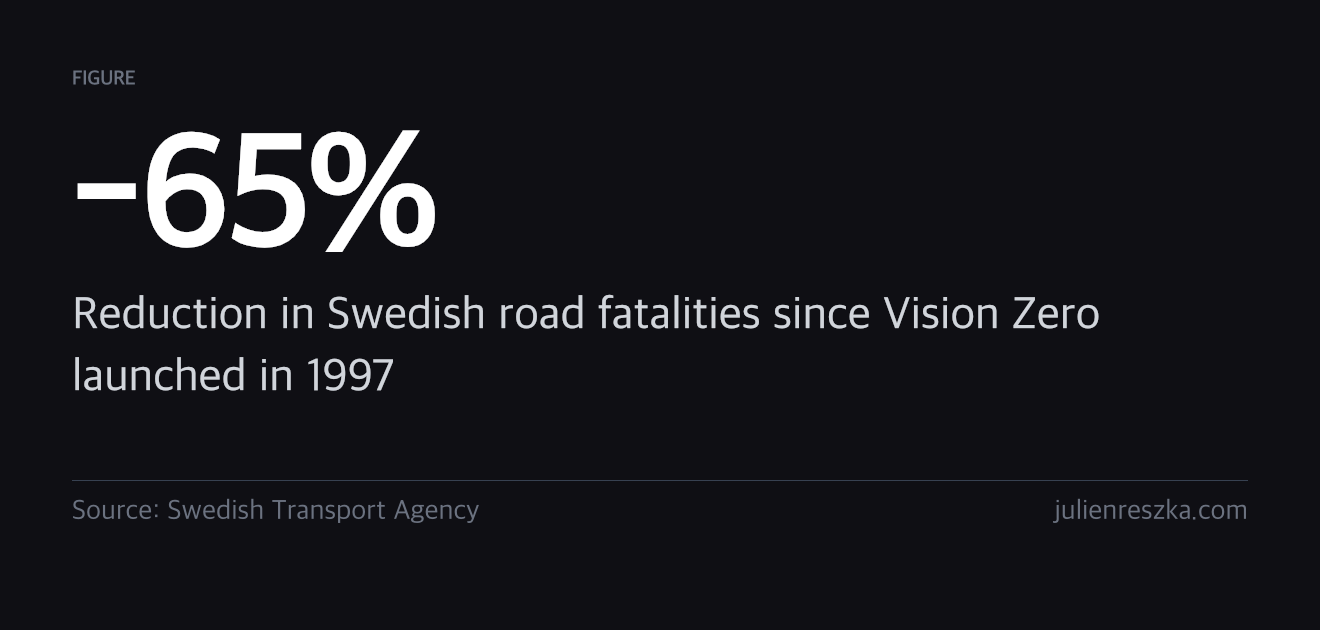
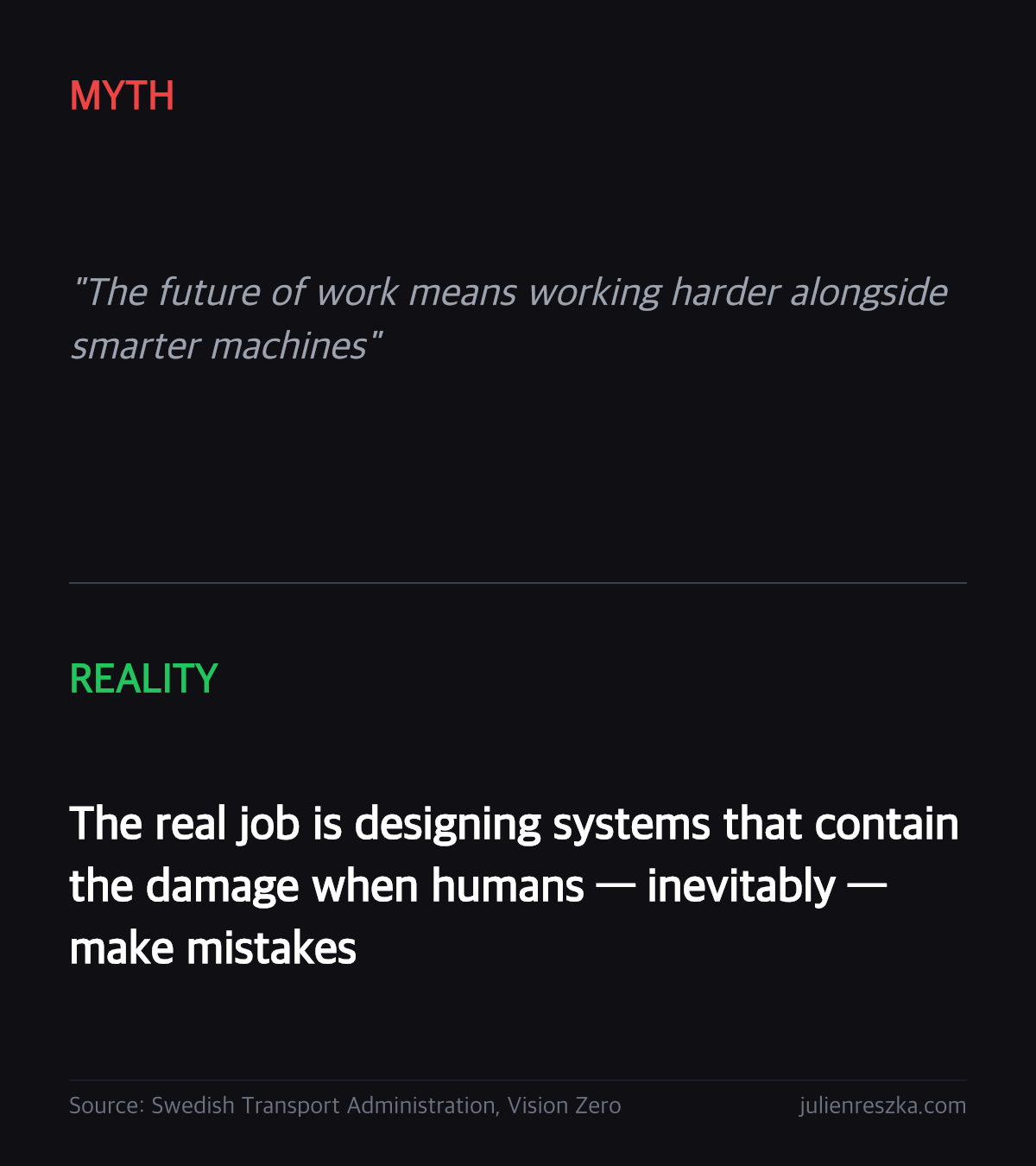
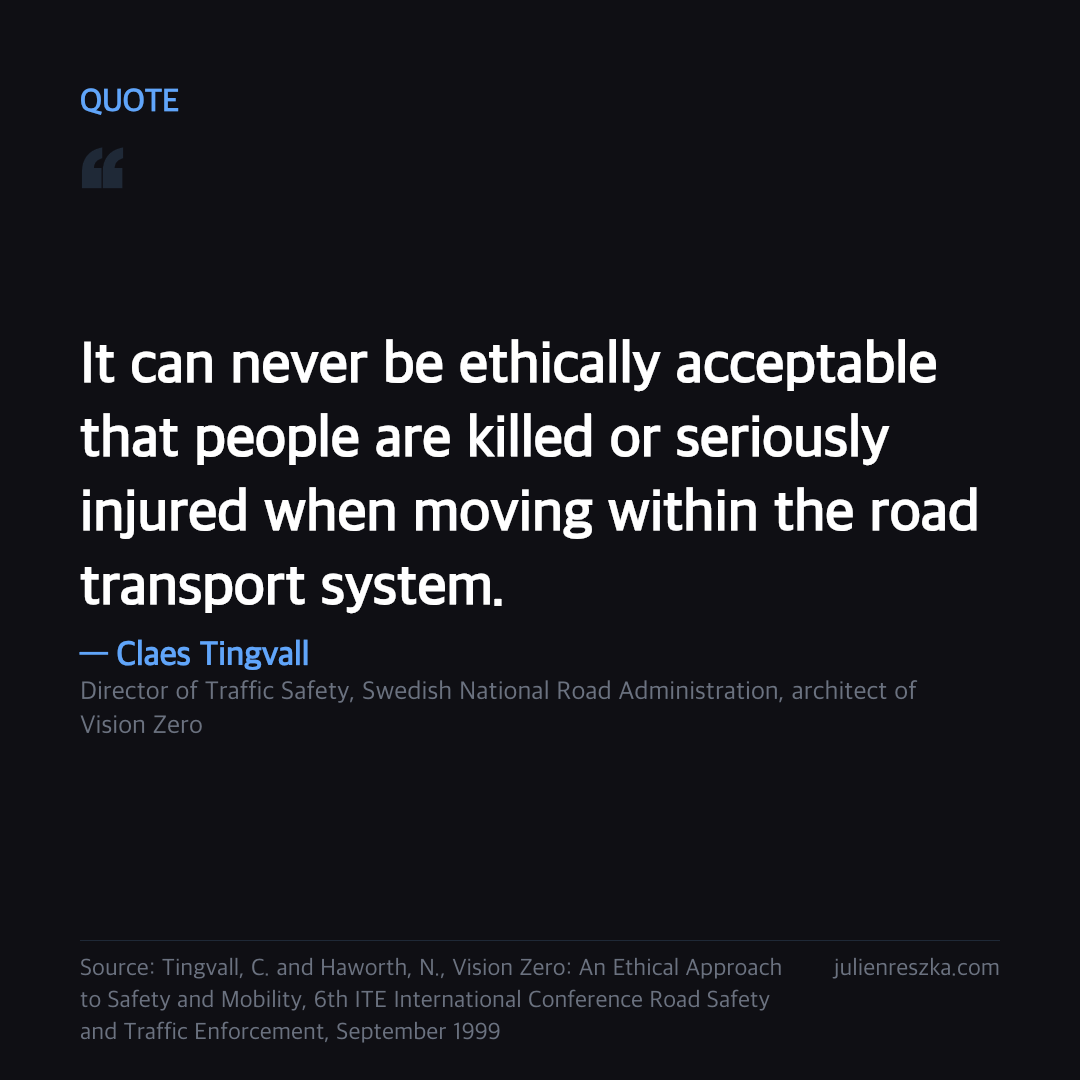
The coming shift in work is not about working more, it is about working less in the right way, staying out of the path of autonomous agents long enough for them to be useful, while taking on a different kind of responsibility: designing systems that assume human error and contain its consequences. Sweden's Vision Zero road safety programme is the clearest model for this: rather than expecting drivers to be perfect, engineers redesigned roads so that mistakes could not be fatal:
- roundabouts instead of intersections
- barriers between lanes
- speed limits set by physics rather than optimism
AWS formalised the same logic for cloud infrastructure with its shared responsibility model, which draws a hard line between what the platform guarantees and what the user must handle, so neither side is surprised when something breaks. The worker of the future is less an executor and more a system designer who asks, before anything goes wrong, how bad can this get if someone does the wrong thing, and then makes the answer as small as possible.
Discussion
Yes. We've been trying to fix human errors with more training and it never sticks. Redesigning the process so the bad outcome is impossible is a completely different conversation.
Yes. Trying to draw the shared-responsibility line between our team and the autonomous agent we deployed last month. Clarity on who owns what when it breaks is missing and it's hurting us.
Write the line down explicitly. The act of writing it surfaces every gap.
Hard agree on the second half. The hardest part of my week is figuring out what to do, not doing it. AI tools that help me decide what's worth doing would matter ten times more than tools that help me do it faster.
The Vision Zero analogy is imperfect in one key way: road engineers can enforce physical constraints. You literally cannot drive fast through a roundabout. Software has no equivalent: any guardrail I design can be bypassed by someone with deploy access. The damage-containment goal is right, but the forcing functions available in software are much weaker than in road design.