 Julien Reszka
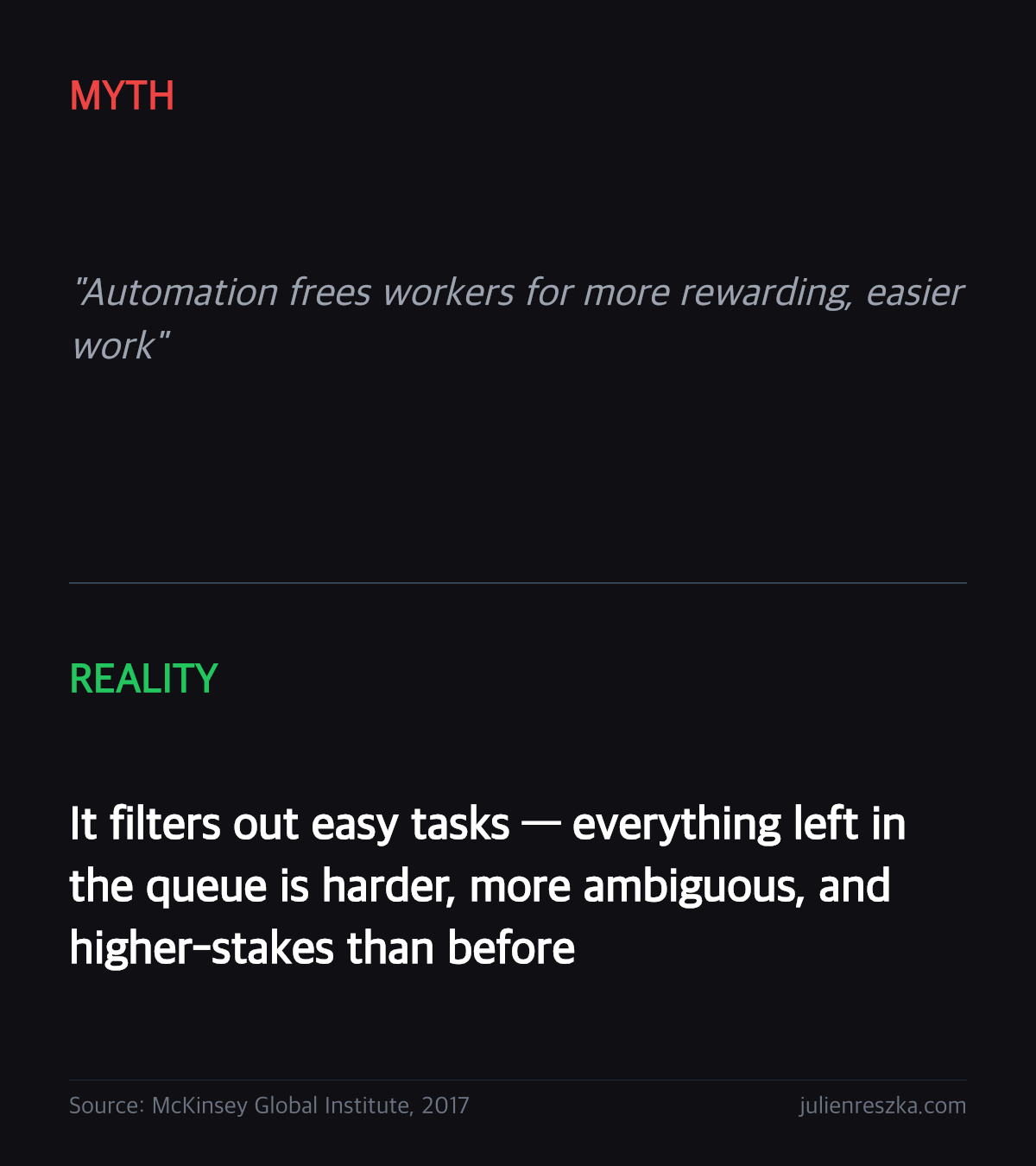
The optimistic case for automation is that it handles the tedious work and gives people time to do what they are actually good at, but this assumes that hard and easy tasks arrive in equal measure, and that once the easy ones are gone you have breathing room. What actually happens is that automation raises the floor on what counts as a human task: anything a machine can do reliably stops coming to you, which means everything left in your queue is something a machine could not handle, which means your average day gets harder, not easier. Employee well-being data reflects this: automation has not reduced workplace stress, it has concentrated it, because the work that remains is precisely:
- ambiguous
- high-stakes
- emotionally demanding
The promise was more time; the result was a harder residual. What you can do is stop waiting for automation to sort your queue and instead choose to work on the hard problems before they become the only problems left. The people who will do well are not the ones who avoided difficult work. They are the ones who sought it out early enough to get good at it.
Discussion
Yes. The easy half of my job is gone and what's left is the ambiguous, political, high-stakes work that wears me out by Wednesday.
Same shape. The work I'm best at got automated and I'm now full-time on the work I avoided. Trying to get good at it on the job is brutal.
That's the lesson the hard way. Seek out the hard stuff before it becomes the only stuff.
The harder work is also more valuable. Engineers handling ambiguous, high-stakes decisions command significantly more than the ones who handled routine tickets. I'm more worn down by Wednesday than two years ago, but I'm also paid more and have more actual leverage. The concentration of difficulty isn't only a cost.