 Julien Reszka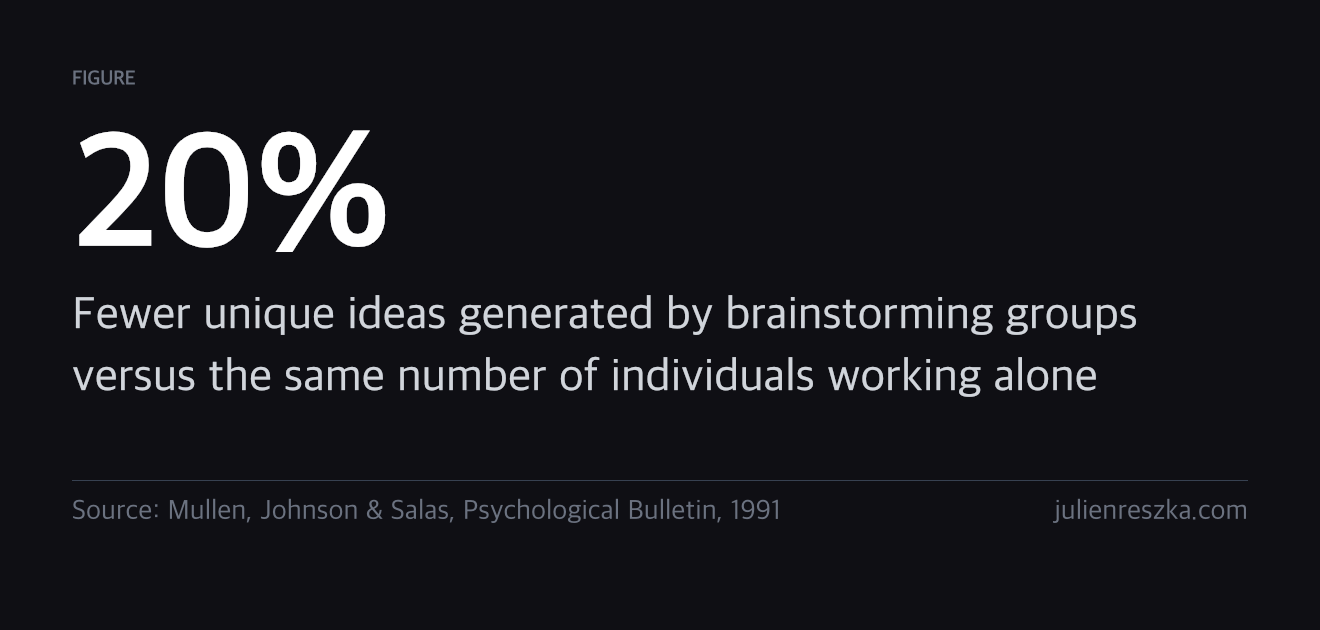
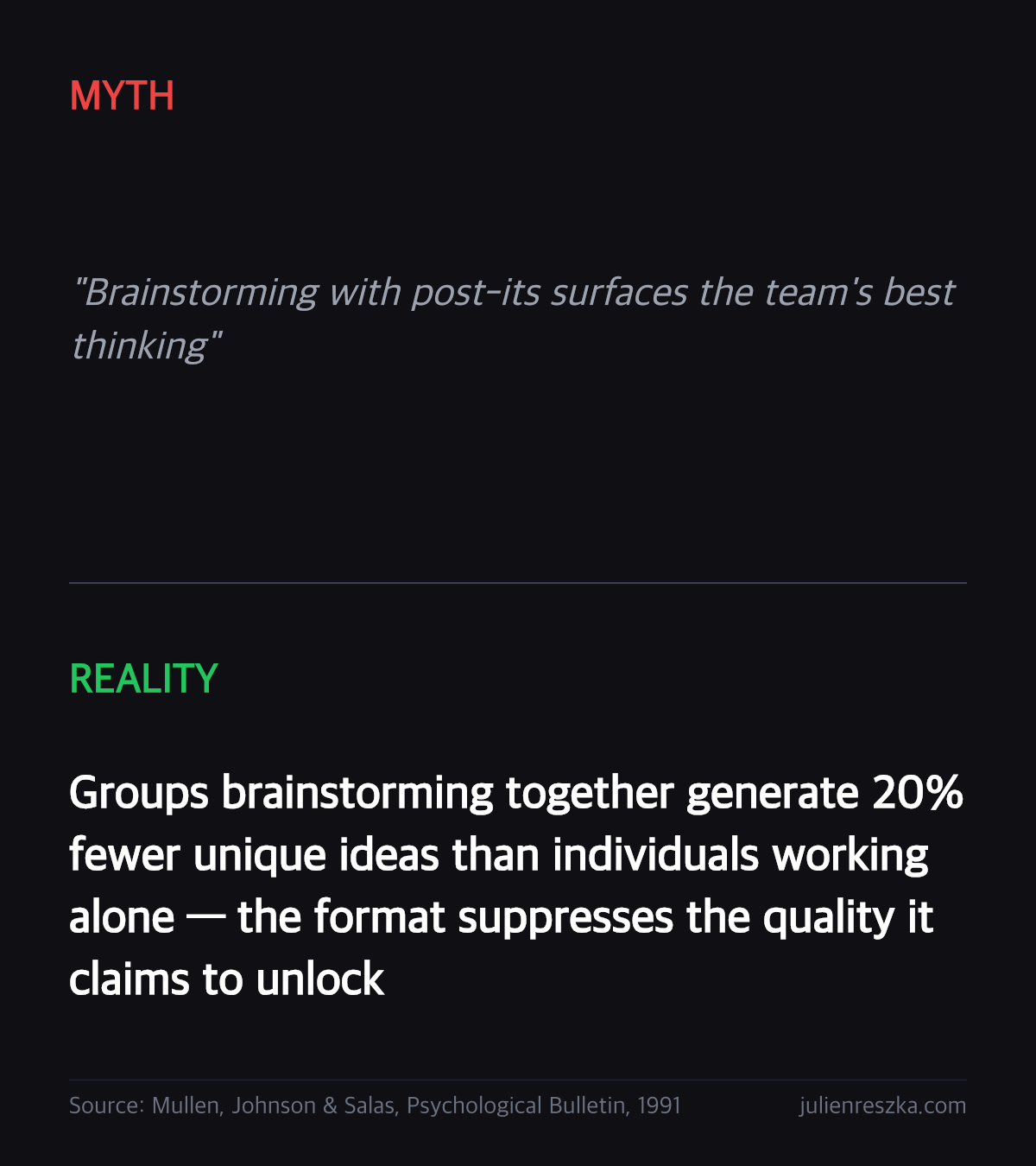
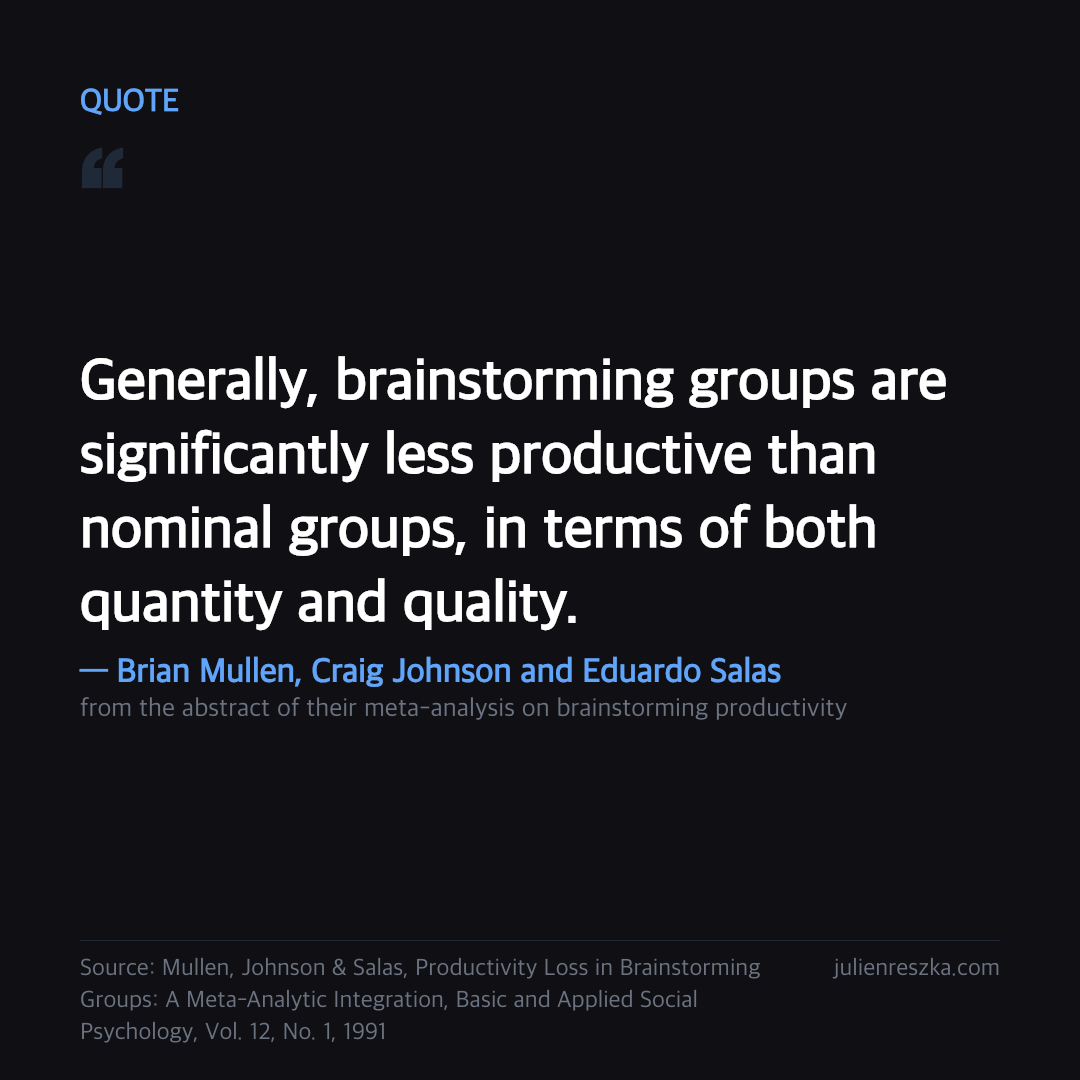
Stop, start, continue gives you noise by design. Everyone writes on post-its simultaneously, which means the ideas that surface are the ones that feel safe to write in a group, not the ones that require sustained thinking to find. The board fills up, the facilitator clusters the post-its, and the team votes on themes. The output is a list of impressions, not a diagnosis. Brainstorming research has measured this consistently: groups working together produce around 20% fewer unique ideas than the same number of people working alone, because social dynamics (conformity, the anchoring effect of hearing others' ideas, the reluctance to contradict) suppress independent thinking. The fix is to ask better questions and require written answers before anyone speaks. Three questions can replace the entire format:
- How are we sourcing our inputs more strategically? Are we addressing the real supply and demand imbalance that is inflating our costs?
- How are we making the work more sustainable? What disruptions are we experiencing and are we adapting to them or assuming they are temporary?
- How are we using our energy more efficiently? Are transformation costs high because we are building the wrong things or building things the wrong way?
These questions do not produce post-its. They produce paragraphs, which means they require thought, which means the meeting starts with substance rather than raw brainstorm output.
Discussion
Yes, every two weeks we generate a wall of post-its and ship none of it. Last retro I counted: 23 ideas, 0 follow-through. The format is the problem, not the team.
Same here. We have months of 'start doing async standups' that nobody ever started. Going to try the three-questions-in-writing format next sprint and report back.
We did exactly this swap last quarter. The first round felt slow because people actually had to think, but the meeting produced two decisions instead of forty post-its. Worth the awkwardness.
The three strategic questions are useful for leadership teams but break down at the team level. I tried sending 'how are we sourcing our inputs more strategically?' to a six-person engineering team and got blank stares. The format assumes a level of strategic context that most individual contributors don't have, and the senior people who do have it are also the ones who need the meeting least.