 Julien Reszka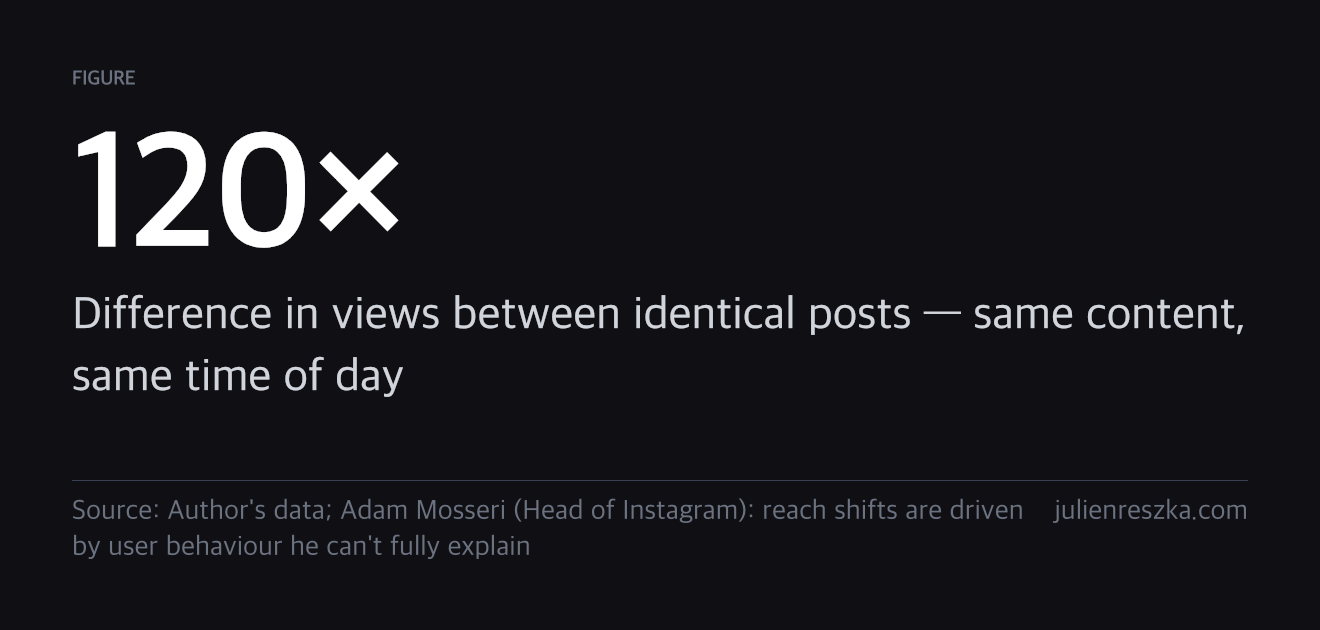
Casinos do not pay out on every pull because unpredictable rewards are far more addictive than reliable ones. The uncertainty is the mechanism, not a bug. Instagram's algorithm works the same way: I posted the same reel twice on two different accounts:
- same content
- same time of day
- same platform
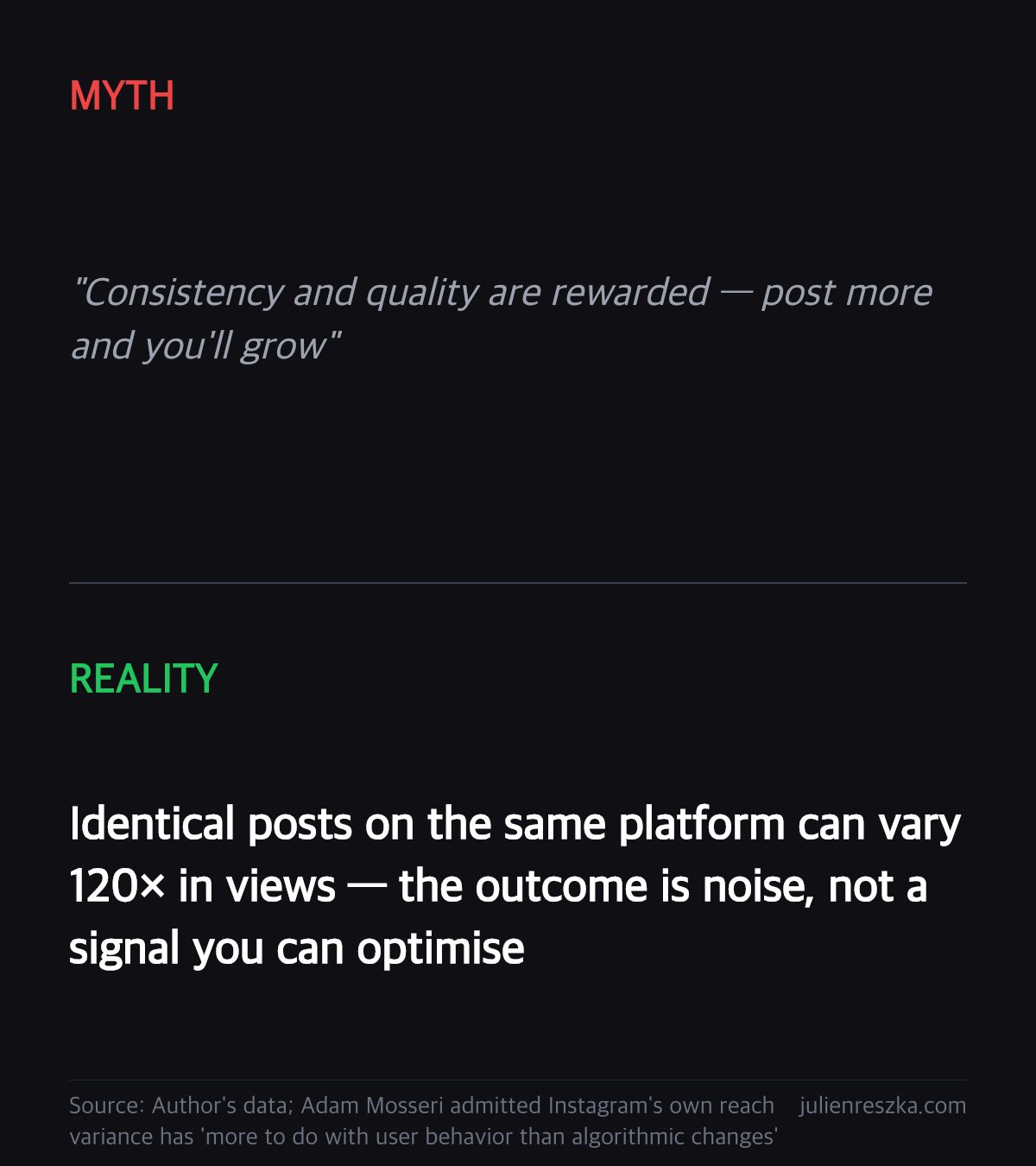
one got 340 views while the other got 41,000, which means the outcome was noise, not signal, and every time I opened the app to check I was pulling a lever. Adam Mosseri (Instagram's own head) has publicly admitted the reach variance has 'more to do with user behavior than algorithmic changes,' which means even the person running the platform cannot fully explain why your post lands or disappears. The problem with that for mental health is not the lows. It is the highs, because a random 41,000-view day does not teach you anything useful, it just makes you come back and pull again, and I decided I did not want to spend my attention that way.
Discussion
Yes. The variance is what hooks me. A reel hit 80k last month and I've been chasing that high since with nothing close. The slot machine framing made me uninstall the app.
Variable ratio reinforcement. Skinner figured this out decades before Instagram monetised it.
Yes. Decided last week that 'success' is whether I'm proud of what I posted, not the view count. The dopamine reset took three days and was worth it.
I run a business that generates consistent revenue from Instagram. The variance is real and I stopped tracking individual post performance, but the aggregated reach still drives discovery that nothing else replaces at the same cost per contact. Quitting was the right answer for your mental health; it wasn't the right answer for mine.