 Julien Reszka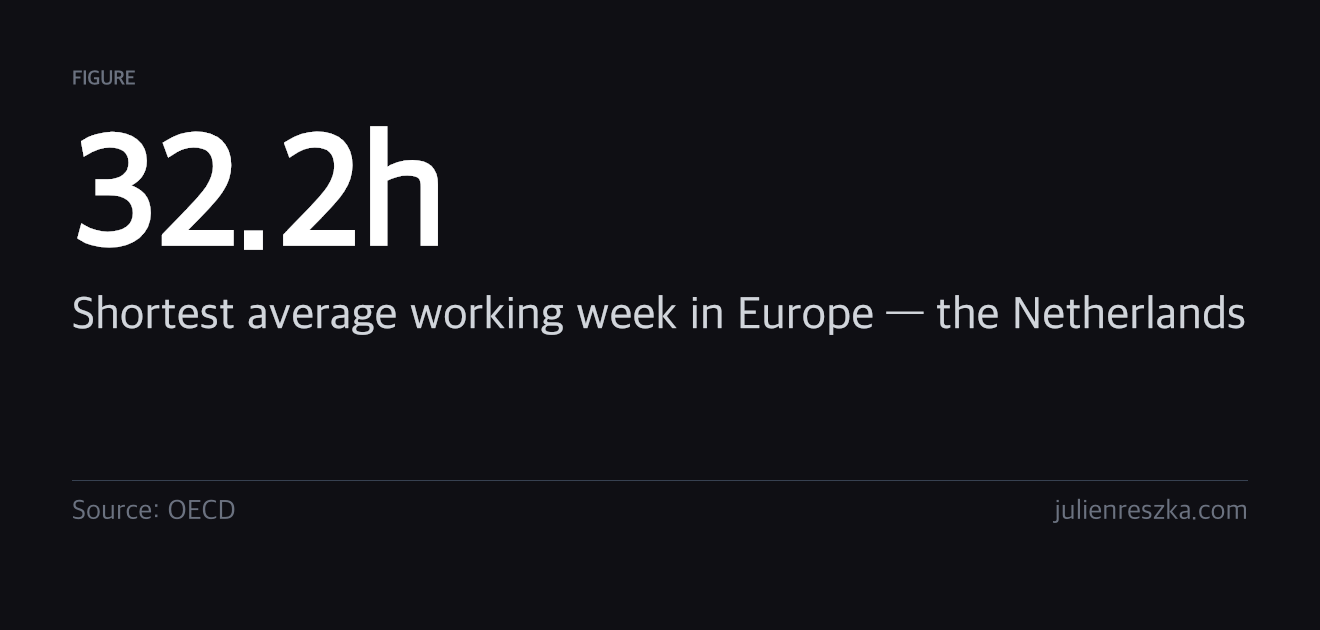
Sleep duration is one of the most reliable objective proxies for employee well-being, and the international data tells a consistent story: Japan and Singapore rank among the lowest-sleeping countries on earth, at 7h31 and 7h24 per night respectively, while the Netherlands, France, and New Zealand cluster around 8h03 to 8h05. The difference is not temperament or time zone. It is policy. The Netherlands has the shortest working week in Europe at 32.2 hours, with widespread adoption of four-day schedules; hourly productivity remains among the highest in the OECD. France legislated the right to disconnect in 2017, making it illegal to require employees to respond to emails and calls outside working hours, and guarantees a minimum of five weeks paid leave. New Zealand has run multiple national trials of four-day weeks with consistent findings:
- output unchanged
- absenteeism down
- reported well-being up
The countries that sleep well did not stumble into it. They wrote it into law and measured the results. The ones that do not have simply not decided to yet.
Discussion
Yes. My team works late because the manager does, not because the work requires it. Trying to change the culture without authority is harder than it sounds.
Underslept for years and my output reflects it. Going to set a hard 18:00 stop this month and treat the inevitable pushback as the data point.
That's the move. The pushback tells you whether the culture is fixable from the inside.
The Dutch model works in stable, knowledge-worker environments. Emergency medicine, live broadcast, global support roles: a hard 18:00 stop is structurally incompatible with the job. The legislation argument is real but covers a narrower range of work than the post implies, and it doesn't help if you're in one of the exceptions.