 Julien Reszka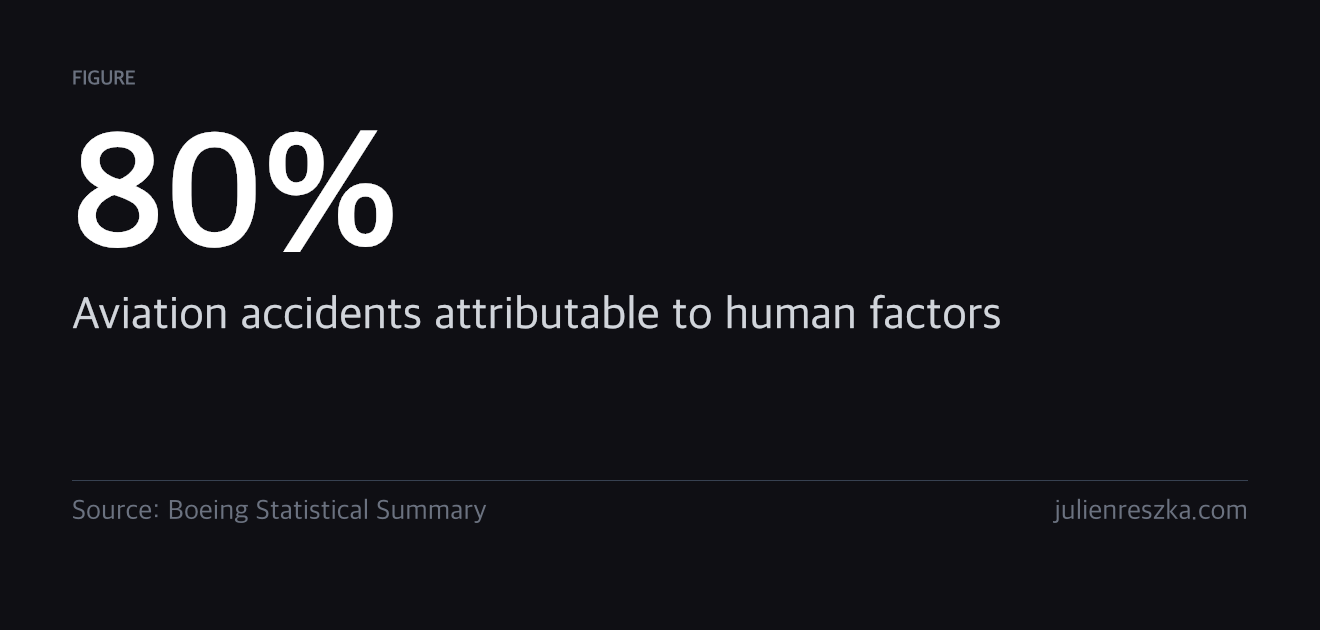
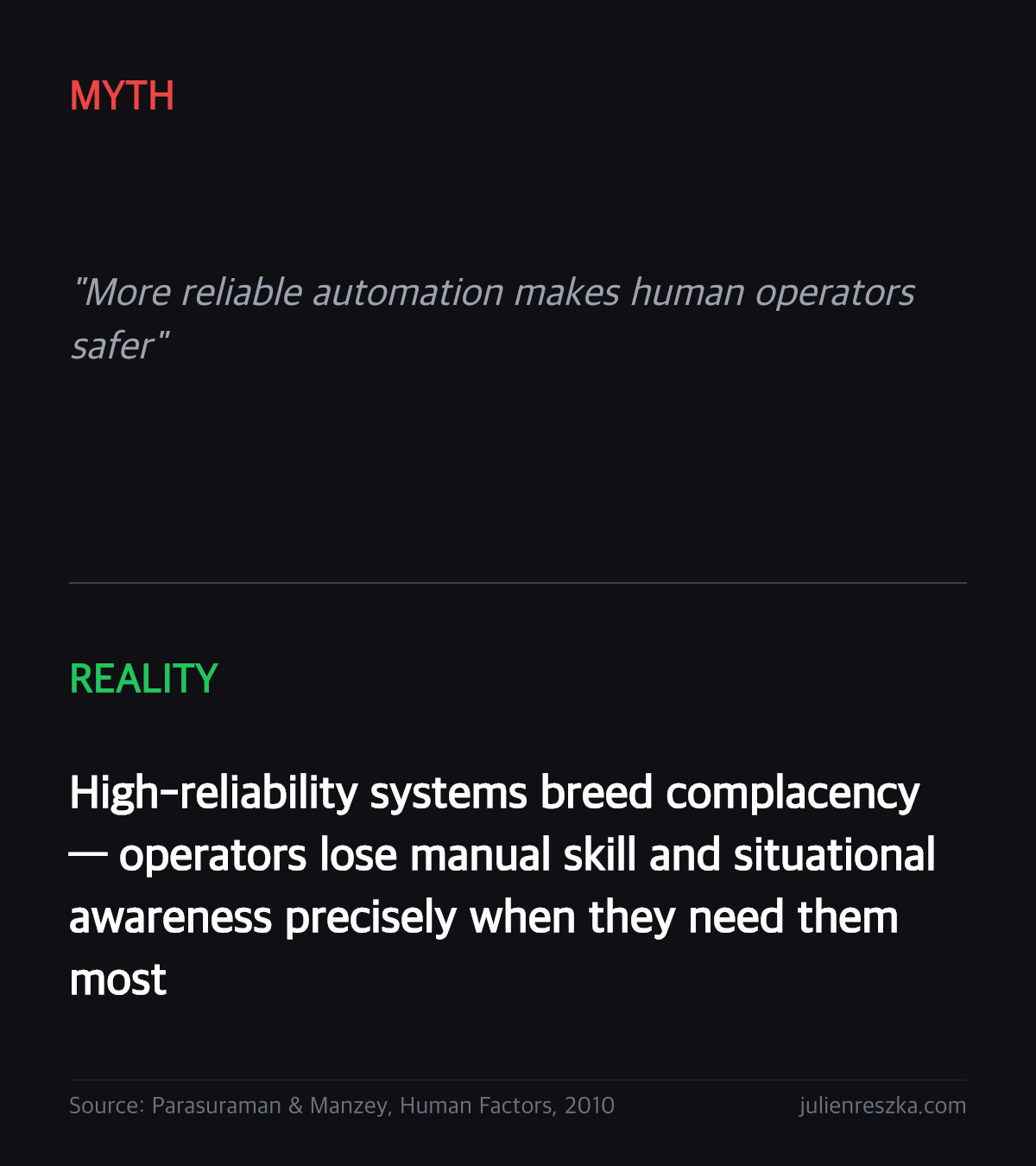
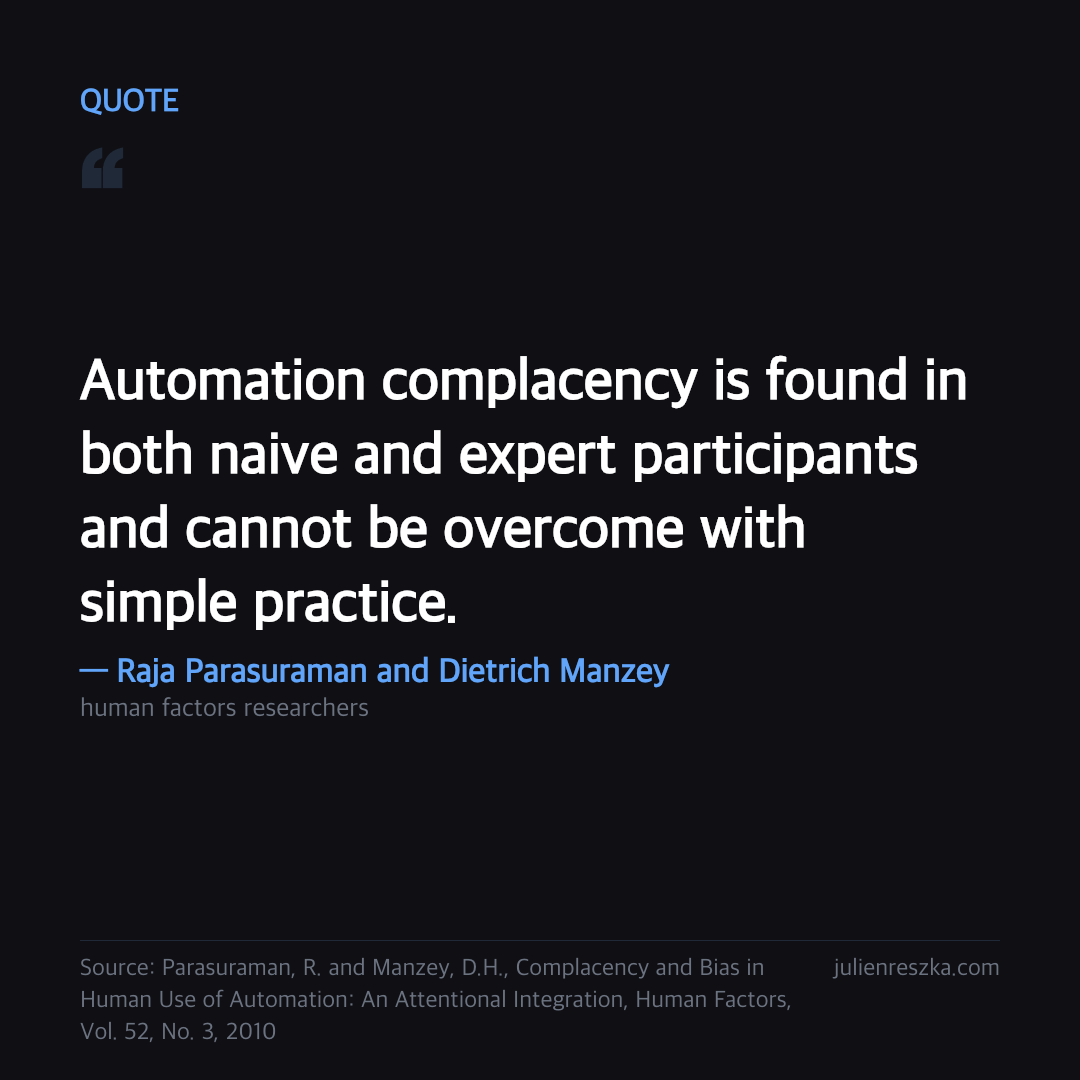
The argument for automation is that it frees up cognitive bandwidth. Fewer routine decisions means more headroom to think carefully about the ones that matter. What actually happens is the opposite: when a system reliably handles a task, the human monitoring it gradually stops monitoring, because nothing ever goes wrong, and sustained attention without feedback is not something brains do voluntarily. Aviation has a name for this: automation-induced complacency, and it shows up in accident reports where pilots failed to notice system failures they would have caught immediately if they had been flying manually. The irony is that the better the automation, the worse the problem: a system that almost never fails produces operators who are almost never ready for the moment it does. The countermeasure is deliberate:
- Identify the critical tasks you have handed to automation.
- Periodically turn them off and practice manually.
- Keep the interval short enough that the skill does not decay.
Not because the machine is unreliable, but because you are, and the only way to stay ready is to keep practicing the skill the machine has been covering for you.
Discussion
Our on-call engineers haven't had a real incident in eight months. I can feel the readiness eroding. Scheduling a game day this week.
We run quarterly chaos drills for exactly this. The skill comes back quickly but you have to keep the interval short or it's back to square one.
Hadn't framed it this way before but it's accurate. Haven't touched a manual deploy in over a year and I know I'd be slow and second-guessing everything if CI broke tomorrow. Trying to pick one task a week to do by hand.
The aviation parallel is apt but I'd push on one thing: pilots are required by regulation to log manual hours. Most engineering orgs have no equivalent obligation so the decay is invisible until something breaks.
Coming to this late, found it via the automation series. We ran a game day last week for the first time in eighteen months and the results were uncomfortable. Two engineers couldn't complete rollbacks they'd have done in their sleep three years ago. Scheduling quarterly from here.