 Julien Reszka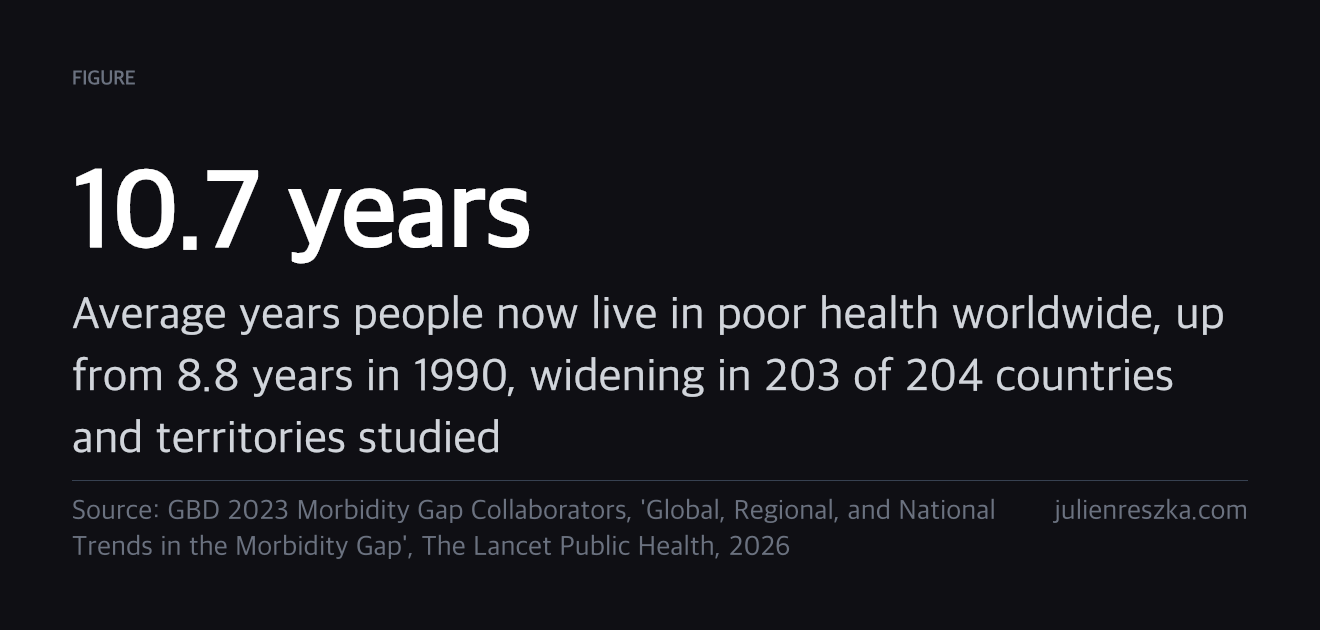
Living longer gets treated as an unambiguous win. The newest global health data says a growing share of those extra years are sick years, and the gap between how long people live and how long they stay healthy is getting worse, not better.
Researchers call it the morbidity gap: life expectancy minus healthy life expectancy, the years a person can expect to live free of serious disease or disability. Global life expectancy rose from 64.6 to 73.8 years between 1990 and 2023. Healthy life expectancy rose too, but slower, from 55.9 to 63.1 years. The difference, years spent sick rather than dead or healthy, grew from 8.8 to 10.7 years, an increase of nearly 22 percent.
That is not a rounding error in one unlucky country. The gap widened in 203 of 204 countries and territories studied, and across the whole adult lifespan rather than only its final years.
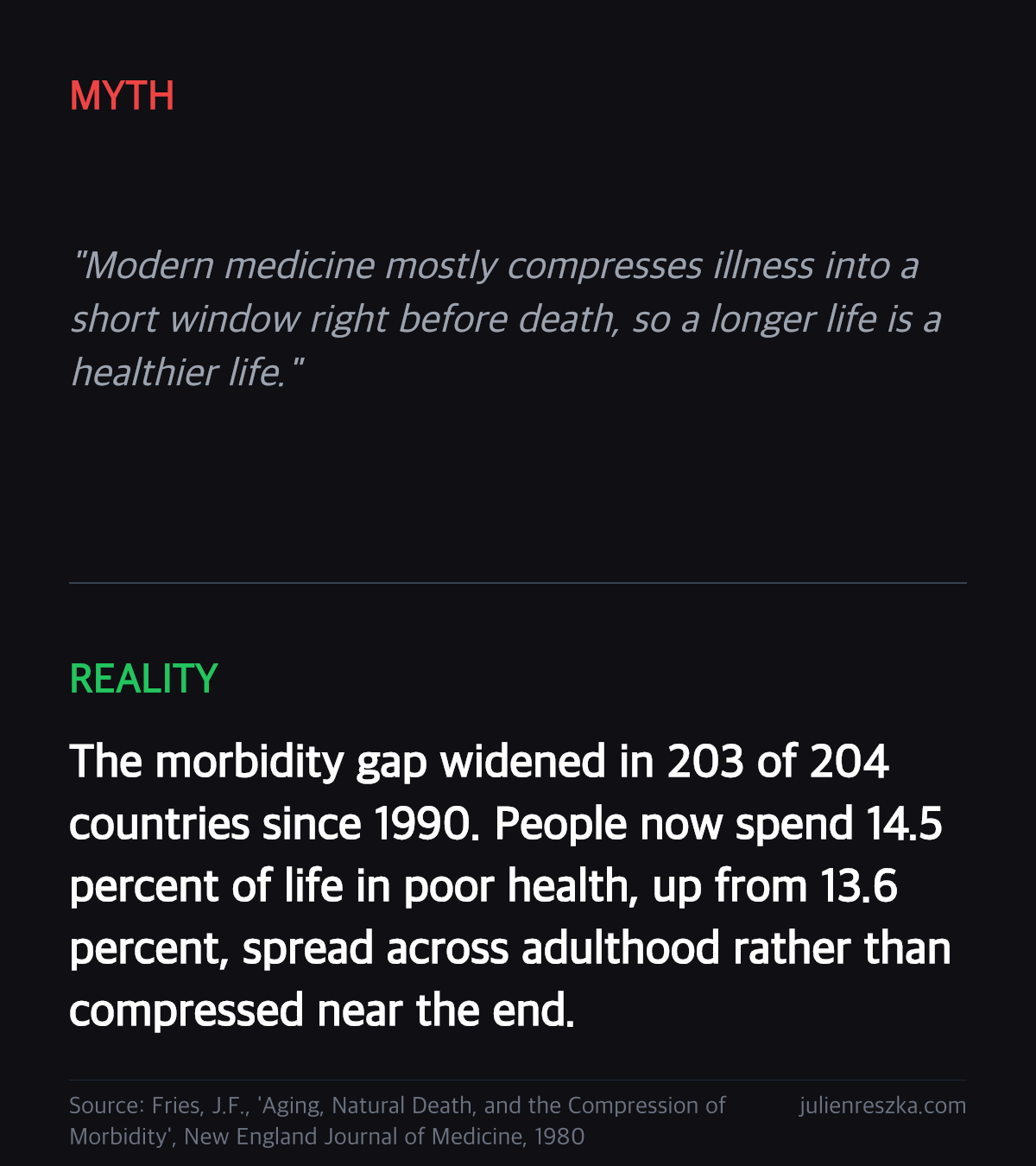
- Share of a global lifetime spent in poor health rose from 13.6 percent in 1990 to 14.5 percent in 2023
- Women carry a wider gap than men, 12.1 years in poor health on average against 9.3 years
- The three widest national gaps in 2023 belonged to rich countries: the United States at 14 years, Australia at 13.9, and Canada at 13.7
The cause is not a handful of rare diseases. Musculoskeletal disorders led by low back pain, depression and anxiety, age related hearing loss, falls, and a cluster of other chronic, non fatal conditions together account for 57 percent of all unhealthy years worldwide. Modern medicine is very good at keeping someone alive through a heart attack, a cancer diagnosis, or a stroke. It is much less good at preventing the chronic condition that settles in afterward and stays for good.
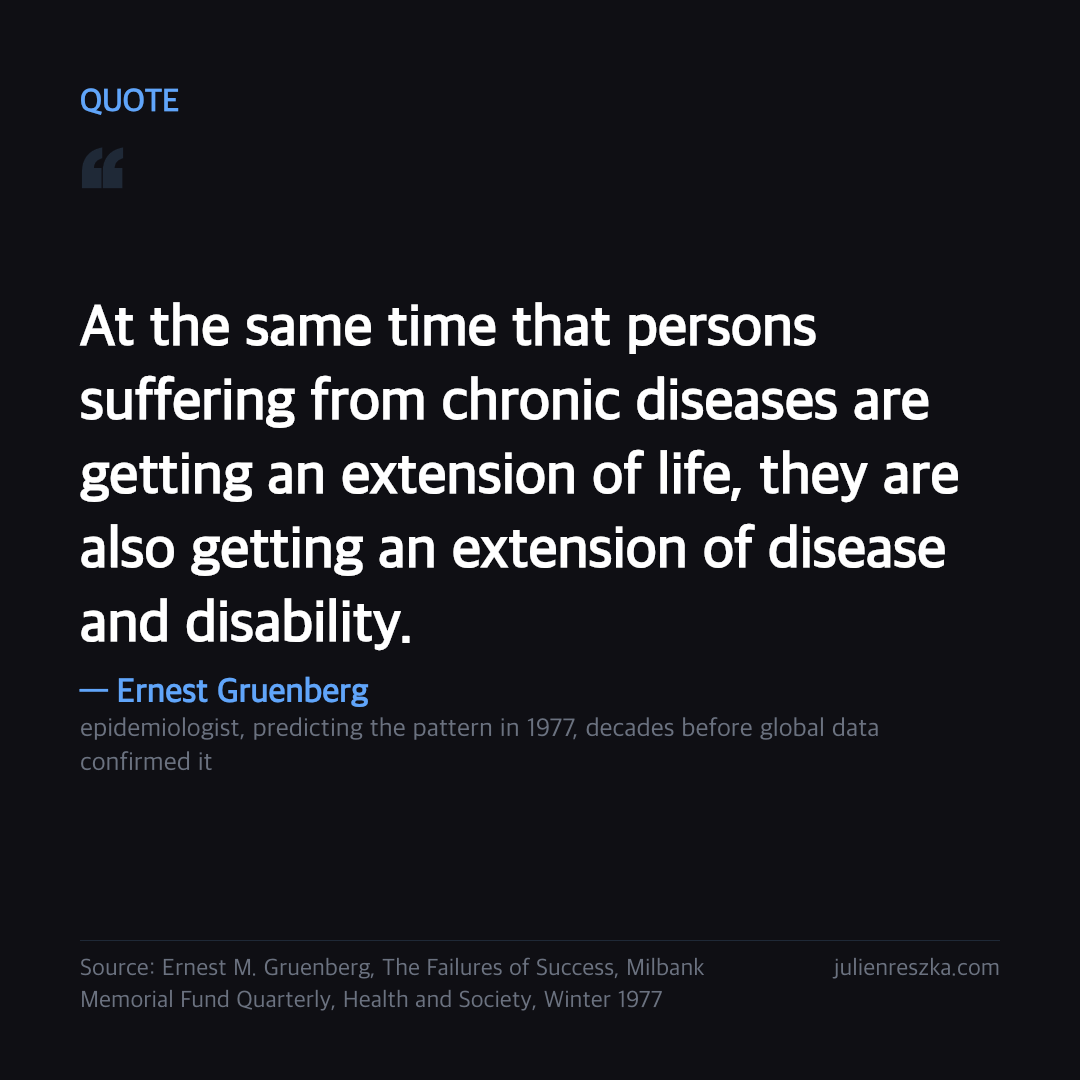
In 1980 the physician James Fries proposed the opposite outcome. His compression of morbidity hypothesis predicted that healthy habits would push back the onset of illness faster than they pushed back death, squeezing sickness into a short window at the very end of life. Forty three years and 204 countries of data later, that is not the pattern in the numbers. In most places illness is spreading across more of adult life, close to what the epidemiologist Ernest Gruenberg predicted in 1977 in a paper called The Failures of Success: medicine that postpones death without curing the disease behind it.
The country with the widest gap shows the trend inside its own borders too. A county level study covering 2009 to 2019 found that United States life expectancy rose half a year, to 79.1, while healthy life expectancy fell over the same decade, down 0.3 years to 66.2. The sharpest declines were among American Indian and Alaska Native populations in the western United States.
Your Pension Depends on Kids You Did Not Have made the sustainability case with dependency ratios: more retirees drawing on fewer workers. This data sharpens that case rather than repeating it. The extra years a pay-as-you-go pension is now funding are disproportionately sick years, the kind layered with disability payments and long term care costs on top of an ordinary pension check, not extra years of healthy retirement quietly costing the same as always. A system already strained by a rising dependency ratio is being asked to fund more expensive years per retiree at the same time.
Discussion