 Julien Reszka
Google can tell you:
- a page exists
- how fast it loads
- how many other sites point to it
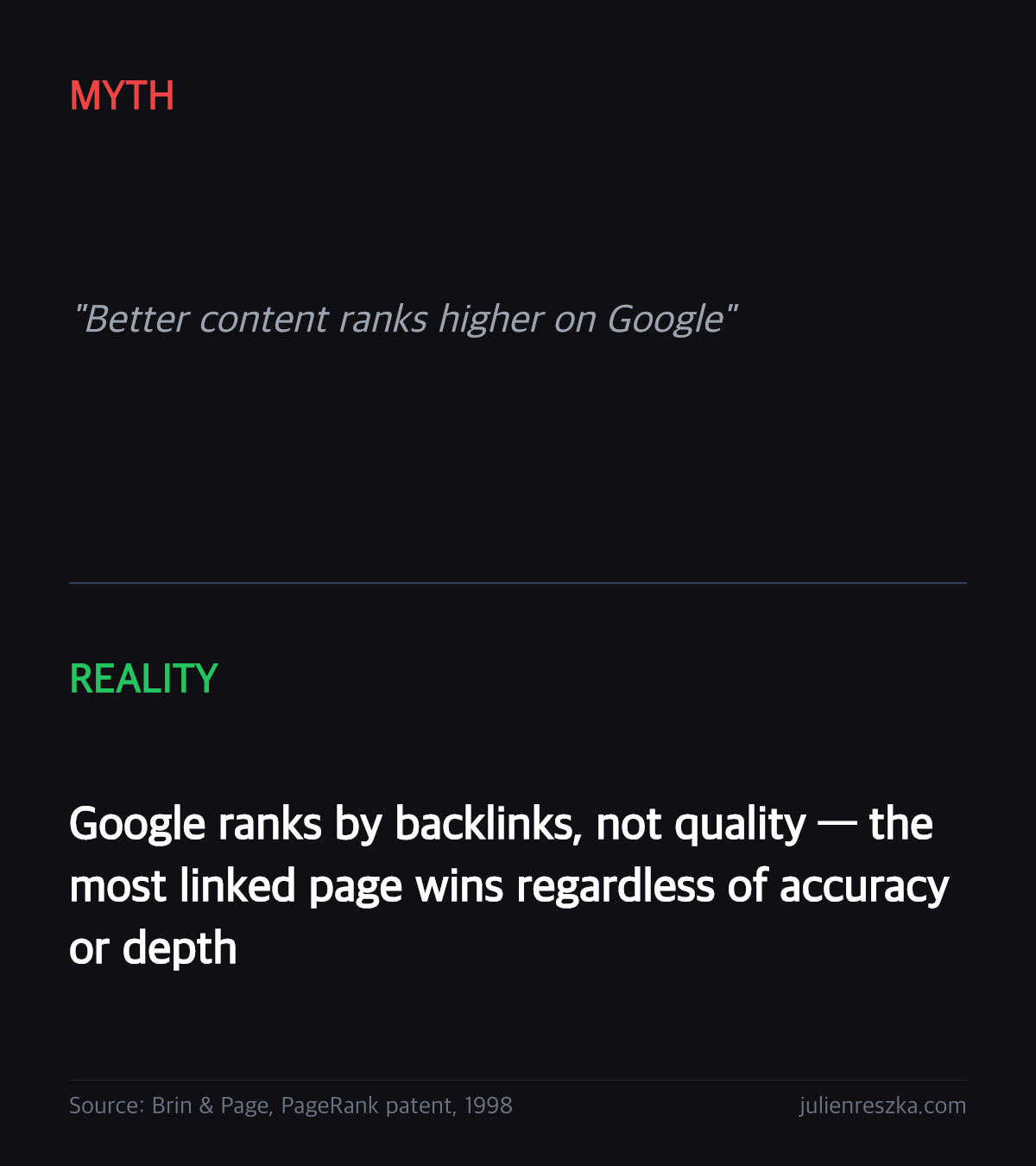
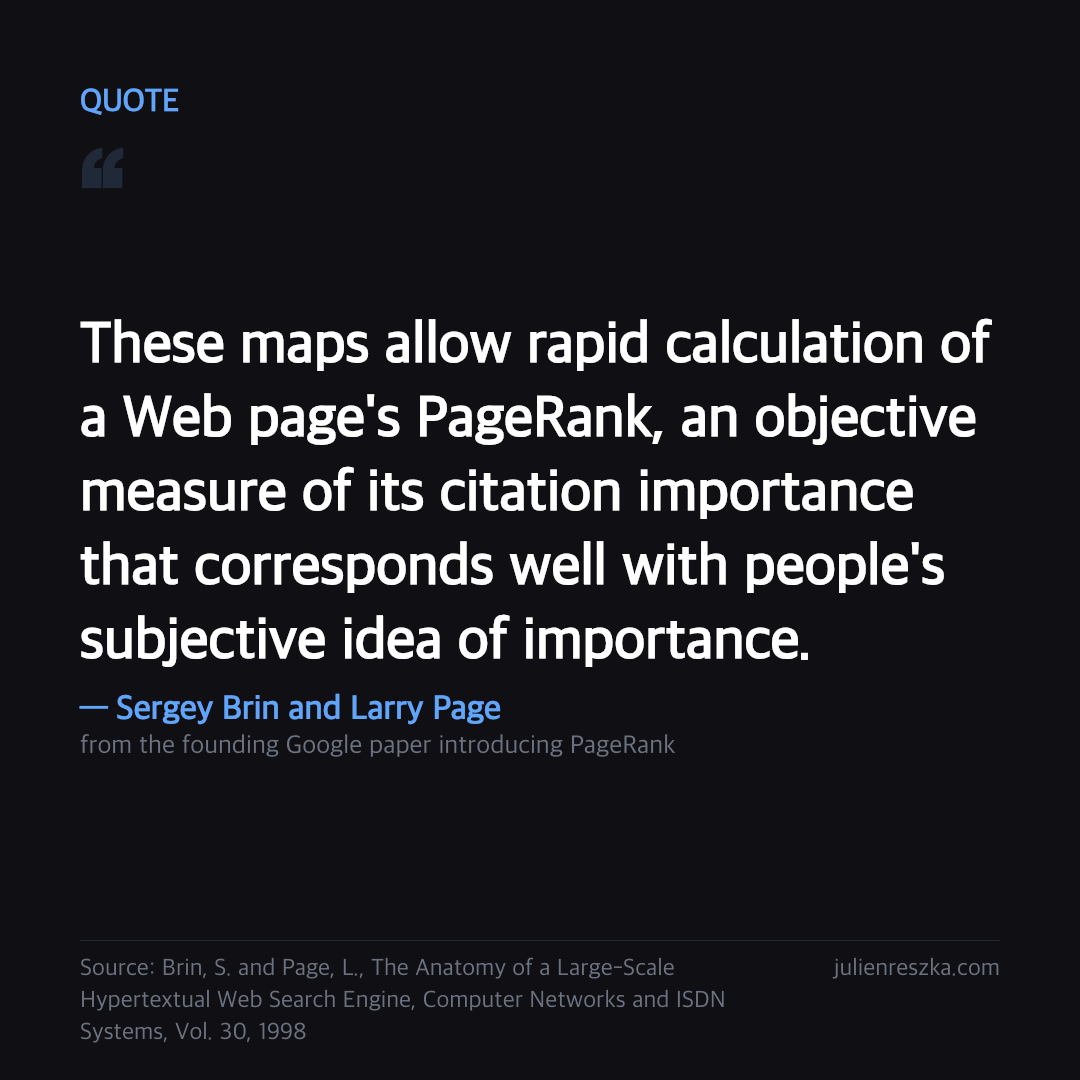
but it still cannot tell you whether the page is genuinely useful, so it keeps deferring to the crowd, which means the web's most linked pages win regardless of quality, and if you actually made something good you now have to spend your energy chasing backlinks instead of improving the work. A clear example is Wikipedia: it ranks first for almost everything not because it is always the most accurate or deepest source, but because half the internet links to it. Any specialist who writes a better page on the same topic will sit on page four until someone notices them and links back. The part you control is the work itself and where you take it first: publish for a specific audience that already trusts you, send it directly to people who would genuinely find it useful, and let the backlinks follow from that, rather than spending the same energy on SEO for an algorithm that cannot tell the difference anyway.
Discussion
Yes. Spent six months on SEO for a deep technical piece. Got nothing. Sent it to ten people in the field by email and three of them shared it. The signal was obvious.
Yes. Our domain has zero authority so we're outranked by aggregators who scraped our content. Direct distribution to specialists is the only thing that works.
And it costs the same time as optimising for a search engine that can't tell the difference.
Backlinks do correlate with quality over time because good content earns links. The mechanism is slow and noisy but not random. My best technical pieces have the most inbound links and the most search traffic. The algorithm doesn't measure quality directly but it approximates it if you give it time. SEO has worked for us; the timeline is just longer than people expect.