 Julien Reszka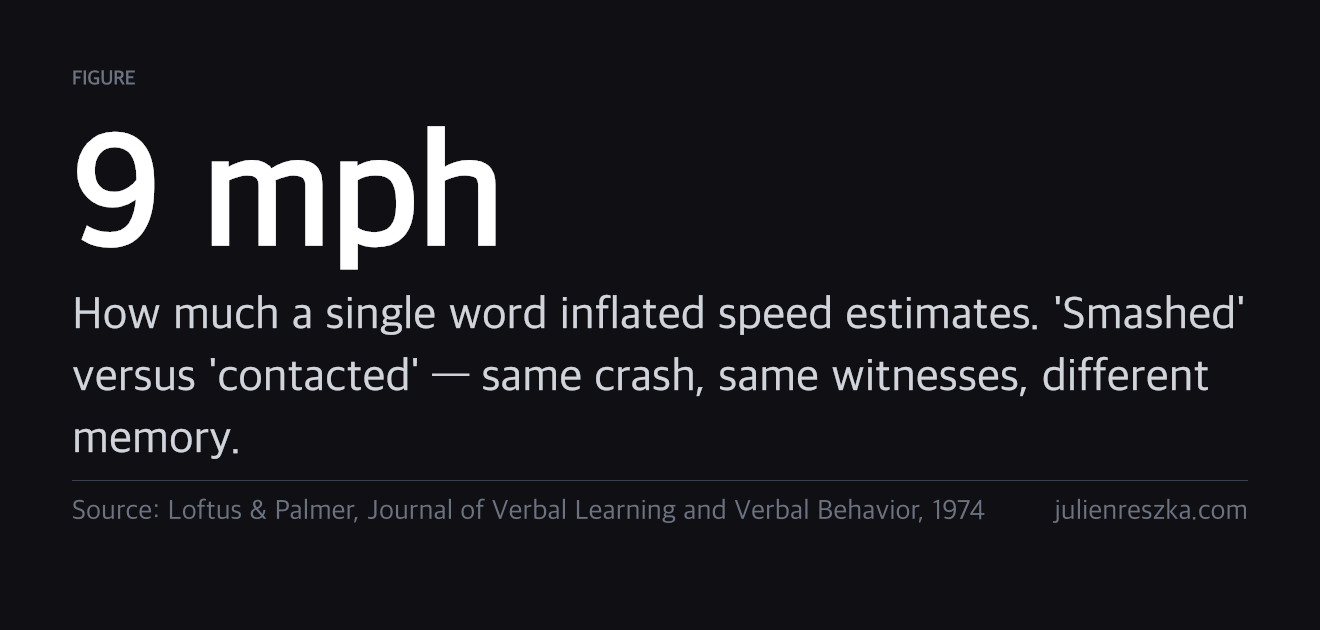
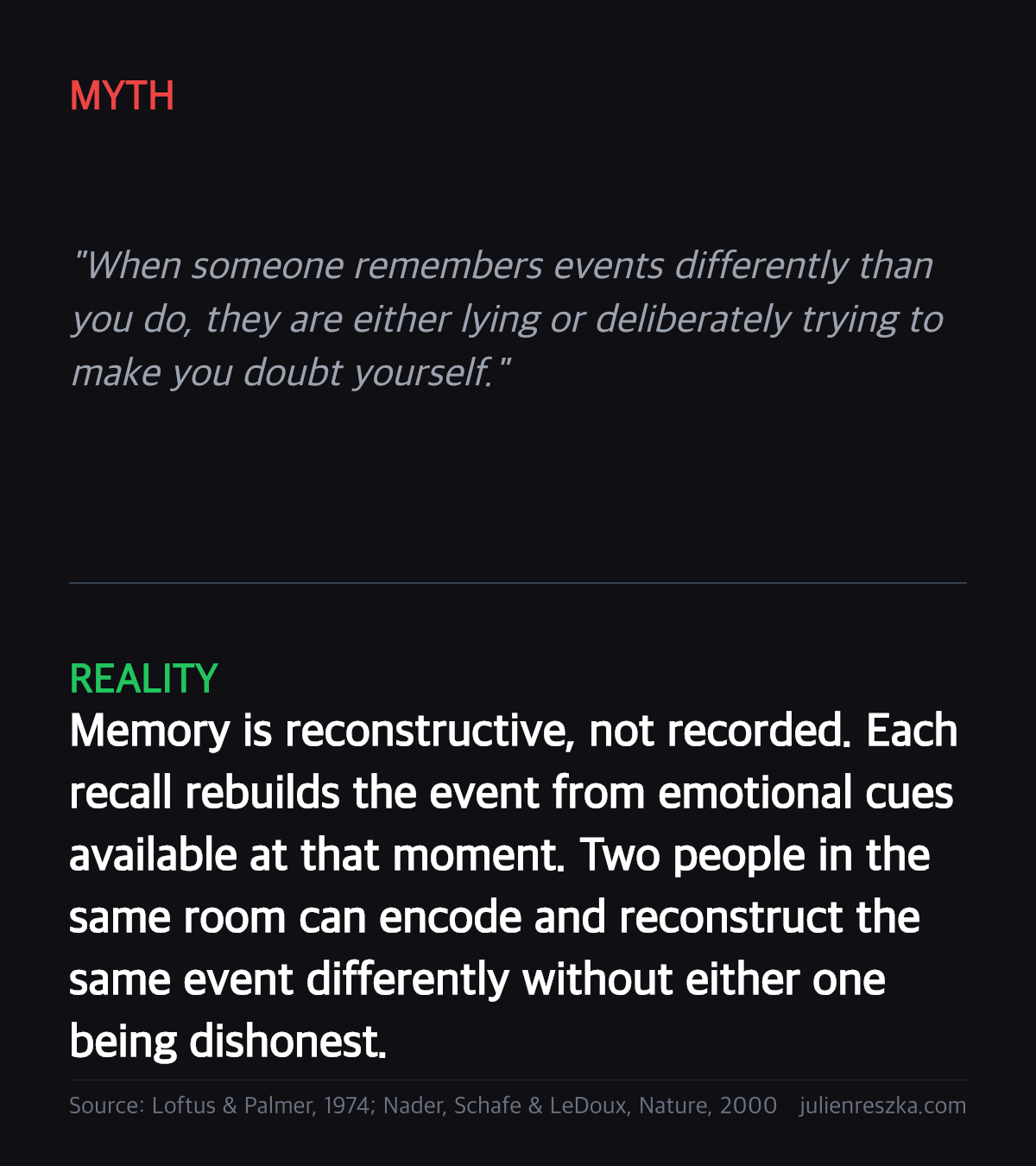
People do not misremember to hurt you. They misremember because memory is reconstructive, not recorded. Every recall rebuilds the event from cues available at that moment, which means your emotional state at recall changes the memory itself. The person who said they would handle it genuinely remembers agreeing to something smaller. The one who felt dismissed genuinely remembers a different tone than the one who felt accommodating.
This is not gaslighting. Gaslighting is deliberate manipulation. What you are more likely dealing with is two people who experienced the same event through different emotional filters and reconstructed it differently each time they thought about it. The practical implication is large: if you go into the conversation trying to prove your version correct, you will lose the relationship trying to win the argument.
Document as a navigation tool, not as evidence
Write things down not to accumulate ammunition but to have a fixed point when both memories drift. A contemporaneous note serves three things:
- It reduces the scope of disagreement to what is actually in dispute
- It separates what happened from how it felt
- It gives both parties something external to look at instead of each other
Write in neutral language. "On Tuesday I sent the brief and noted the deadline" is a fact. "You ignored my brief" is a conclusion. The log should be full of facts.
Three steps that earn each other
1. Empathy: map what each person is worried about
Before correcting anyone's version, find out what they are protecting. Discrepant memories usually defend something: a sense of fairness, a fear of blame, a need to feel competent. Understanding the worry does not mean conceding the facts. It means you now know what the conversation is actually about.
Ask what the event felt like for them. Let the answer run longer than feels comfortable. The feelings attached to a memory are often more accurate than the chronology.
2. Analysis: find a path where both versions can be partly right
Once the emotional stakes are on the table, look for a move that acknowledges both accounts without requiring either person to be completely wrong. In most disputes, both versions contain partial truth: the person who said they'd handle it may have genuinely intended to, and you may have genuinely understood a firmer commitment than they gave. Both things can be true simultaneously.
The useful question is not who was right but what a good outcome looks like from here. That reframes the conversation from a trial into a negotiation.
3. Commitment: get something concrete
Feelings acknowledged, path agreed: now get a specific commitment. Not a declaration of goodwill. A concrete next action with a date attached.
The commitment becomes the new shared memory. Two people who disagree on what happened in October can both remember what they agreed to do on Thursday. That shared reference point is worth more than resolving the historical dispute. It also gives you something measurable: if the commitment is kept, the relationship is working. If it is not, you now have a clear, undisputed fact to name.
The order matters. Start with commitment before empathy and you get defensiveness. Skip analysis and the commitment evaporates in two weeks. Each step earns the next.

Discussion