 Julien Reszka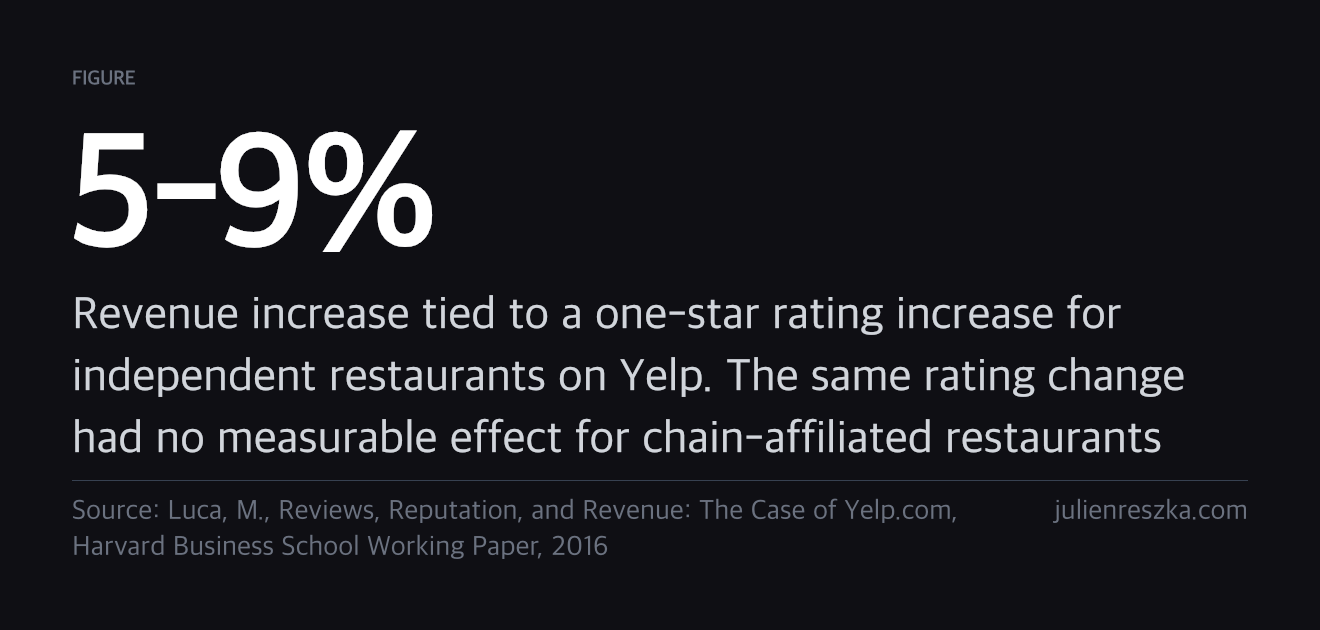
Not everyone experiences a bad review the same way. A well known brand can absorb one, because a customer already trusts what they know about it from a hundred other places. Someone with no track record yet cannot, because a stranger's only signal about them might be whatever a search turns up. The real question is not whether reputation matters. It is whether you are the kind of business, or the kind of person, that can afford for it to go unmanaged.
A study of Yelp-rated restaurants from the platform's early years, matched against actual state tax revenue data, found that a one-star increase in rating raised revenue by 5 to 9 percent, with the effect disappearing entirely for chain-affiliated restaurants. That data is old enough to question on its own, but the same pattern shows up more recently in a different industry: a 2018 study of the hotel market found that the revenue advantage of being a recognized chain fell by more than half between 2000 and 2015, as growing review volume let independent hotels compete on reputation instead of brand name. A known brand gives customers other signals to rely on, so one more review barely moves anything. An independent business, a freelancer, a new product, anyone without that cushion, is exactly the case where a handful of public reviews or mentions carries the most weight, not the least.
- A one-star increase in Yelp rating raised revenue 5 to 9 percent for independent restaurants, matched against real sales data
- The same rating change had no measurable revenue effect for chain-affiliated restaurants, which already have other reputation signals
- A separate 2018 study found the revenue advantage of chain affiliation in the hotel industry fell by more than half between 2000 and 2015 as review volume grew
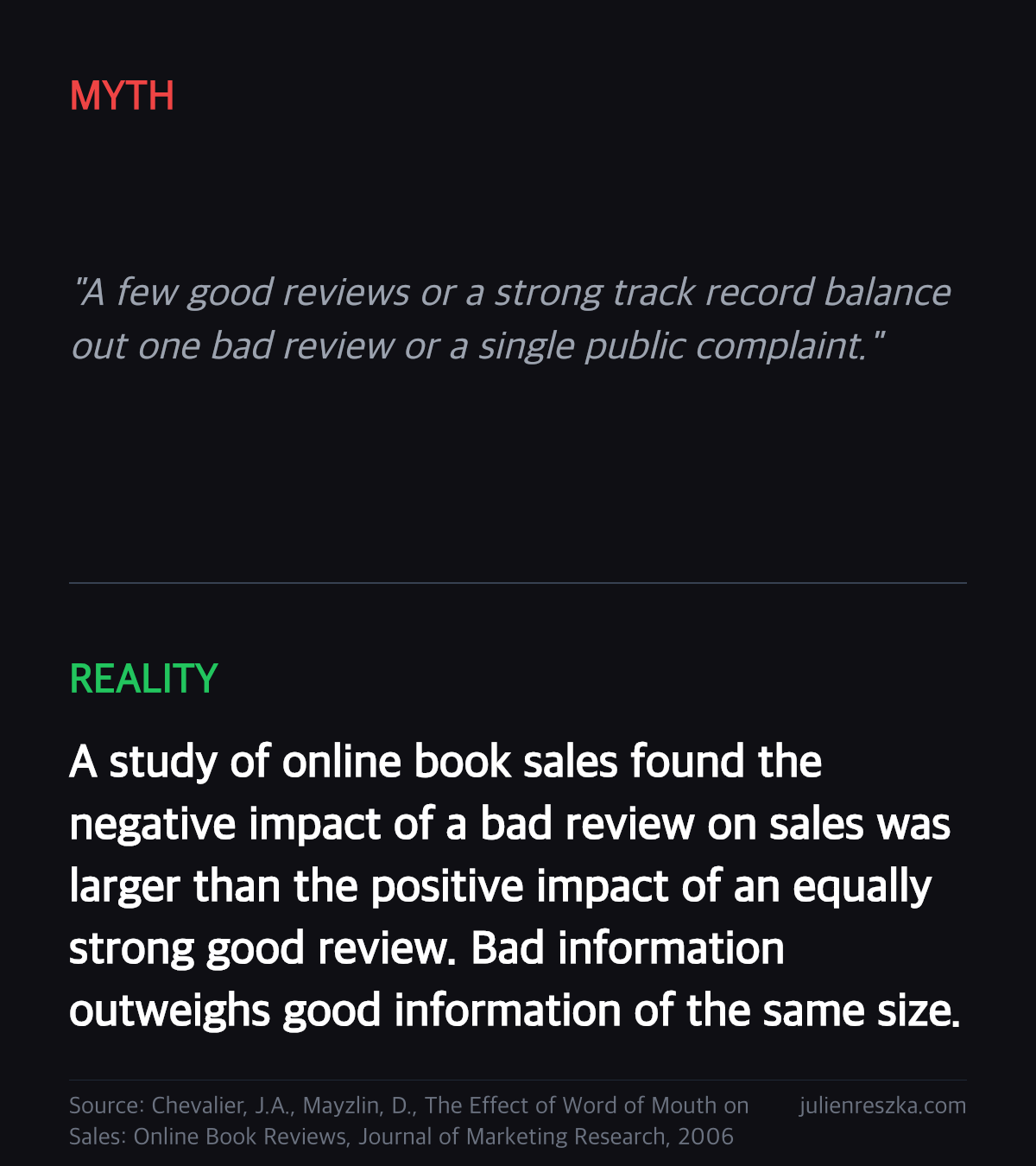
- A study of online book sales found a negative review's impact on sales was larger than an equally strong positive review's impact
Not knowing where you stand is common, and it stays that way longer than most people expect. Research on complaint behavior found that most dissatisfied customers never voice a complaint to the company at all. A more recent study of social media complaints found that people who post publicly are often doing it for an audience, not a resolution, which means the complaint was never addressed to the company in the first place. It was addressed to the next person considering it.
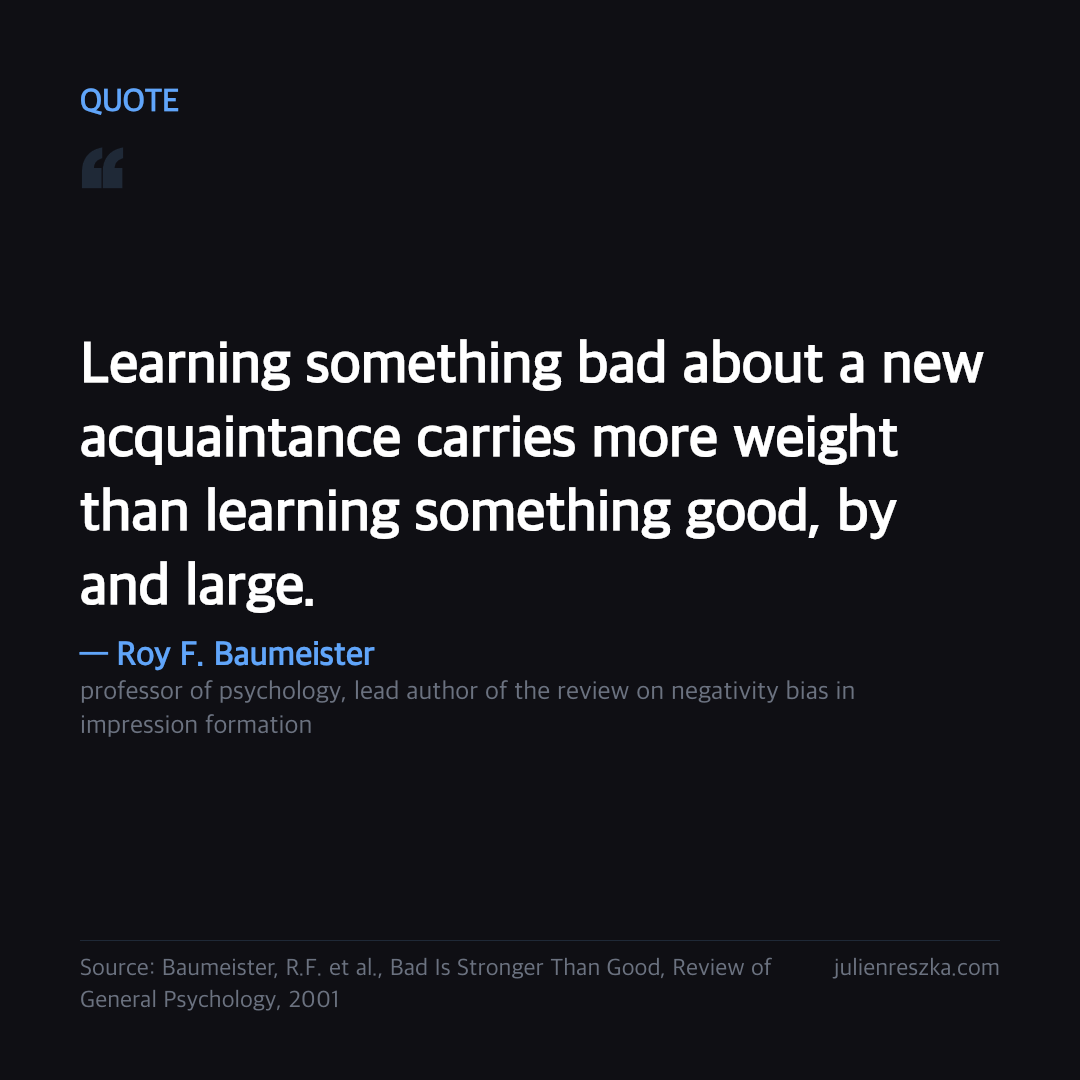
The instinct is to assume a few good reviews balance out one bad one, the same way a strong quarter balances a rough one. The research on reviews does not support that. A negative review moves sales more than a positive review of the same size moves it back. This tracks a much older finding about how people weigh information about anyone, not just companies: learning something bad carries more weight than learning something good, by and large. A five star review does not erase a one star review, it just sits next to it.
If you already have the brand recognition to absorb a bad review without anyone noticing, checking occasionally is probably enough. If you do not, the actual risk was never one bad review, it is not knowing about it, or the ten smaller mentions before it, until it has already shaped what the next person decided. That is a reason to check regularly, not once before it matters.
Discussion