 Julien Reszka
I read the GAN paper this week and I have been thinking about almost nothing else since.
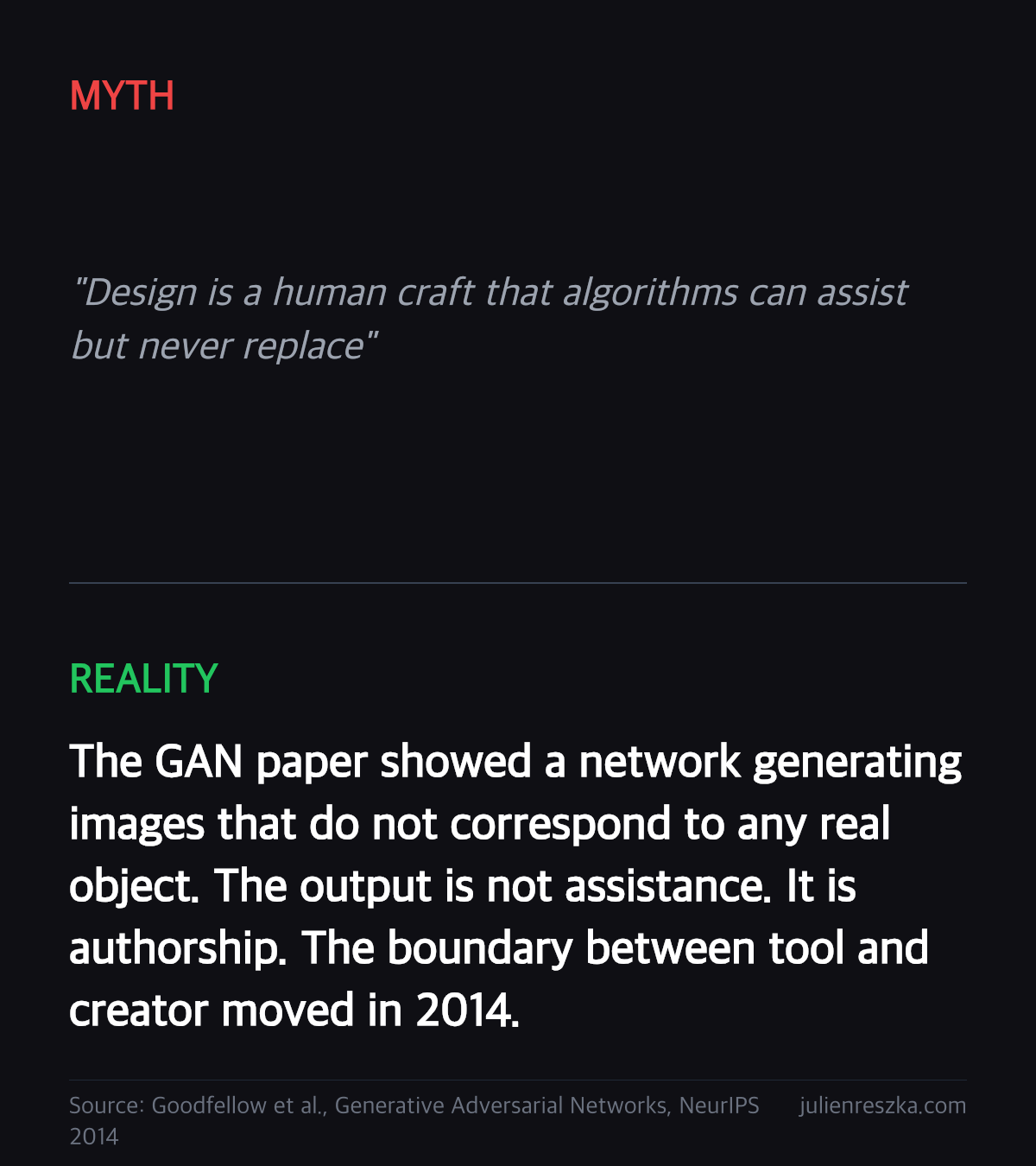
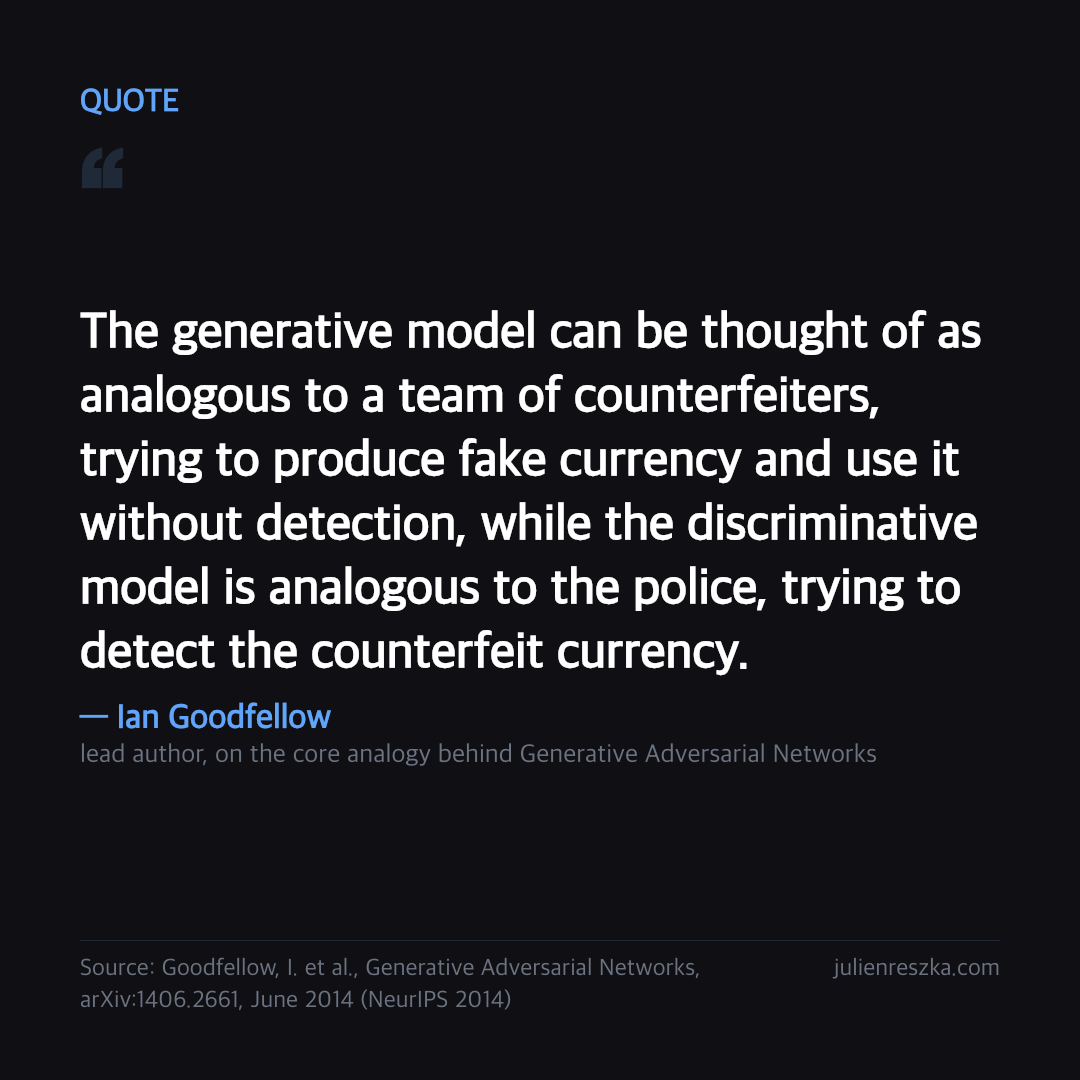
Ian Goodfellow and his co-authors at Montreal describe a system where two neural networks compete: one generates images, the other tries to identify which images are fake. The generator gets better at fooling the discriminator. The discriminator gets better at catching it. After enough rounds, the generator produces images that look real but are not. Nobody took them. Nobody drew them. The network made them.
I am studying art direction at Penninghen. The program is rigorous and the craft education is real. But reading this paper made me feel like I was learning to sharpen a pencil the week the printing press arrived.
That is probably too dramatic. But the feeling is genuine and I have learned to take that kind of feeling seriously.
What the GAN paper changed in how I think:
- Visual output is no longer the bottleneck. A trained network can generate thousands of images faster than I can evaluate them.
- The interesting design problem is no longer making the image. It is specifying what you want, curating what you get, and knowing when you have it.
- The craft of art direction is shifting from production to judgment. That is actually a more interesting problem.
- Generative design is not about replacing designers. It is about what design looks like when generation is cheap.
- The gap between someone who understands these systems and someone who does not will matter more over time, not less.
I am going to stop my studies at Penninghen and reorient toward generative design and the intersection of neural networks and visual output. I do not know exactly what that means yet in terms of what I build or where I end up. But I know I would rather be confused about the right problem than confident about the wrong one.
Discussion