 Julien Reszka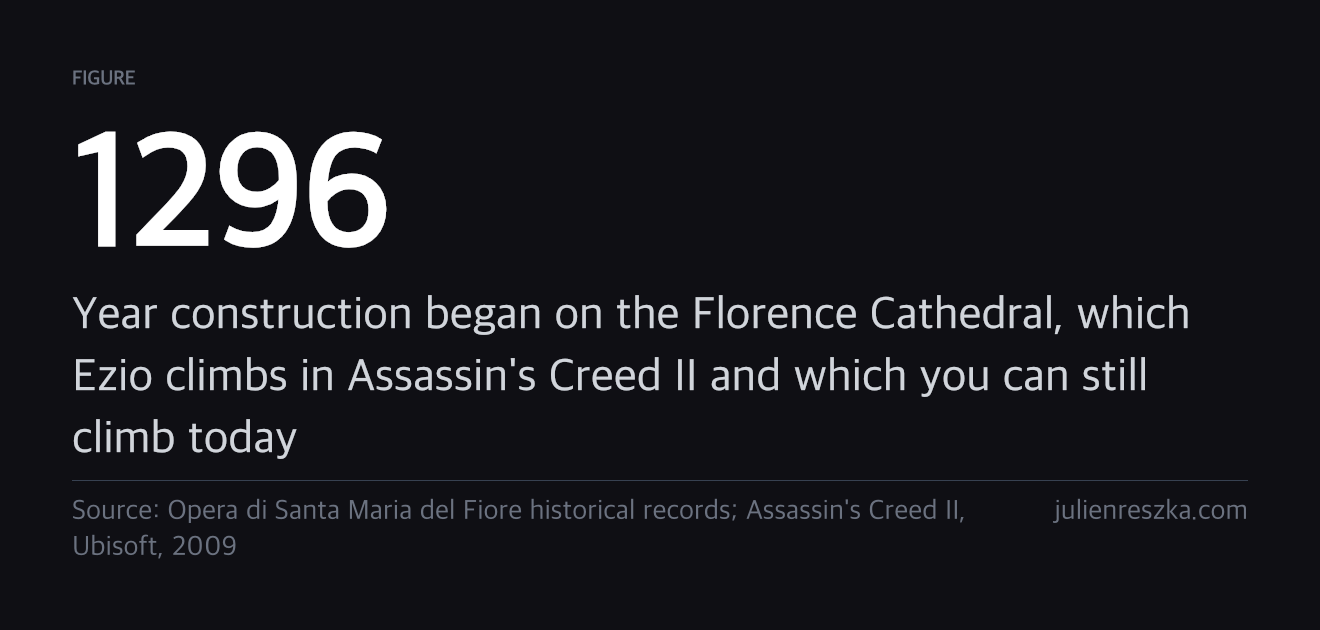
I arrived in Florence in July knowing exactly where I was going.
Not because I had been there before. I had not. But I had spent about 30 hours in the city in the late 15th century, climbing its towers, running across its rooftops, and listening to its citizens argue in the streets. When the game ended I thought: I should go there someday.
Two years later, someday arrived.
We stayed in a villa outside the city. Stone walls, terracotta floors, cypress trees in the garden. The kind of place where you sit outside in the evening and the light makes everything look like it was painted. July in Tuscany is hot in a specific way. The heat has weight to it. The shadows are sharp.
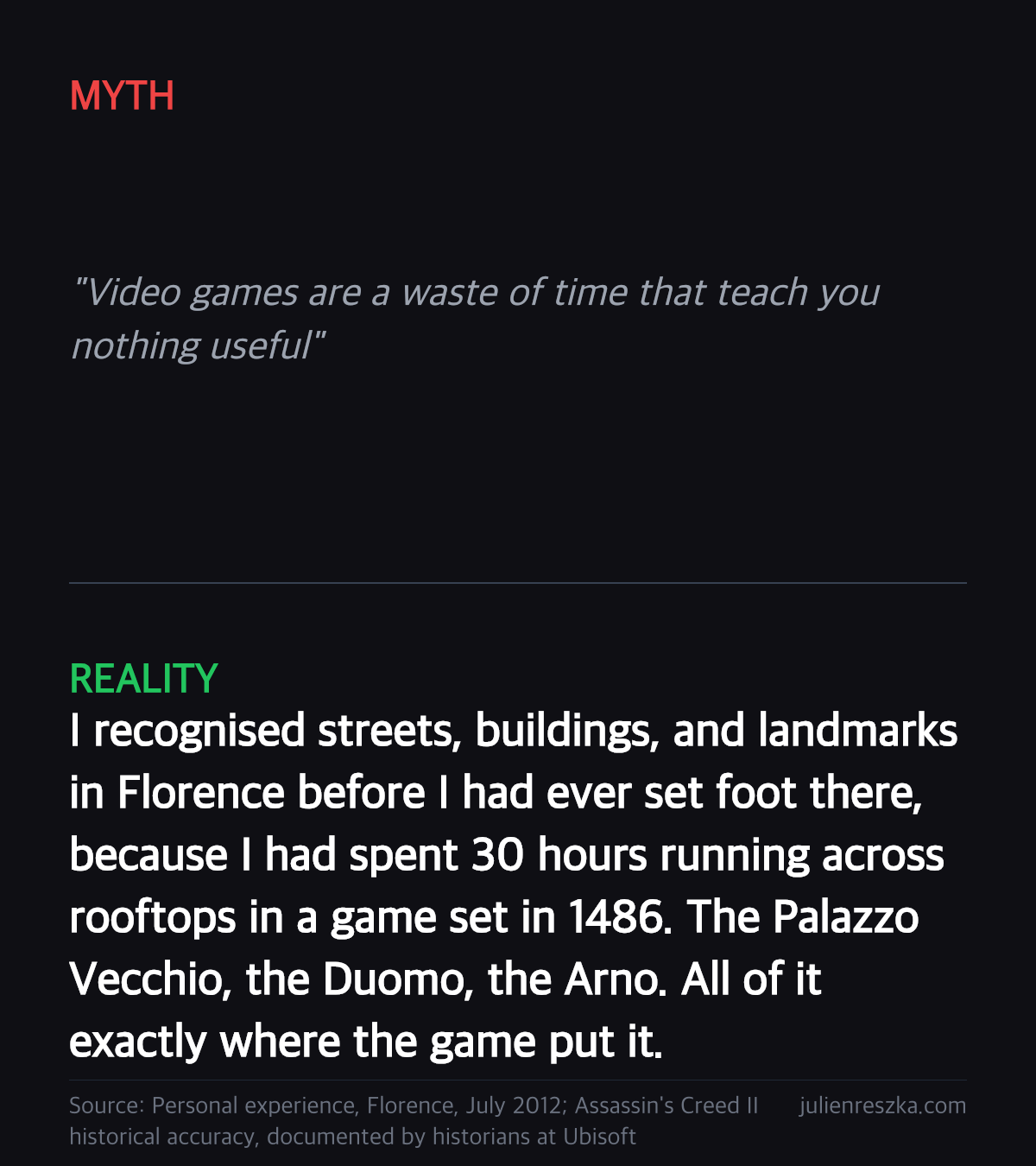
The city itself was disorienting in the best way. The Palazzo Vecchio is exactly where the game put it. The Duomo is bigger in person but unmistakably itself. Walking across the Ponte Vecchio I kept expecting the camera to pan out.
We went to the Museo Leonardo da Vinci, which was the part I was most excited about. It has machines built from Leonardo's actual sketches. The aerial screw. The armored vehicle. Things I had seen in the game as useful tools for stabbing people, now in glass cases as engineering history.
Seeing them built at scale changes something. On the page they are sketches. In the game they are props. In the museum they are arguments. You understand immediately that this person was not drawing fantasies. He was solving problems. The solutions happened to be 400 years early.
We also went to the Museo Galileo. It has Galileo's original telescopes and his finger in a reliquary, which is either macabre or fitting depending on your view of scientific martyrdom. It also has:
- Instruments from the Medici collections
- Maps that show how people imagined the world before they had seen all of it
The finger is the part people remember. I remember the telescopes.
I do not think I would have gone to Florence when I did without the game. I do not think I would have known to go to the Museum of Science. I do not think I would have stood in front of a 15th-century building and felt the particular pleasure of recognition that comes from knowing what you are looking at before someone explains it to you.
The game sent me there. The city delivered.
Discussion