 Julien Reszka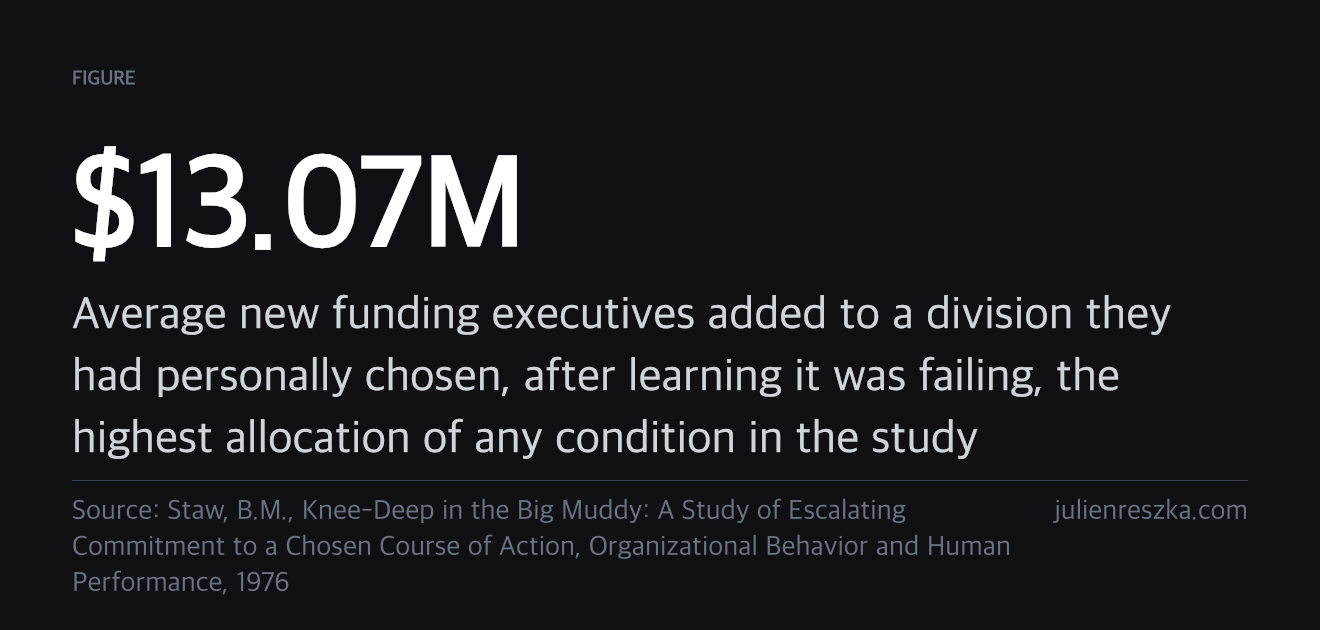
You're still funding it. Not because it's working. Because you're the one who chose it, and admitting it failed means admitting you were wrong. In 1976, a psychologist tested exactly this instinct. He asked business students to imagine they were a corporate financial officer, allocating 10 million dollars in research funding between two company divisions. Years later, in the same role, they learned their chosen division was now failing and had to decide how to allocate a new 20 million dollar pool. People who had personally picked the failing division did not pull back. They poured in more money than anyone else in the study, an average of 13.07 million dollars, the single highest allocation recorded, specifically because it was their choice and it was now failing.
The same pattern shows up at a much larger scale outside the laboratory.
- Shoreham Nuclear Power Plant was budgeted at 75 million dollars when announced in 1966
- Cost estimates kept rising for the next 23 years, past 5 billion dollars, while the utility kept building
- It was sold for one dollar and dismantled in 1989 without ever generating a watt of commercial power
Researchers call this escalation of commitment, and the driving force is not new information, it is self-justification. Once you have publicly chosen something, admitting it failed means admitting you were wrong, so the natural move is to defend the choice by doubling down, not to correct it. This is exactly what the phrase "it gets worse before it gets better" gives people permission to do. As long as the story allows for one more dip before the climb, there is never a moment that counts as proof of failure. That is not patience. It is a permission structure to keep defending a decision instead of examining it.
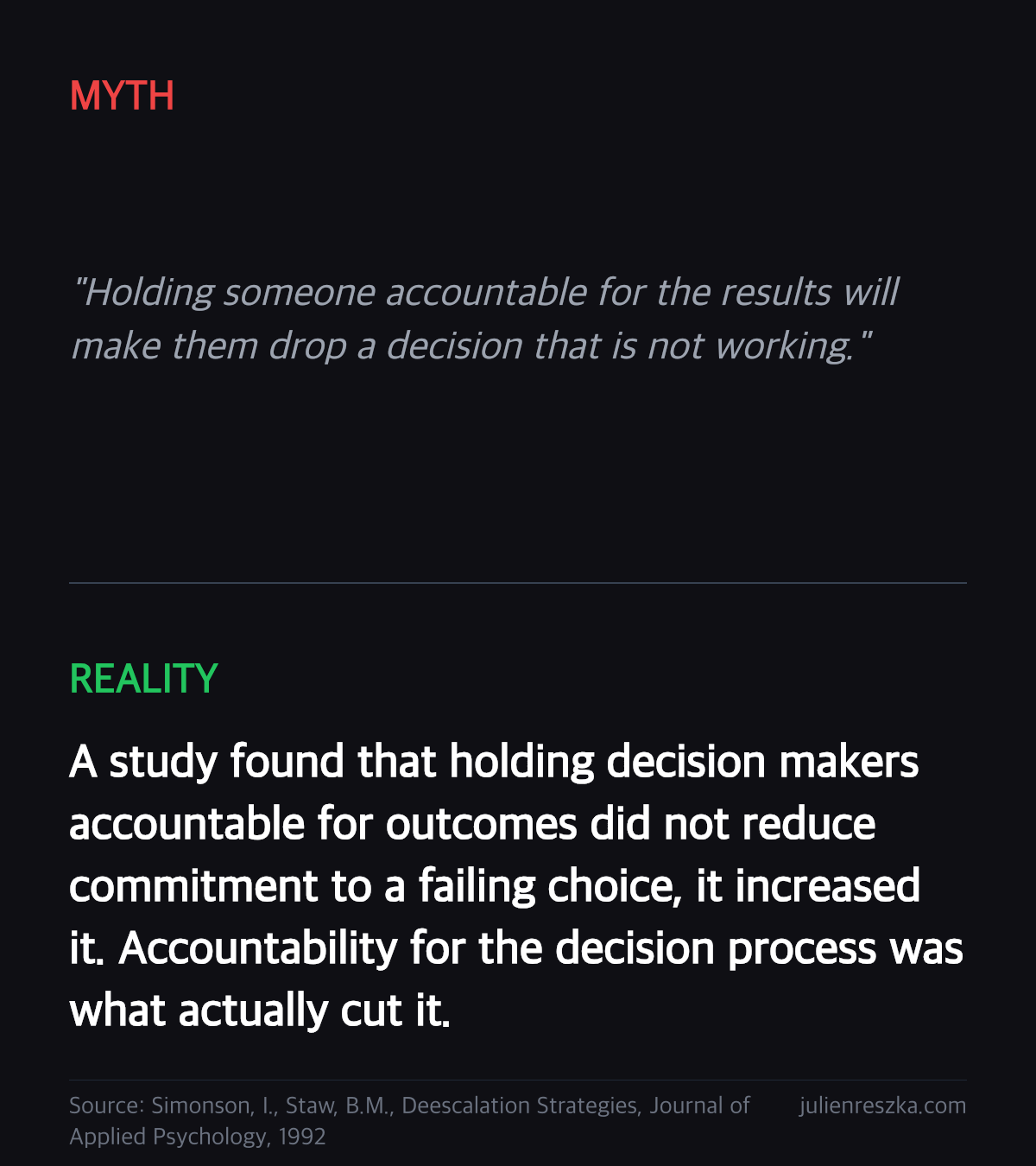
What actually breaks the pattern is not more scrutiny of the outcome. A follow up study held some decision makers accountable for their results and others accountable for the quality of their decision process, the reasoning that led to the choice, not just whether it paid off. Outcome accountability did not help, it made things worse, raising the money committed to a failing choice from 5.1 million dollars at baseline to 5.8 million. Process accountability was the only condition that reduced it, down to 4 million dollars. Asking someone to defend their reasoning breaks the self justification loop. Asking them to defend their results feeds it.
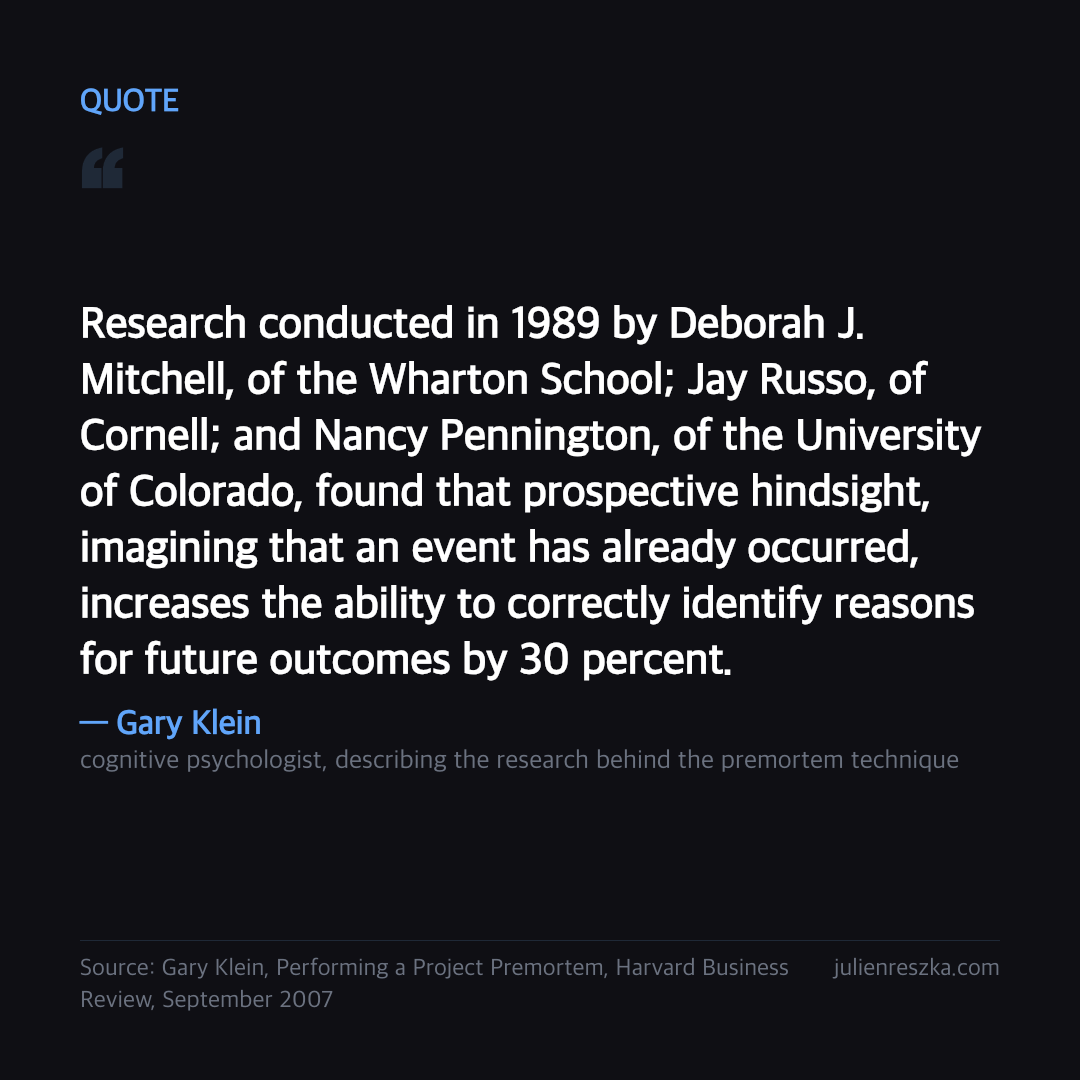
One concrete way to force that shift toward examining the reasoning instead of just the results is a premortem. Instead of asking whether a decision might fail, you assume it already has: imagine it is a year from now, the decision failed completely, and write down exactly why. According to Gary Klein, who popularized the technique, people who imagine a failure has already happened are measurably better at identifying the real reasons behind it than people who are only asked whether it might happen. Companies that struggle to kill their own failing bets are almost always missing this step, not the willingness to change. What they are missing is a forcing function that makes the failure impossible to keep explaining away.
The years are not spent fixing anything. They are spent defending a choice that a different question would have already ended. Shoreham never got fixed. Twenty three years in, the utility did not find a way to make it work, it simply ran out of road and shut the whole thing down. A premortem or a process review does not guarantee a better outcome. What it removes is the years spent finding out the hard way, by asking the question early enough for the answer to still matter.
Discussion