 Julien Reszka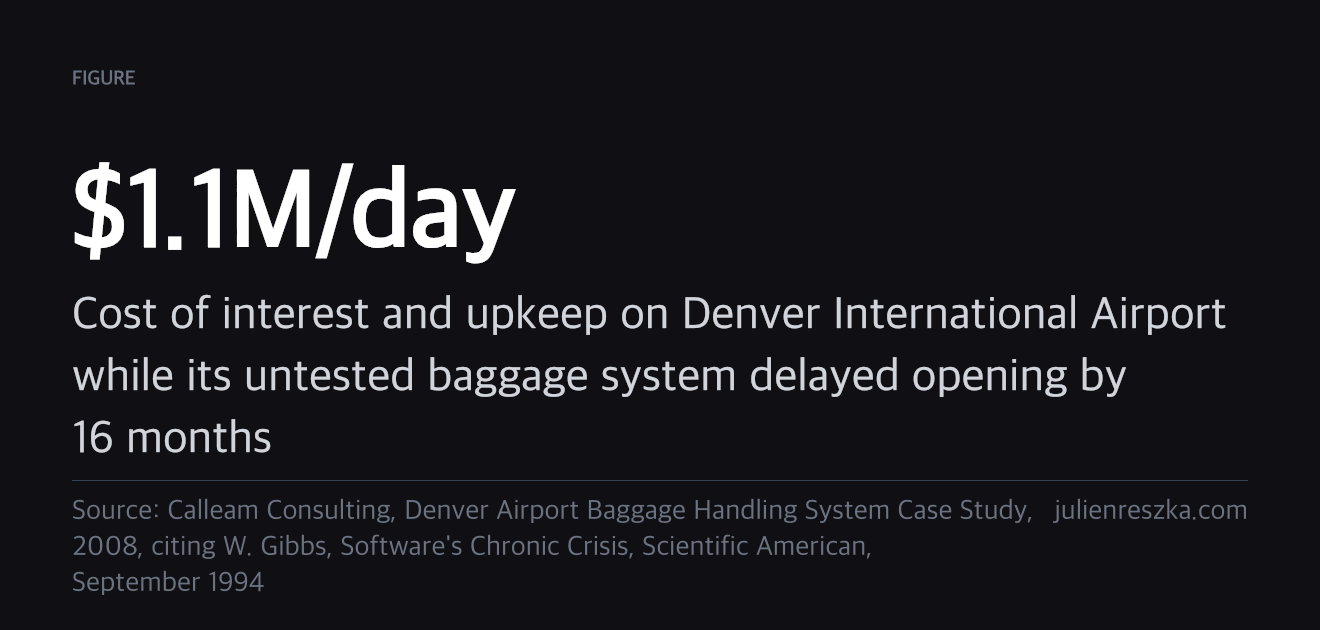
Denver International Airport finished construction on schedule. It then sat empty for 16 months, costing the city 1.1 million dollars a day in interest and upkeep, because of one subsystem: an automated baggage handler that nobody tested in pieces before betting the whole airport on it.
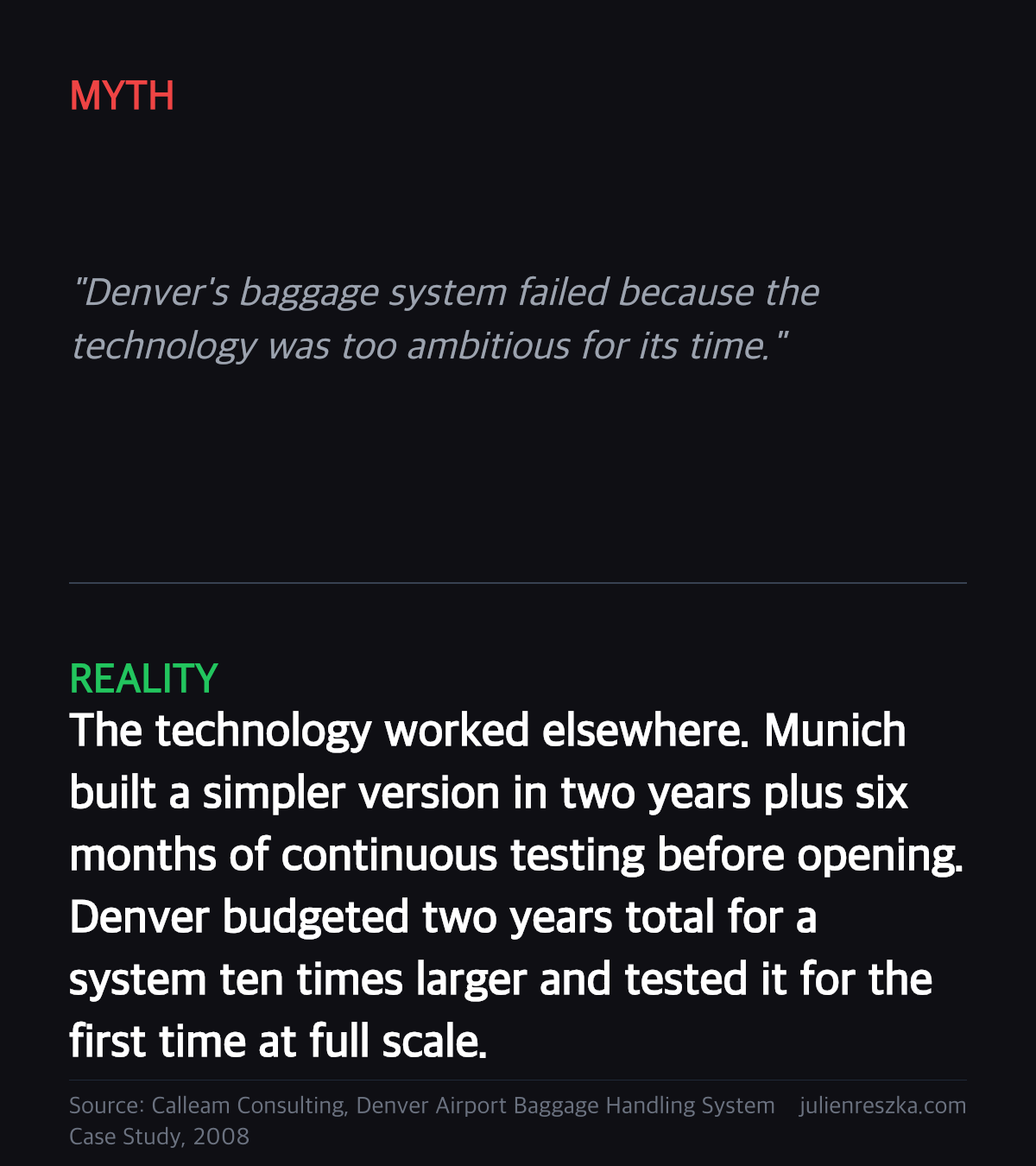
The system was ten times larger than any automated baggage handler ever built: 17 miles of track, more than 3,500 carts, coordinated by over 100 networked computers deciding in real time where every empty cart needed to be next. A simpler version of the same idea, built for Munich's airport, took two full years to construct and then ran continuously for six months before opening day, just to catch the bugs that only show up at scale. Denver budgeted two years for the entire project, design through opening, for a system ten times more complex.
None of this stayed hidden. Airport officials invited the media to watch the system in action months before opening, without telling the contractor first. Carts crashed into each other at speed. Bags built to survive normal handling got crushed on camera, spilling clothes across the floor. Denver's mayor canceled the next opening date within days of it airing.
Two decisions turned an ambitious system into an impossible one.
- The terminal building was designed before the baggage system, so its track had to bend through turns it was never built for, and cart speed was cut in half to stop bags flying off the curves.
- Instead of proving the design on one concourse first, the airport rolled it out to all three at once, so the first real test of the system under full load was also its biggest one.
Sketching the dependency network first is what saved Polaris two years on a five year deadline. Denver did the opposite: it committed to a fixed schedule before anyone had mapped which parts of the system depended on which, then discovered the dependencies live, at full scale, with an airport waiting on the other side of them.
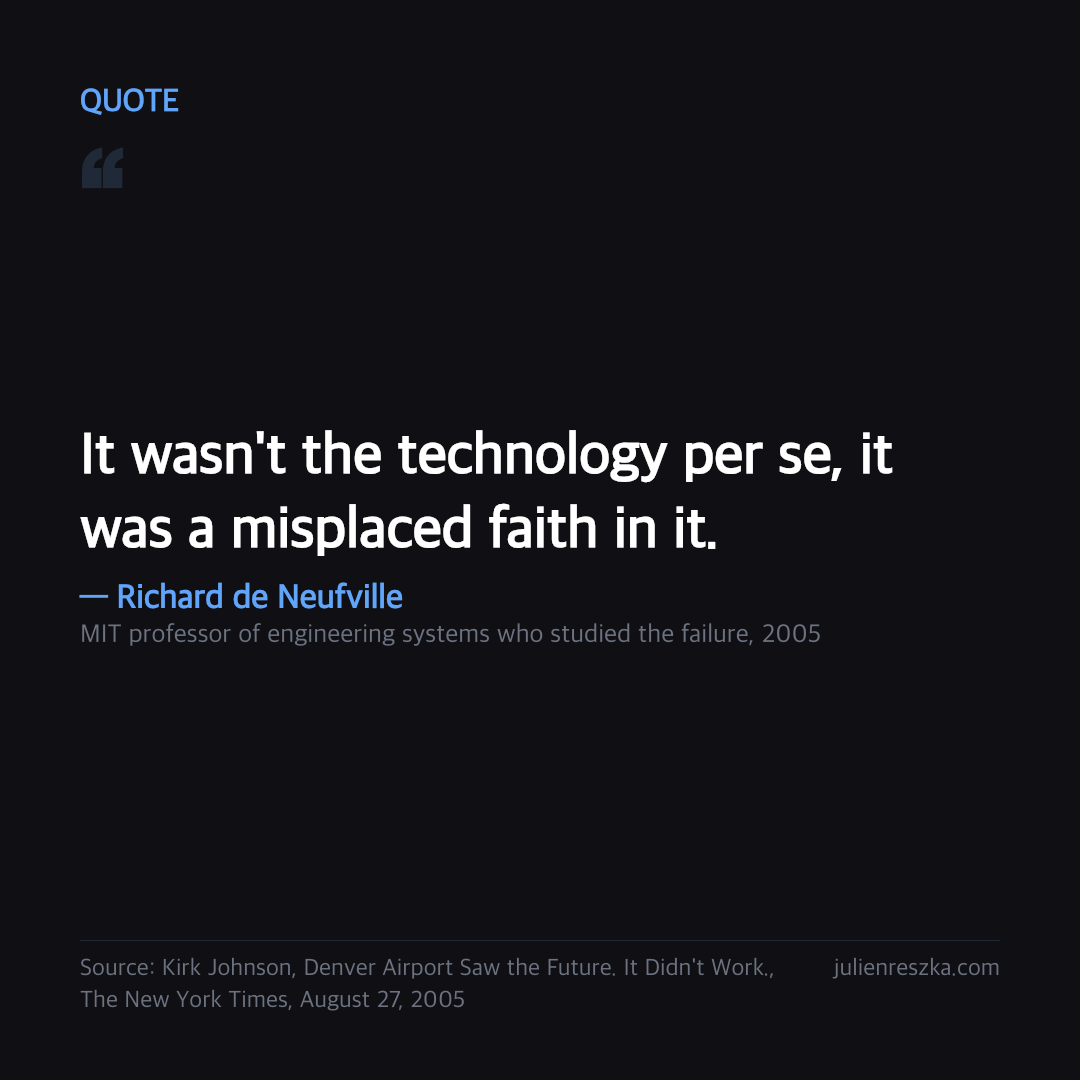
When the automated system finally failed for good in August 2005, it was replaced with the same plain conveyor belts and tug carts every other airport already used. Fears that a manual system would be too slow for a hub Denver's size turned out to be unfounded. The airport has run on it since. The 1.1 million dollars a day was never the price of solving a hard problem. It was the price of testing the hardest version of the problem first.
Discussion