 Julien Reszka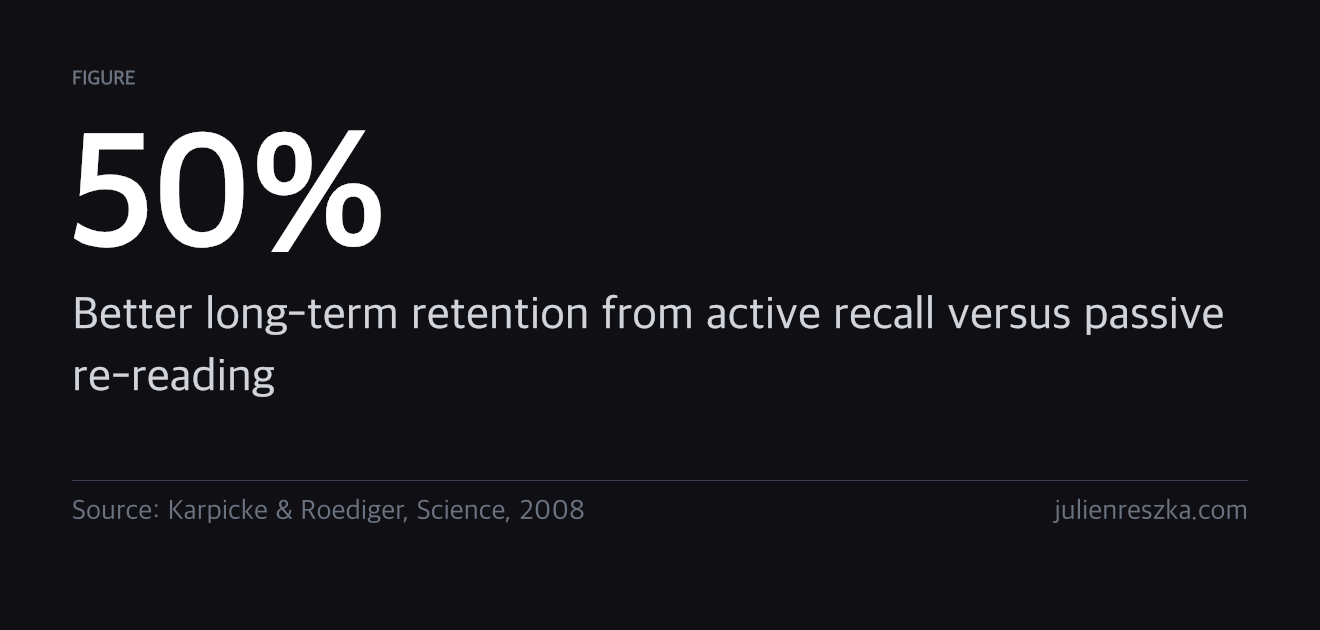
I am currently reading Artificial Intelligence for Humans by Jeff Heaton, and I am translating it into French as I go.
Not because I plan to publish the translation. Because translation is the most aggressive reading technique I know.
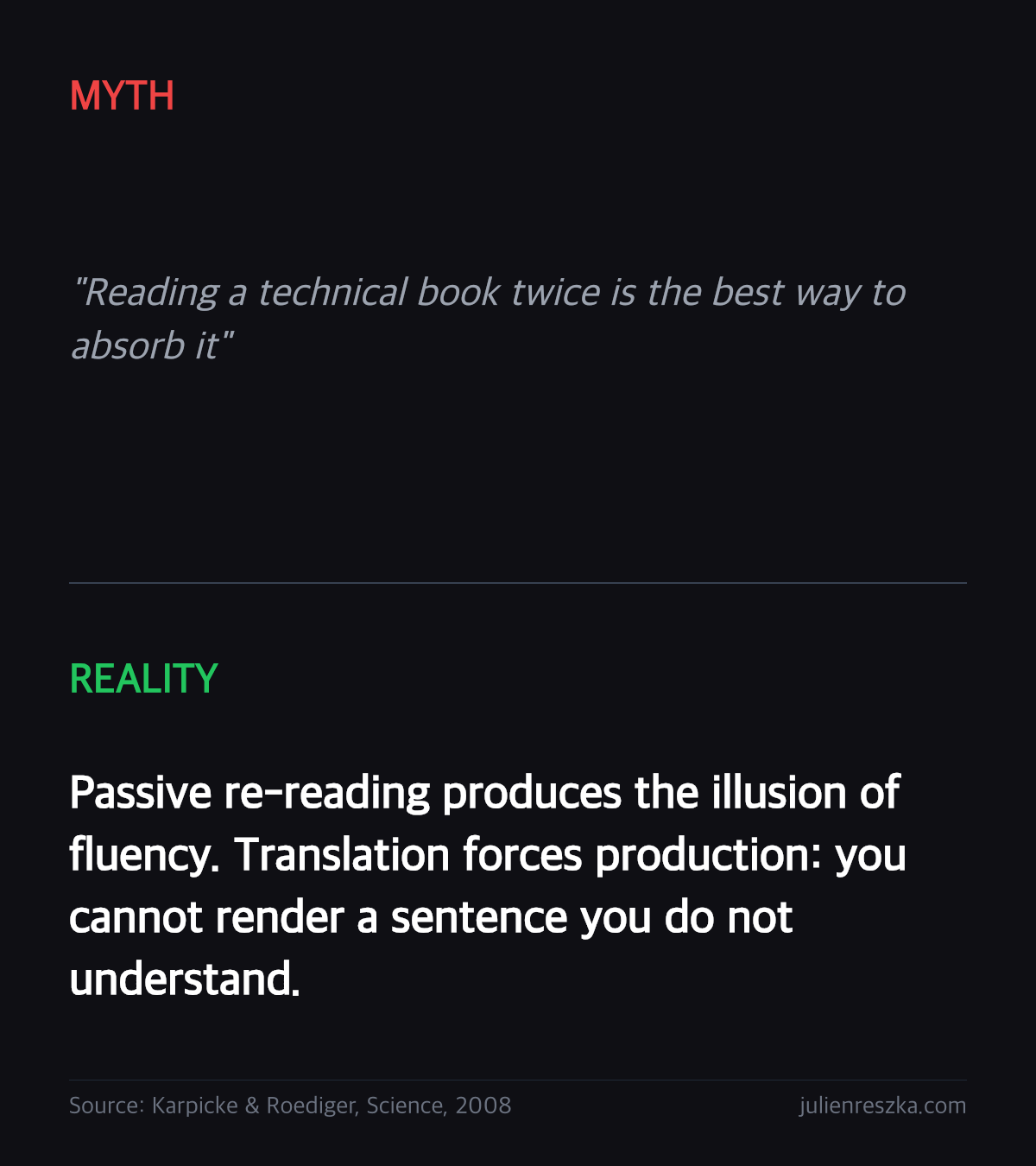
Here is the problem with reading a technical book: comprehension is easy to fake. You read the sentence, your eyes move, and your brain produces the sensation of understanding. You can read twenty pages of a machine learning textbook and retain nothing, because passivity produces the illusion of fluency without the encoding.
Translation breaks that illusion in the first paragraph.
You cannot translate a sentence you do not understand. The moment you try, you discover immediately whether you grasped it or merely passed your eyes over it. Every ambiguous pronoun, every technical term used without definition, every causal chain you assumed rather than followed: all of it surfaces the moment you try to render the sentence in another language.
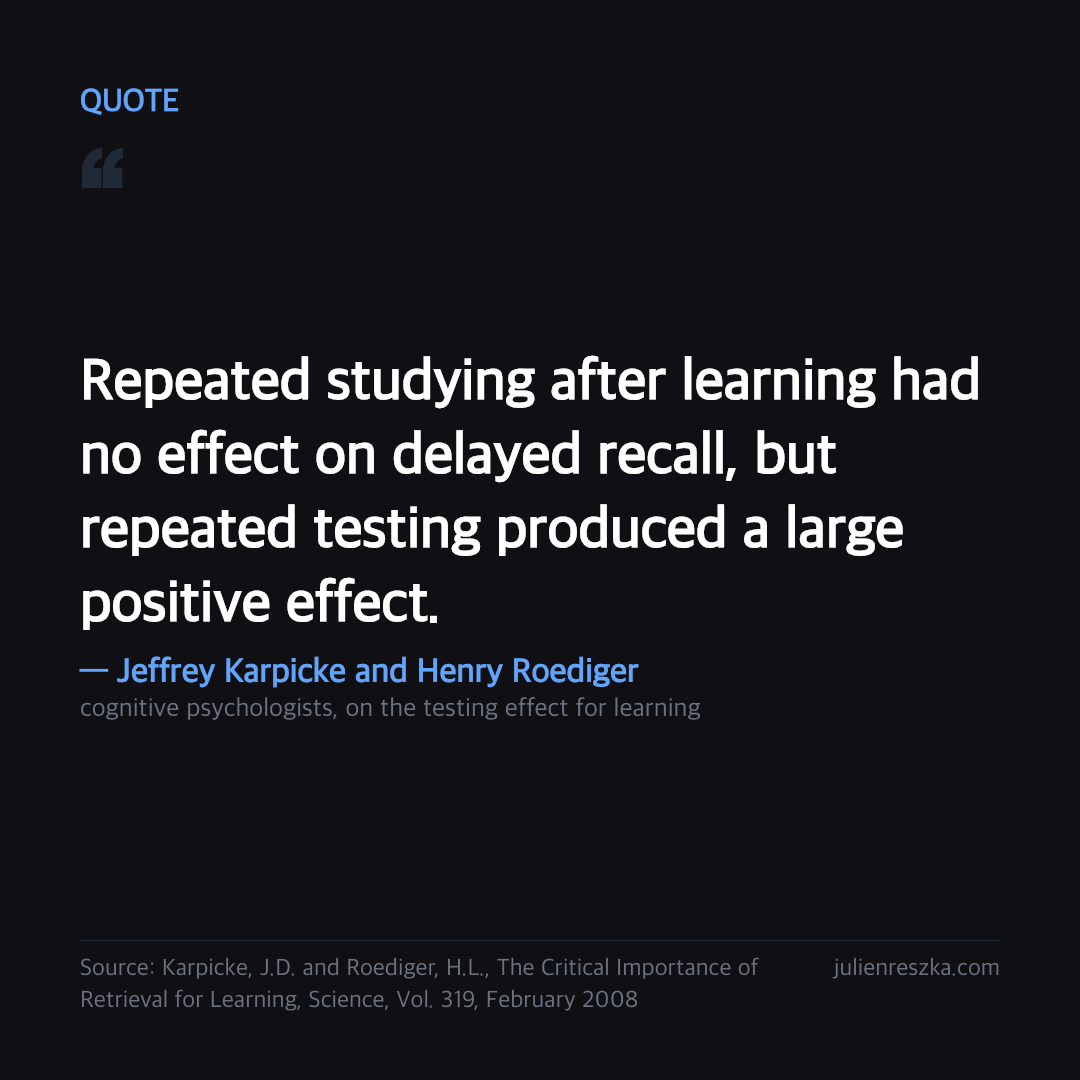
This is active recall in its most demanding form. Not re-reading, not highlighting, not taking notes in the margin. Production. You are generating the content from your own encoding rather than recognising it from the page.
The cognitive load is exactly the right kind. You are not struggling with an unfamiliar language on top of unfamiliar content. You are using your strongest language as a forcing function to test your encoding of new ideas. When the French sentence does not come, the problem is not my French. It is that I did not understand the original.
Some practical observations after several chapters of Heaton:
- You cannot skim. Every shortcut you would normally take on a difficult paragraph is blocked. This is a feature.
- Analogies reveal themselves. Heaton uses analogies to explain neural network concepts. Translating them forces you to decide whether the analogy holds or just sounds plausible.
- You build a personal vocabulary. When you decide how to render a term, you own the definition. You made the decision. The word is yours.
- Errors are obvious. If your translation is awkward, you go back to the original. That second visit is where the learning happens.
The method scales to any subject and any language pair, including translating dense academic prose into plain speech in your own language. That version is slower than ordinary reading and faster than forgetting everything by Thursday.
Discussion
I do this with philosophy texts and it is the only thing that works for me. Hegel translated badly means Hegel understood badly. The translation is the exam.
Tried this with a statistics textbook last year. Got through one chapter in three hours. Retained everything. The time cost is real but so is the return.
Three hours per chapter sounds slow until you compare it to reading the chapter in forty minutes and remembering none of it.
Counter: this only works if you are already fluent enough in both languages that the language is not the bottleneck. If your target language is shaky, you spend the cognitive load on grammar instead of concepts.