 Julien Reszka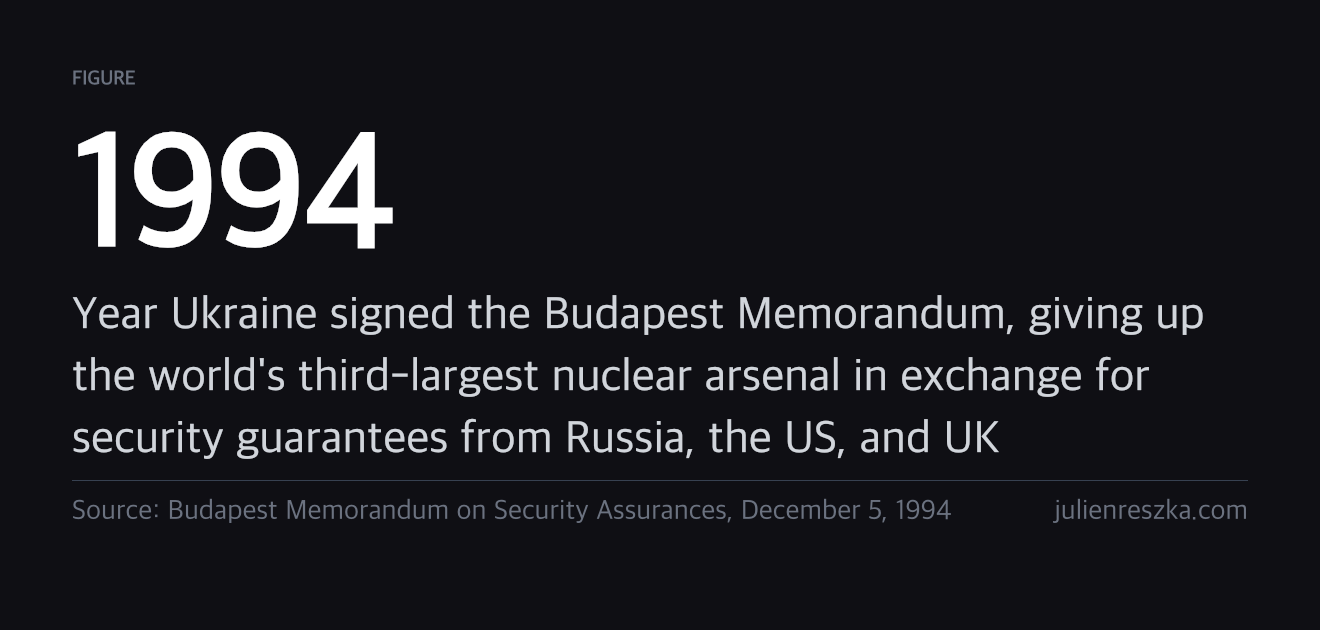
Russia annexed Crimea last week. Most people I know are confused by it. I was not, and I have been trying to work out why.
I have Polish roots. My family's history runs through a region that has been partitioned, occupied, and redrawn more than once. Growing up in France, that history stayed in the background. But it stayed. The names, the borders, the logic of buffer states and great power competition between Germany and Russia: it was never entirely abstract for me. When Crimea happened, it was not a surprise. It was a pattern I recognised.
So I signed up for a formal course on the geopolitics of Central Europe at the University of Lorraine to close the remaining gaps, not because I am lost but because I want the vocabulary to match the intuition.
What I already understood before the course:
- Why Crimea specifically: it hosts the Black Sea Fleet, Russia's only warm-water naval base, and Sevastopol was on a lease that Ukraine could have chosen not to renew
- Why Ukraine's military was in no position to resist: years of underfunding and Russian penetration of its officer corps had hollowed it out
- Why Poland's reaction is so different from Germany's: Poland has been between these two powers before and knows what the pattern looks like from the inside
- Why the Budapest Memorandum produced no response: it was a political commitment, not a treaty, with no enforcement mechanism and no signatory who wanted to be the one to test it
The Crimea annexation is not an isolated event. It is the opening move in something longer. The structure of what comes next is already visible if you know where to look. I am going to study it formally so I can read the next moves more precisely.
Discussion